
- History of selection
- Description and characteristics of the variety
- Main characteristics
- Appearance
- Clusters
- Berries
- Frost resistance
- Productivity
- Transportability
- Disease resistance
- Pros and cons
- How to plant correctly
- Site selection and preparation
- How to choose and prepare a seedling
- Recommendations for choosing deadlines
- Planting diagram
- Care instructions
- Watering
- Mulching
- Top dressing
- Formation
- Preventive spraying
- Protection from wasps and birds
- Preparing for winter
- Grafting cuttings onto rootstock
- Diseases and pests
- Powdery mildew
- Phylloxera
- Mildew
- Oidium
- Harvesting and storage
- Applications of berries
- Tips and advice from experienced gardeners
Humanity has been cultivating grapes for several millennia. However, new hybrid varieties with improved properties and characteristics emerge every year. The Rochefort grape variety is relatively new, but has already gained popularity among gardeners and farmers due to its early ripening and excellent flavor. While grapes were once available exclusively in southern regions, today the fruit bush is cultivated in a variety of climates.
History of selection
The creator of the Rochefort table grape variety is amateur breeder E.G. Pavlovsky, who collaborates with Rostov scientists from the Potapenko Research Institute.
The new fruit crop was developed in 2002 by crossing the Talisman grape and the Cardinal variety.
As a result of long and fruitful work, the breeder obtained a hybrid variety of fruit crop resistant to frost and drought, with large berries and a unique taste.
In 2015, the Rochefort variety was added to the state register of fruit crops with a recommendation for cultivation in all regions of the country.
Description and characteristics of the variety
In a short period of time, Rochefort grapes have spread across Belarus, Ukraine and Russia, where they are cultivated in various climatic zones.
Berries ripen 105-120 days after flowering, making it suitable for growing in cooler climates. In southern latitudes, ripe clusters are harvested in the first half of August.
Important! The ripening time and taste of grapes depend on the number of sunny days and the amount of heat received by the fruit crop.

Main characteristics
This hybrid grape variety is easy to grow and care for, making it accessible even to novice gardeners and farmers.
Appearance
The fruit tree will grow vigorously and spreadingly, with large green leaf blades. Fruiting canes reach up to 1.4 m in height, and the vine fully matures during the growing season.
The shrub enters flowering in June. The shoots bear clusters of small, white flowers, which form into racemes. After flowering, berries form within the clusters.
Note: The Rochefort grape variety is self-pollinating and does not require a pollinator.
Clusters
The grape clusters are large, weighing from 500 g to 1 kg, cone-shaped, dense, with even rows of purple berries.

Berries
The fruits ripen to be large, weighing up to 12 grams, and round in shape. The color of the berries changes depending on the stage of ripeness. At the beginning of ripening, the fruits acquire burgundy and purple hues; at maturity, they become reddish-grayish with a blue tint; overripe berries turn black.
Ripe berries are sweet, juicy, with a muscat flavor, and no hint of acidity. The flesh is firm, covered with a firm but thin skin that's completely imperceptible when eating the grapes.
Rochefort grapes tend to develop early berries, which can be confusing for inexperienced gardeners. Avoid picking the berries once they've darkened; they need to remain on the vine to fully appreciate their sweetness.

Frost resistance
Thanks to its late flowering period, this fruit tree is resistant to spring frosts. Rochefort easily tolerates temperatures down to -23 degrees Celsius (-23 degrees Fahrenheit), but in regions with harsh winters, the bushes require additional insulation.
The variety is sensitive to drought. Even a slight lack of moisture negatively impacts the yield and flavor of the berries.

Productivity
Rochefort begins bearing fruit in the third to fourth year of outdoor growth. The ripening time of the berries depends on the climate and weather conditions of the growing region. According to the fruit cultivar's specifications, ripeness occurs between the 105th and 120th day of the active growing season.
With proper and timely care, one bush can produce up to 10 kg of ripe, healthy berries.
Transportability
Thanks to the dense skin and pulp, the grapes retain their marketable appearance for a long time, which facilitates long-distance transportation.
Disease resistance
Hybrid fruit crops have weak natural immunity to diseases and pests. Berry bushes are often attacked by fungal diseases and pests, which leads to reduced yields and, in the worst case, plant death.
Pros and cons
To grow a healthy berry bush and get a high-quality and abundant harvest of berries, you need to understand all the pros and cons of the Rochefort grape variety.

Advantages:
- Early ripening of berries.
- Ability to bear fruit and pollinate independently.
- High yield rates.
- Excellent taste of fruits.
- Dense bunches are stored for a long time and are easy to transport.
- The variety is resistant to low temperatures.
Important! Seedlings transplant easily and root quickly in the soil.
The disadvantages of the hybrid variety include low resistance to diseases and the fruit crop's intolerance to drafts and gusty northern winds.
How to plant correctly
The quality and quantity of the resulting harvest directly depend on proper planting and subsequent care of the plant.
Site selection and preparation
For growing Rochefort grapes, choose sunny plots of land with a southern or southwestern exposure, protected from wind and drafts.
If there is groundwater, the minimum depth should be 2.5 m from the soil surface.

It is not recommended to plant grape seedlings in lowlands and marshy areas.
Although hybrid grapes are undemanding to soil composition, the berry crop grows, develops, and bears fruit better in loose, fertile soil with a neutral acidity and moisture content.
Soil preparation is carried out 4-6 weeks before planting seedlings.
- The area is dug to a depth of 70-80 cm.
- Remove debris, weeds and roots from the soil and loosen it thoroughly.
- The soil is mixed with organic and mineral substances.
- Compost and clay are added to sandy soil, and heavy soil is diluted with sand and humus.
- Planting holes are dug on the prepared area.
- The depth and diameter of the holes is not less than 80 cm.
- The distance between plantings is kept from 2.5 to 3 m, between rows from 3 to 4 m.
- Drainage is placed at the bottom of the hole, fertile soil mixture is poured on top, a support peg is driven in and the plant is watered.
Important! Soils with high acid content must be limed beforehand.
How to choose and prepare a seedling
Varietal seedlings of hybrid grapes are purchased in nurseries or specialized stores.
- Plants aged 1-3 years take root and establish themselves most easily.
- The seedling is carefully examined for damage and infection by diseases and pests.
- The presence of several branches, leaves or buds is required.
- The roots are well developed, moisturized, without putrefactive deposits or compactions.
Before planting in open ground, plant rhizomes are placed in warm water for 10-15 hours, and then treated with antibacterial agents and a growth stimulant.

Recommendations for choosing deadlines
Rochefort grapes are planted in open ground both in spring and autumn.

Autumn work is carried out 4-6 weeks before the first frost, allowing the seedling time to establish and root. Before winter sets in, the young plant is given additional cover.
Spring planting is carried out as soon as the soil warms up to +15 degrees.
Planting diagram
Before transplanting the seedlings into the soil, the roots of the plants are trimmed, leaving only long and healthy shoots.
- The seedling is placed in the center of the planting hole.
- The roots are carefully spread out in the hole and covered with fertile soil mixture.
- The soil is compacted, the plant is tied to a peg and watered.
After completing the planting activities, the tree trunk circle is mulched with straw or peat mixed with sawdust.
Care instructions
To grow a high-quality and abundant grape harvest, the fruit crop requires timely and competent care.

Watering
Water the bush 3-5 times throughout the season. Grapes require moisture before flowering and during fruit formation. Pour up to 15 liters of warm, settled water under each plant.
During flowering and ripening of berries, the grapes are not watered.
During dry periods, irrigation activities are carried out more frequently; during rainy periods, irrigation is abandoned altogether.
Important! After watering, thoroughly loosen the soil and remove weeds.
Mulching
Mulching the soil reduces the need for irrigation and loosening the soil, retains the necessary amount of moisture in the soil, and protects the plant from the spread of weeds and pests.
Any organic materials can be used as mulch.
In late autumn, the trunk circle is mulched with a thick layer of humus, protecting the grape roots from freezing.
Top dressing
Grape vines require additional nutrition in the third to fourth year of growth. In the spring, fruit trees are fertilized with organic matter. During the active growing season, berry plants are supplemented with phosphorus and potassium.
Before the start of winter rest, manure and ash are added to the soil.
Formation
For proper growth, development and fruiting, grapes require annual pruning.
In spring and autumn, remove dry, broken, old and damaged branches and shoots.
After harvesting, all branches are cut off, leaving 4-6 buds on each.
Important! The load on one grape bush should not exceed 22-24 fruiting shoots.
Preventive spraying
To protect plants from harmful insects and fungal infections, preventative treatment of bushes and soil is carried out in early spring using chemical and biological pesticides.
If necessary, repeat spraying in the fall.

Protection from wasps and birds
Birds and wasps that feed on the fruit juice cause significant damage to ripening berries.
To protect the harvest, they use shiny tapes, old disks, install scarecrows, or cover the bunches with a fine mesh.
Preparing for winter
Before the onset of winter, Rochefort grapes are watered generously, the trunk circle is mulched with a thick layer of humus and covered with dry leaves or spruce branches.
In regions with a temperate climate and cold winters, fruit bushes are removed from their supports and bent down to the ground. The tops of the plants are covered with plastic or special materials. As soon as the first snow falls, a large snowdrift is raked over the bent bush.
Important! Young plants planted in the fall must be covered for the winter, even in regions with mild and warm winters.
Grafting cuttings onto rootstock
To obtain new seedlings and rejuvenate old grape bushes, vegetative propagation methods are used.

To prolong the life of a fruit-bearing plant, a young cutting is grafted onto an adult bush.
- The old bush is completely cut back, leaving a small part of the main trunk.
- The surface of the cut trunk is cleaned and treated with antibacterial agents.
- A neat cut is made in the center of the trunk, and a pre-prepared cutting is inserted into the hole.
- The grafting site is tied with twine or a special tape and treated with clay on top.
Take a look Also
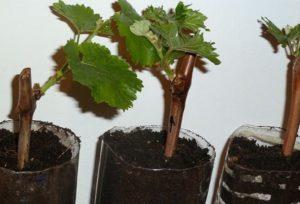
Caring for a grafted plant is the same as caring for regular grape bushes.
Diseases and pests
The main threat to grape bushes is powdery mildew and a dangerous pest of American origin, phylloxera.

Powdery mildew
The fungus manifests as spots and plaques on leaves, buds, ovaries, and grape fruits. The berries rot, crack, and fall off, while the leaves and ovaries turn black and dry out.
For prevention and treatment, preparations based on fungicides and copper are used.
Phylloxera
A dangerous pest that attacks both above-ground and underground parts of plants, these tiny aphids spread quickly and cause irreparable damage to fruit bushes and crops.
To combat the pest, chemical preparations based on insecticides are used.
Mildew
The fungus affects the above-ground part of the grapes, appearing as light spots on the leaves, buds, ovaries and fruits.
Over time, the spots turn black, the ovaries fall off, and the berries rot and spoil.
Sulfur-based preparations and fungicides are used to treat bushes and soil.

Oidium
The fungal infection manifests itself as a powdery white coating on buds, shoots, leaves, inflorescences, and fruits. The berries rot and crack, accompanied by an unpleasant, strong odor reminiscent of rotten fish.
To combat the disease, sulfur-based products and fungicides are used.
Harvesting and storage
The ripening time of Rochefort grapes depends on weather and climate factors. In southern regions, the berries ripen in mid-August; in cooler climates, they ripen in late September.
This variety has a characteristic feature, which manifests itself in the early browning of the fruit. Therefore, it's best not to rush harvesting; instead, allow the tasty and nutritious berries to ripen fully.
Rochefort grapes retain their marketable appearance for a long time; bunches can be stored in the refrigerator for up to 3 months, allowing for unhindered transportation of the harvest over long distances.
Applications of berries
The fruits of the Rochefort table grape variety contain a huge amount of useful substances, minerals, amino acids, antioxidants and vitamins.

It is recommended to eat the berries fresh,
Also, juices, nectars, marmalade, jams and preserves are made from grapes.
The fruits are dried, frozen, and canned. The most experienced housewives make homemade wines and liqueurs.
Tips and advice from experienced gardeners
The Rochefort grape variety requires little effort in cultivation and subsequent care. However, this fruit crop does have its weaknesses, which must be constantly kept in mind.
- Vineyards are poorly protected from fungal diseases and phylloxera, so preventative treatment of the bushes several times a year is necessary.
- Due to active growth and development during the growing season, too many fruit shoots grow, which must be monitored and pruned in a timely manner.
Otherwise, the fruit crop is unpretentious and accessible for growing by novice gardeners and horticulturists.
Related posts:
 The ripening time of grape vines by variety, how to speed up the process, and what to treat the plant with
 Description of 30 grape varieties for Siberia, planting and care for beginners
 How to grow grapes in the Moscow region in open ground without a greenhouse
 Description of the Julian grape variety, planting and care instructions
 Description of 30 varieties and types of Muscat grapes, planting, cultivation and care
 Description of the Krasotka grape variety, planting and care technology
 Beginner's Guide to Growing Grapes in Open Ground in Central Russia
 Description and characteristics of the Laura grape variety, planting and care