
How and when should I treat grapes for gray mold? This is the first question that comes to mind when faced with this problem. Don't panic; research the issue and implement the right treatment. In its early stages, the disease is quickly and easily treated. It becomes more difficult if the grapevine is in an advanced stage. But even then, it's possible to cure the vine.
Types of rot
Grape vines are susceptible to various types of rot. These include gray, white, black, sour, and Aspergillus rot.
Gray
The disease is caused by a fungus. It survives during the winter under the bark or roots of the vine. In the spring, the fungal spores spread and fall on healthy vines. The fruit then becomes infected and begins to spoil.
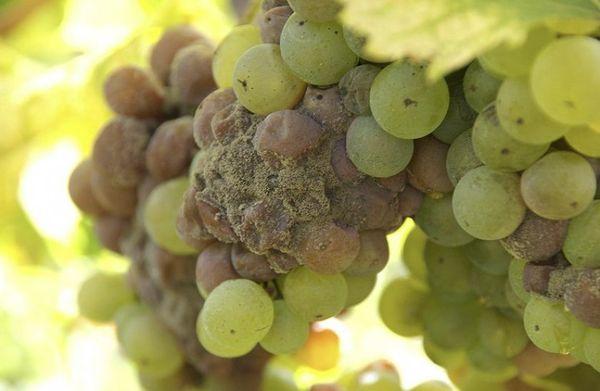
The fungus appears as a gray, fluffy coating on the berries; after wilting, the grapes fall off. They cannot be eaten, processed, or used for winemaking. The disease quickly spreads throughout the entire plant.
White
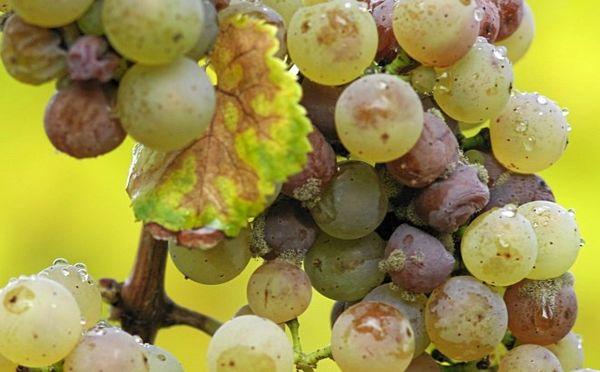
The disease is also caused by a fungus. It lives in the soil, migrates to the shoots in the spring, and attacks the grape clusters. In dry weather, light spots appear on the berries; in wet weather, black spots develop. These are the first signs of rot. The grapes then crack and begin to rot.
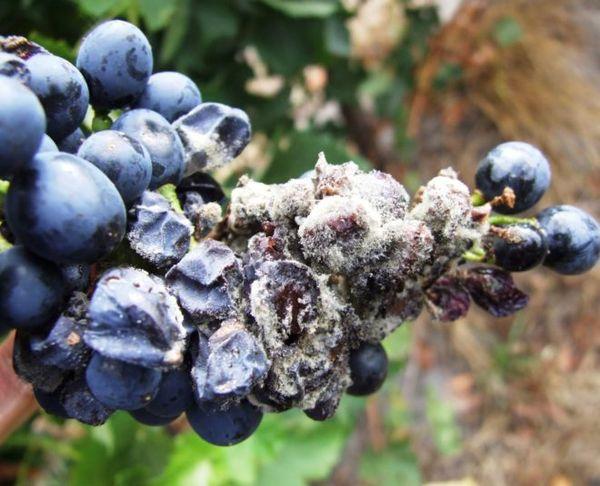
White rot is not capable of infecting the entire shrub, so taking immediate action will help cope with the problem.
Black
The most dangerous type of fungus. It attacks berries, and in more advanced stages, it spreads to leaves, shoots, petioles, and other parts of the bush. Spores survive in the soil over winter and migrate to the body of the bush in the spring.
Both overripe and young berries are infected. They turn black, shrivel, burst, and leak juice. The fungus spreads quickly and can destroy over 80% of the harvest.
Aspergillosis
This disease is caused by more than 10 fungi of the same genus. It is common in hot southern regions. The fungus begins to multiply in high humidity and hot temperatures. It invades vine shoots and spreads through the fungus's body.
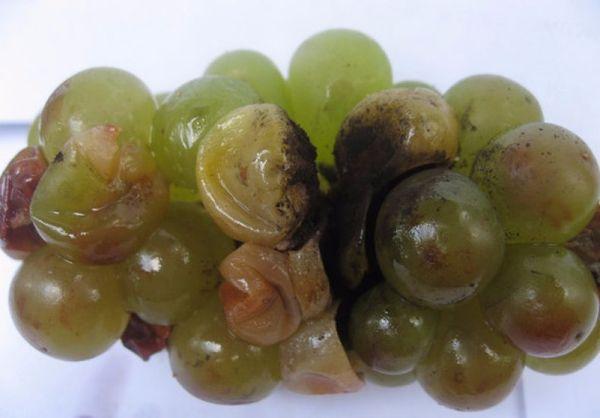
The berries turn brown, become soft, and deflate. They begin to release juice, shrivel, and dry out.
Sour (acetic)
The fungus penetrates the surface of the fruit via the wind. It survives in the plant's roots during the winter. Once infected, uncharacteristic spots appear on the berries. The fruit shrinks and loses juice. The grapes begin to ferment from the inside. During fermentation, acetic acid is formed from the grape juice. This is where this type of rot gets its name.
Take a look Also
Localization and signs of bush disease
The rot spreads across various parts of the plant. It affects not only the fruit, but also the inflorescences, shoots, leaves, and clusters. Specific signs are visible in each area.
Inflorescences
Fruit formation begins on the inflorescences. The berries begin to spoil even before they ripen. Even in the initial stages of development, the fruits dry out, die, and fall off. This type of damage can result in a loss of over 50% of the harvest.
Brushes
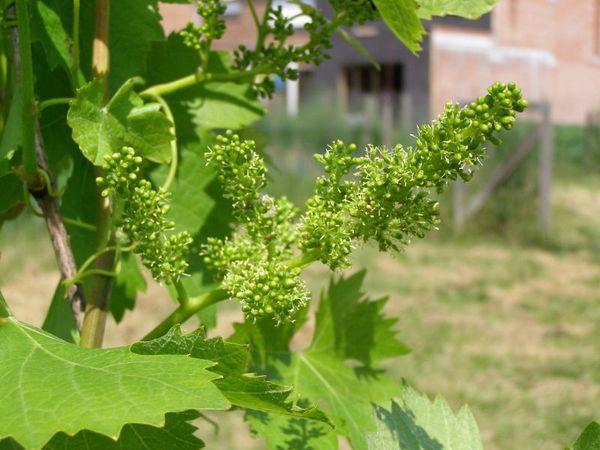
If flowering and fruit set are successful, the berries form into clusters, each consisting of over 30 berries. If infection occurs at this point, the fruits stop growing and developing. They freeze at the spot, gradually change color, the clusters dry out, leak juice, and become covered with a white or gray fluffy coating.
Branches
On vineyard branches, the symptoms are quite characteristic, as they are on other parts of the plant. The vines turn brown and become covered with a gray coating. The surface becomes dry, yellow, and in some cases discolored. After the branches are infected, the fungus spreads to the fruit.
Leaves
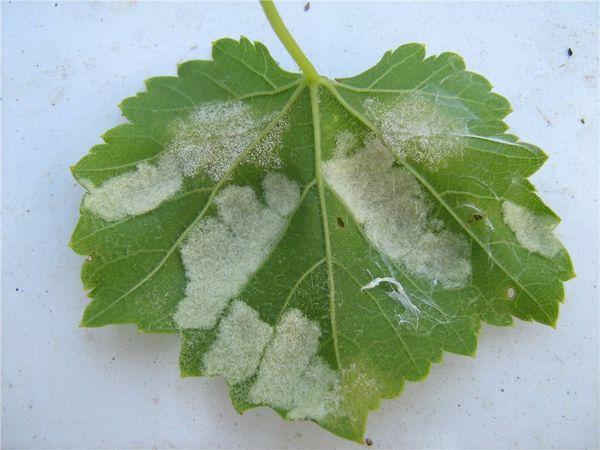
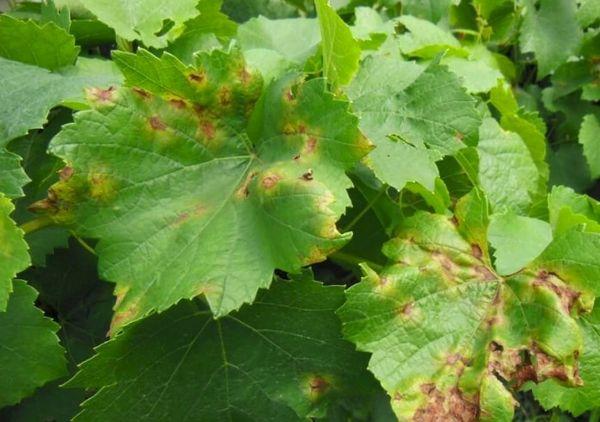
Green grape leaves are initially attacked by the fungus. Brown spots appear on them. These gradually increase in size, then become covered with a distinctive coating. They turn gray and hairy. The fungus then sucks all the juices from the leaves, causing them to dry out and curl.
Preventive measures
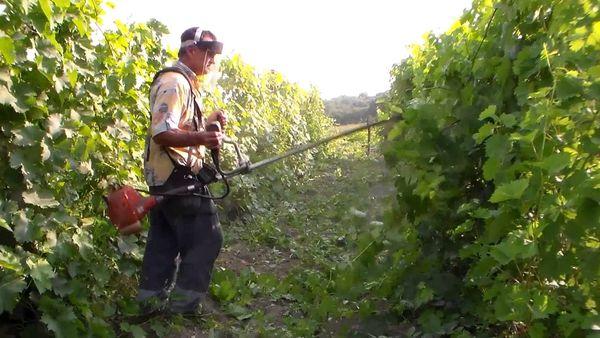
Gray mold attacks shrubs in summer. Its most active period is July. To prevent the spread of the infection and its spread to shoots, vineyards should be sprayed periodically. Antifungal fungicides and copper-containing preparations are used for preventative measures. Spraying should be done several times per season. The most suitable periods for this are:
- before the buds begin to form;
- after the formation of ovaries;
- after harvesting.
Important! Do not spray with chemicals 20 days before harvest, as they accumulate in the fruit.
Treatment of the disease
To treat the problem, chemical or biological agents, as well as folk remedies, are used. Treatment begins as soon as the first signs are detected. The faster the treatment, the greater the chance of preserving the harvest.
Medicines
There are chemical and biological products available on the market. They help quickly and effectively eliminate gray mold without harming the harvest. They are eliminated from the plant sap within 15-20 days. Therefore, poisoning from treated berries is impossible if you follow the instructions and handle them correctly.
Chemicals
Chemical treatments are quite effective against fungi. They help save the crop and the plant from destruction. Vineyards can be treated:
- "Antracol";
- "RovralFlo";
- "Topsin M";
- "Dared";
- "Topaz".
It is recommended to change medications at regular intervals, as fungi can develop resistance to the active substance.
Biological
It's also possible to eliminate gray mold using biological products. These are based on toxins or other substances isolated from bacteria, fungi, and other biological organisms. Treating vineyards with these products is no less effective than chemical ones. Suitable products include:
- Horus;
- Quadris;
- "Fundazol";
- iron sulfate;
- colloidal sulfur;
- copper sulfate;
- "Immidazole";
- "Mikal".
Folk remedies
For gardeners who don't like using chemicals or artificially created remedies, folk remedies are a good option. Treatments can be done using a variety of recipes. Even in the last century, people most often used natural remedies made at home.
The best recipes are:
- Mix 5 g of baking soda, 5 ml of vegetable oil, 75 g of laundry soap, and 5 liters of water. Stir all ingredients, pour into a spray bottle, and spray the shrub.
- A potassium permanganate solution. It has a disinfecting effect and kills harmful fungi. It is effective in the early stages of the disease. In advanced cases, this method is not always effective. For grapes, dissolve 20 g of powder in 10 liters of water. It is recommended to repeat this procedure every 3 days until improvement begins.
- Mix 200 g of dry mustard with 10 liters of water. Mix thoroughly and apply to the entire plant. The mustard's scent and pungent taste instantly kill rot.
- Pouring boiling water over the roots of the vineyard helps to get rid of fungal spores early in the season before they have a chance to penetrate the foliage of the bush.
- Tobacco infusion. Pour 200 g of tobacco herb into 10 liters of hot water. Let it steep for 3 days. Then strain and apply to the affected plant.
- An infusion of wormwood is effective against fungi. Its scent also repels harmful insects. Prepare the solution using 100 grams of wormwood per 1 liter of water. Keep in mind that the berries' skins will retain a bitter taste. Be sure to rinse them with water before using.
- A mixture of any quantity of onion peels, 1 head of garlic, and 1 kg of wormwood is poured into 50 liters of water. While the solution is steeping, add 200 g of grated soap and mustard powder. Let it steep for 5 days. Then strain the required amount of solution and mix it with water at a 1:5 ratio. Apply the solution.
Important! Adding soap to any solution improves adhesion to the leaf and increases the duration of action.
Resistant and vulnerable varieties
Breeders have developed varieties resistant to gray mold. There are also grape varieties susceptible to infection by the fungus. To avoid this problem, it is recommended to choose varieties with strong immunity.

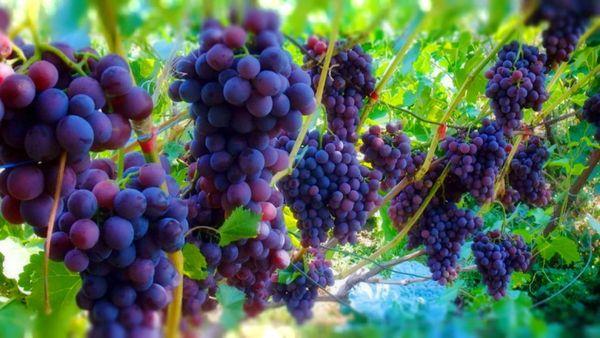
These include:
- Agat Donskoy;
- Dviet blue;
- Delight;
- Timur;
- Harold;
- Rochefort;
- Marquette;
- Helios;
- Athos;
- Dubovsky pink;
- Pleven;
- Gabena Nou;
- Taiga;
- Aligote.
These varieties are resistant not only to gray mold but also to other fungal diseases. This simplifies crop care and improves harvest quality.
Among the vulnerable and weak grape varieties, the following are noted:
- Veles;
- Century;
- Muscat;
- Chardonnay;
- Sauvignon;
- Lady fingers;
- Alyoshkin;
- Transfiguration;
- Lily of the valley.
These varieties have a pleasant flavor and are widely used in winemaking. Their immunity is not very strong, but in the modern world, growing these grape varieties is easier, as there are numerous preparations and treatments for disease control.
To obtain a decent grape harvest, you need to choose varieties and types that are zoned for the growing region.
Tips and recommendations
What should you do to avoid this problem? Follow these recommendations and tips:
- The bushes are thinned out regularly; the dense condition of certain areas disrupts the air circulation inside.
- Watering is carried out strictly according to the schedule in hot weather to prevent overwatering of the shrub's roots.
- Every 5 years the place where the grapes grow is changed.
- When the first signs of the disease are detected, treatment is carried out immediately.
- In spring, the root area is treated with copper sulfate to disinfect it.
- Top dressing and fertilization increase plant immunity.
- Harvest the crops in a timely manner to prevent the development of fungus.
- At the beginning of the season, the bushes are sprayed with antifungal preparations.
Related posts:
 How to grow grapes in the Moscow region in open ground without a greenhouse
 Description of the Julian grape variety, planting and care instructions
 The ripening time of grape vines by variety, how to speed up the process, and what to treat the plant with
 Description of the Krasotka grape variety, planting and care technology
 How to treat grapes after rain in July: medications and folk remedies
 Description of 30 grape varieties for Siberia, planting and care for beginners
 Description and characteristics of the Preobrazhenie grape variety, planting and care
 Beginner's Guide to Growing Grapes in Open Ground in Central Russia