
- Description and Features
- Vine
- Inflorescences
- Berries
- Taste
- Growing regions
- History of selection
- Main characteristics
- Drought resistance
- Frost resistance
- Productivity and fruiting
- Areas of application of fruits
- Resistance to diseases and pests
- Transportability
- Pros and cons of the variety
- How to plant correctly
- Recommendations for choosing deadlines
- Choosing a location
- Soil requirements
- Site preparation
- How to select and prepare planting material
- Planting diagram
- Care instructions
- Watering mode
- Top dressing
- Preparing for winter
- Mulching
- Prevention of diseases and pests
- Trimming
- Methods of reproduction
- Diseases and pests
- Mildew
- Gray rot
- Anthracnose
- Oidium
- Leaf roller
- Spider mite
- Harvesting and storage
The vine has long been known to man for its fruits and by-products. Thanks to selective breeding, gardeners can choose plants based on many characteristics. The Izyuminka grape has berries with remarkable flavor, color, and shape. However, in addition to these advantages, it has significant drawbacks that only an experienced winegrower can overcome.
Description and Features
An early-ripening table grape variety. Three and a half months pass from the start of the growing season until the bunches ripen.
Vine
The stem is tall and produces strong growth during the growing season. Pruning is not recommended for the first 2-3 years, as this will stimulate growth and weaken the vine.
Inflorescences
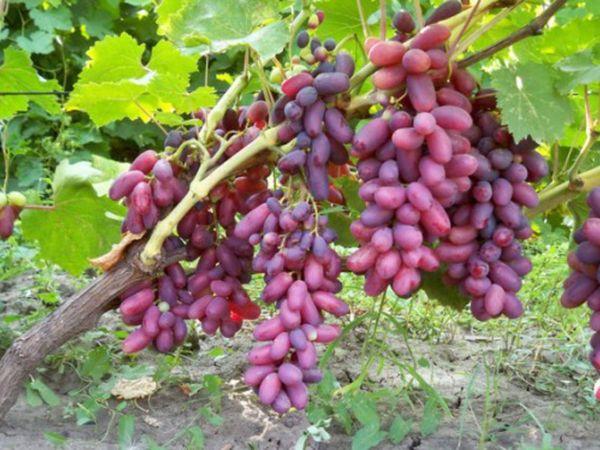
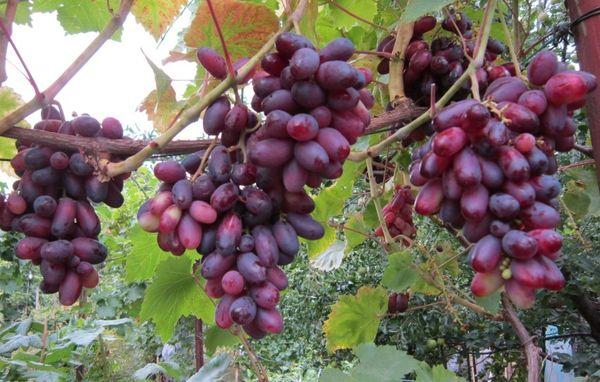
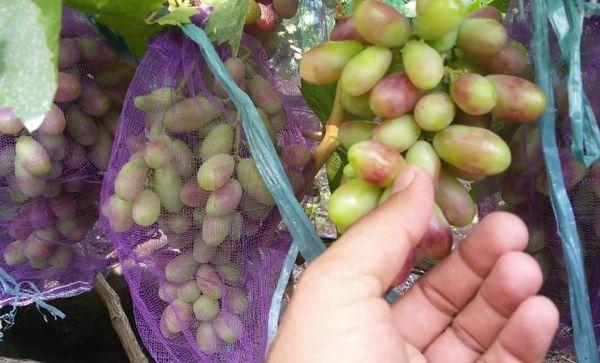
Female flowers form on the vine. An early grape variety with male characteristics is necessary for pollination. Pollinators include bees, bumblebees, and wasps. The cluster size is medium, averaging 500 grams. The grapes are loosely packed. It is recommended to limit the number of inflorescences on the vine to increase yield.
Berries
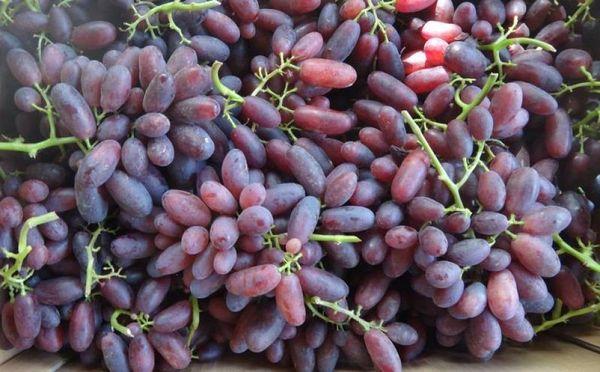
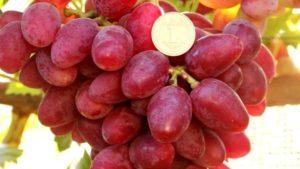
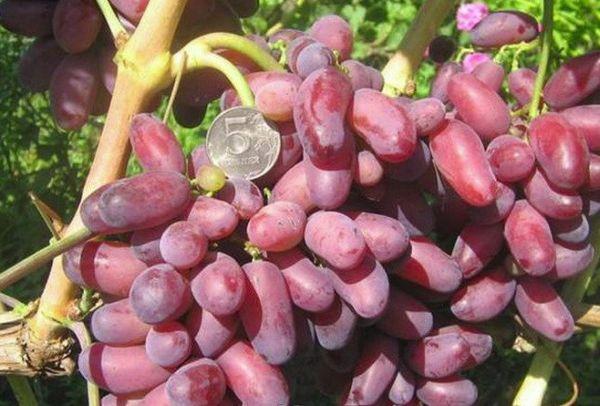
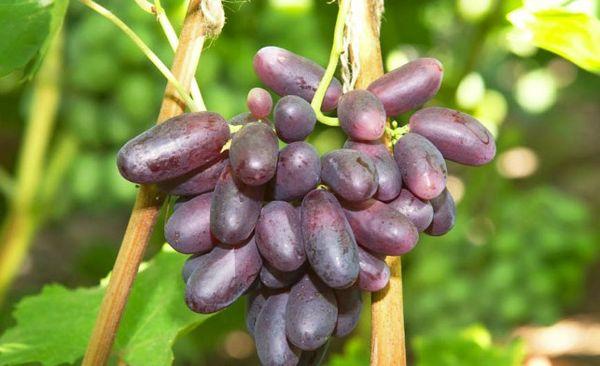
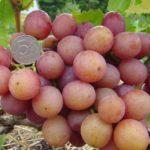
The clusters are free of small and large berries. The grapes ripen simultaneously and are finger-shaped, up to 3 centimeters in diameter, and burgundy-purple in color. The skin is thick. Each Izuminka weighs 10 grams. The variety's name derives from the ability of the ripe berries to dry on the vine, turning into raisins.
Taste
The pulp is sweet, dense, with a sugar content of up to 20%.
Growing regions
Izyuminka is a heat-loving grape variety, freezing at short-term temperature drops to -15 degrees Celsius. The variety is zoned for the Krasnodar Krai, Stavropol, Crimea, southern Ukraine, and Moldova.
History of selection
The hybrid was developed in Ukraine as a result of crossing the Chaush and Cardinal varieties.
Main characteristics
Grapes require careful and competent care to obtain good harvests.
Drought resistance
The vine does not tolerate lack of moisture well. In dry and hot weather, regular watering is required during fruit formation.
Frost resistance
During the autumn-winter period, the bush must be covered, despite the warm winters.
Productivity and fruiting
Young vines yield up to 2-3 kilograms. Beginning in the fourth or fifth year, grape yield gradually increases. With proper cultivation practices, up to 18 kilograms can be obtained per vine.
Areas of application of fruits
The berries are eaten fresh, dried into raisins, and used to make homemade wine.
Resistance to diseases and pests
The variety has weak immunity to all grape pathogens and garden pests.
Transportability
The dense skin ensures good preservation of the bunches during transportation and storage.
Pros and cons of the variety
The advantage of the Izyuminka grape is the quality of the fruit:
- attractive appearance of bunches;
- size;
- form;
- taste;
- shelf life of berries.
The main disadvantage is the difficulty of cultivation, which is expressed in:
- in high demands on soil;
- low frost resistance;
- weak immunity;
- late fruiting.
Shaping the bush by pruning leads to even greater thickening, which is taken into account in the fall.
How to plant correctly
In order for the Izyuminka grape variety to take root well and bear fruit, a number of conditions must be met.
Recommendations for choosing deadlines
The vine is planted in the spring – at the end of April, mid-May, when the soil and air warm up.
Choosing a location
Grapes require a sunny, south-facing location, sheltered from cold winds. The distance from walls should be at least a meter.
Soil requirements
The soil should be loose, nutritious, and well-drained.
Substrate composition:
- humus;
- sand;
- mixture of potassium-phosphorus fertilizers;
- fertile land.
The ratio between the components: 2:1:0.5:3.
Site preparation
The planting hole should be 60 x 60 centimeters. The bottom is lined with broken brick, sand, and a humus-fertile mixture with fertilizer. Pipe cuts for irrigation and fertilizing are dug into the edge of the hole.
How to select and prepare planting material
The following should be checked for the seedling:
- The root at the cut should be white and slightly moist.
- Under the bark the wood has a greenish color.
- The buds should not peel or fall off when pressed.
Seedlings purchased in the fall are stored at temperatures between 0 and 2 degrees Celsius in damp sand. Plants purchased in the spring are hardened off and acclimated to the sun before being planted in their permanent location.
Planting diagram
When planting multiple grapevines, dig a trench 60 centimeters deep and wide. Space the vines 2 meters apart.
Care instructions
The Izyuminka grape will delight the gardener with a harvest if he follows the agrotechnical requirements for growing the vines.
Watering mode
During dry periods, watering is required through wells and pipes from the moment of flowering until harvest: 1-2 times a week.
Top dressing
The raisin requires regular feeding:
- every three years add a bucket of manure per square meter;
- in spring – nitrogen fertilizers;
- in summer – phosphorus-potassium.
Without soil support, grapes will not increase their yield.
Preparing for winter
To protect the Izyuminka grape vine from the cold, it is covered with agrotextile, and the roots with a 30-centimeter layer of mulch.
Mulching
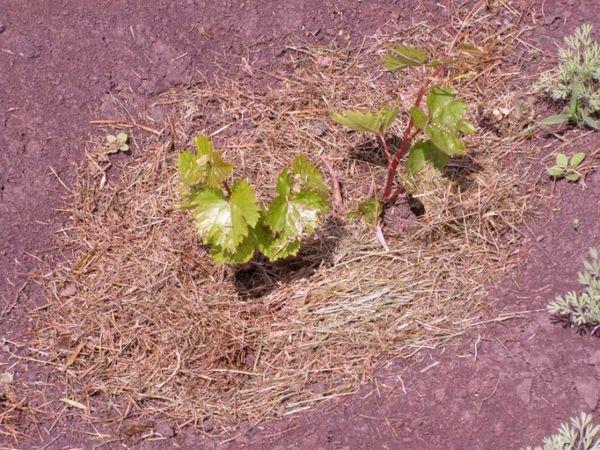
Covering grape roots with peat, humus, and straw protects them from overheating and reduces evaporation, which helps fight pathogenic infections.
Prevention of diseases and pests
During the growing season, 3 sprayings with Bordeaux mixture are carried out.
Trimming
The vines are pruned in spring and autumn, leaving 5-7 buds.
Take a look Also
Methods of reproduction
Grapevines are propagated using grafted or self-rooted seedlings. Grafted plants have advantages in cold resistance, pest resistance, and yield.
Diseases and pests
The Izyuminka grape is susceptible to fungal infections, leaf roller caterpillars and spider mites.
Mildew
A type of downy mildew. Its development requires temperatures between 8°C and 30°C (46°F) and high humidity.
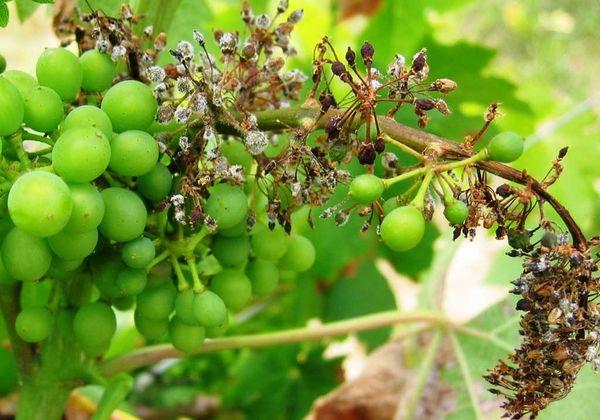
In damp weather, a white coating eventually appears on the foliage, and then on green shoots, buds, and fruits. The fungus does not penetrate the roots. The raisin does not die, but it weakens. The development of shoots and leaves is inhibited, and they fall prematurely. In winter, these plants freeze and die.
A section of the Izyuminka leaf blade becomes lighter, with small spots appearing, turning yellow and merging into one. Brown spots then appear on the shoots. The inflorescences and small ovaries darken, become covered with a white coating, and fall off. The ripening fruits dry up and fall off. Yield losses reach 50-100%.
Young vines and mature Izyuminka vines that are overfed with nitrogen fertilizers and lack potassium fertilizers, as well as dense plantings, are most susceptible to mildew.
Gray rot
A fungal infection that develops on fallen leaves and berries. Brown spots appear on the leaves of the Izuminka, which then lead to further infection. The leaf dries up and falls off. On vines, the fungus causes necrosis of the vine, resulting in a brownish tint with gray fuzz.
Grape blossoms affected by gray mold fail to develop, darken, and fall off. Purple spots appear on the Izyuminka berries. The fruits then wilt, dry out, and fall off.
Anthracnose
Gardeners have given names to the fungal disease by which it can be identified on Izyuminka grapes:
- grape pox;
- spotted smallpox;
- bird's eye.
The initial sign is the appearance of black spots on the leaves, which develop into brown spots with necrotic margins. The leaf turns a dirty pink, shriveled, and falls off.
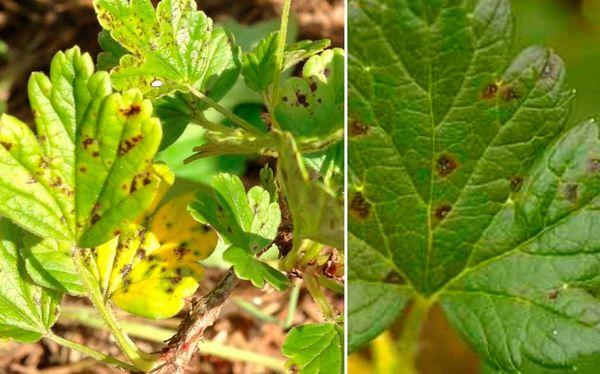
Then, similar spots become visible on this year's Izyuminka shoots. The brown spots grow into the cadmium and expand, forming a brown tumor. At these spots, the grape stem cracks and breaks off or rots.
The fruits have a characteristic feature: brown circles with a purple core, sunken into the flesh. They then crack and fall off. Anthracnose causes grape yield losses of over four-fifths. Sugar content decreases by a factor of five. The weight of Izyuminka bunches and berries decreases by a factor of two to three.
Temperatures above 25 degrees Celsius and humidity above 80% trigger the pathogen's activation. Outbreaks of the disease in grapes occur in the spring and fall.
Other reasons for the development of the disease:
- mechanical damage to the bark due to improper pruning, from hail;
- lack of potassium and phosphorus in the soil;
- soil salinity or acidification.
Parts of the grapes infected with anthracnose are dug up and burned.
Oidium
As with all fungal pathogens, favorable weather conditions for powdery mildew development are warm (20–25°C) and humid. An ash-like coating appears on the Izuminka leaves. Further infection spreads from the leaves to the grapes and stems. The skin of the berries cracks and then heals, forming a deep scar.
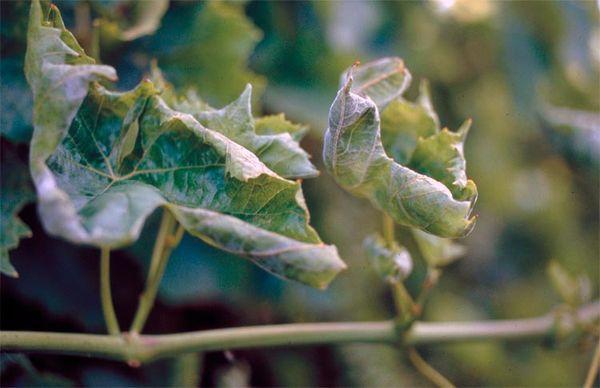
Izuminka fruits become sour, stunt, and dry out. Spoiled berries should not be eaten or processed due to a strong moldy taste.
Leaf roller
The pest attacks bunches and fruits of grapes.
Webbing on shoots and bunches is evidence of the appearance of a leaf roller on grapes.
- two-year-old;
- grape;
- grape.
In spring, butterflies lay eggs in grape buds and buds, from which caterpillars soon emerge. One larva destroys 60 Izuminka buds per day. In early June, the caterpillars pupate. Ten days later, the second generation of butterflies begins to fly, laying eggs in the ripening grape clusters. The caterpillars feed on the berries, which change color, shrivel, and dry out.
Spider mite
Insects no larger than 1 millimeter in size attack grape leaves, sucking out plant juice.
Signs of infection of Izuminka:
- tubercles along the veins;
- small reddish-brown spots;
- web on the inside of the leaf;
- rolling into a tube;
- drying out;
- falling.
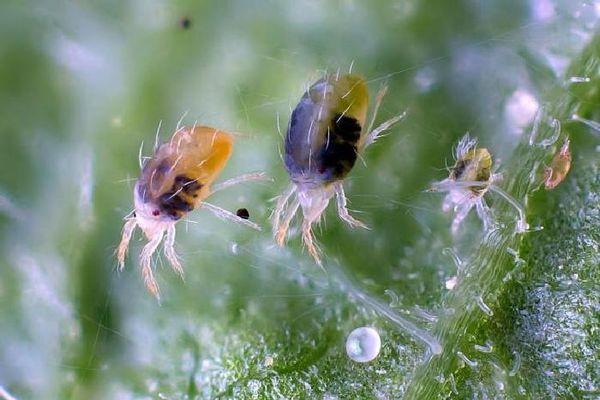
The attack of the pest affects the grapes as a whole:
- shoot growth slows down;
- the bunches become smaller;
- drying of stems.
The mite overwinters in the bark of vines and on weeds, becoming active at temperatures of 8°C (46°F). The main routes of infection for grapes are grafting and planting material from Izyuminka grapes.
Harvesting and storage
Grapes are harvested after the morning dew, in dry, sunny weather, using pruning shears. The bunch is held from below and cut off at the shoot.
Storage methods for Izuminka grapes: Freeze in a refrigerator or in a basement. The freezing temperature is 24 degrees Celsius (75 degrees Fahrenheit). The grapes will keep until spring. Basement storage requirements: humidity no higher than 55%, temperature from 0 to 8 degrees Celsius (32 to 44 degrees Fahrenheit), with fresh air.
In the cellar, ripe, undamaged bunches of Izyuminka are stored in a single layer on shelves in boxes lined with dry aspen sawdust. The grapes have a shelf life of up to three months.
Related posts:
 How to grow grapes in the Moscow region in open ground without a greenhouse
 Description of the Julian grape variety, planting and care instructions
 Description of the Krasotka grape variety, planting and care technology
 The ripening time of grape vines by variety, how to speed up the process, and what to treat the plant with
 Description of 30 grape varieties for Siberia, planting and care for beginners
 Description and characteristics of the Laura grape variety, planting and care
 Description and characteristics of the Preobrazhenie grape variety, planting and care
 Description and characteristics of the Livia grape variety, cultivation and propagation