
- History of selection
- Description and characteristics of the variety
- Main characteristics
- Appearance
- Clusters
- Berries
- Frost resistance
- Productivity
- Transportability
- Growing regions
- Disease resistance
- Pros and cons
- How to plant correctly
- Site selection and preparation
- How to choose and prepare a seedling
- Recommendations for choosing deadlines
- Planting diagram
- Care instructions
- Watering
- Mulching
- Top dressing
- Formation
- Preventive spraying
- Protection from wasps and birds
- Shelter for the winter
- Weeding and loosening
- Diseases and pests
- Powdery mildew
- Mildew
- Harvesting and storage
- Applications of berries
- Tips and advice from experienced gardeners
The Yubiley Novocherkasska hybrid grape variety was first developed in 2016. Thanks to its unique varietal characteristics, this new hybrid quickly gained popularity among gardeners, farmers, and winegrowers. Yubiley Novocherkasska is characterized by increased cold tolerance, making it suitable for cultivation in regions with moderate and cold climates.
History of selection
The creator of this new grape hybrid is renowned folk breeder V.N. Kraynov, who has given the world numerous unique berry varieties. The amateur breeder began developing the variety in 2005, the anniversary year of his hometown of Novocherkassk, by crossing the Talisman grape with the well-known Kishmish Luchisty grape.
But it was only in 2016 that Novocherkassk grapes were included in the state register of fruit crops and recommended for cultivation in regions with southern and temperate climates.
Description and characteristics of the variety
The Yubiley Novocherkasska grape variety inherits the best properties and characteristics from its parent varieties. This hybrid grape easily tolerates temperatures down to -23°C (-23°F), is resistant to diseases and pests, and the berries ripen as early as 110 days into the growing season, making it suitable for growing in a wide range of climates.
Main characteristics
In the southern regions, berries ripen at the beginning of August; in the middle zone, the fruits reach maturity in the first half of September.
Appearance
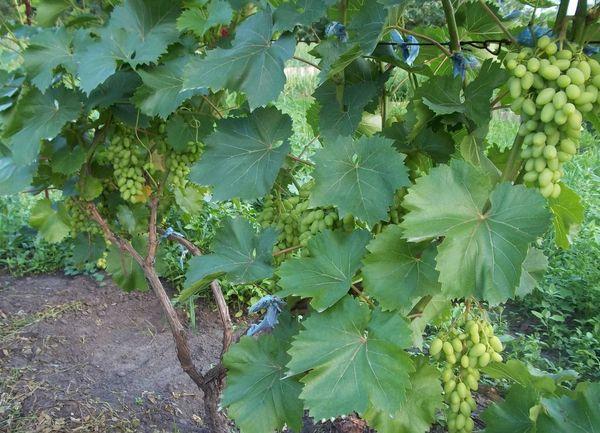
The grapevines are vigorous, with massive, quickly maturing fruit vines that require timely pruning. The leaves are dark green, typical of fruit trees.
During the flowering period, racemose inflorescences with small flowers grow on the shoots, in which berry ovaries subsequently form.
 Important! Once the bushes reach three years of age, they begin to gain their full strength, and their yield increases significantly.
Clusters
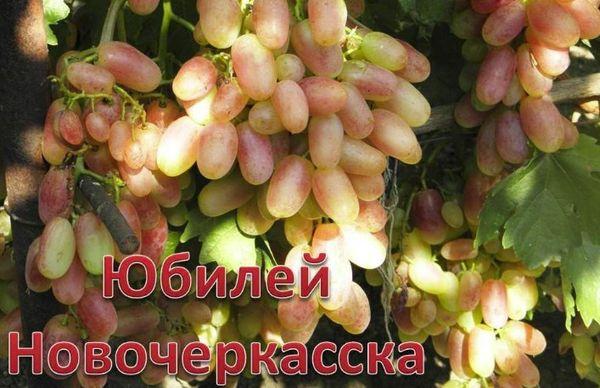
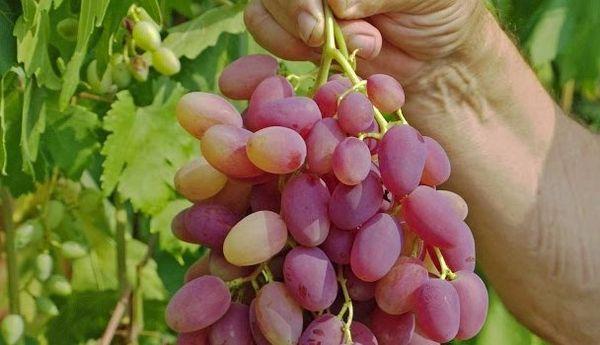
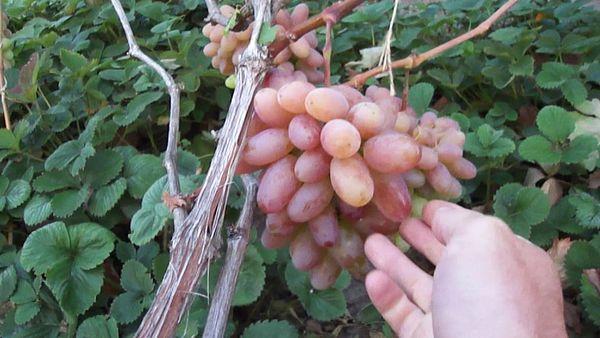
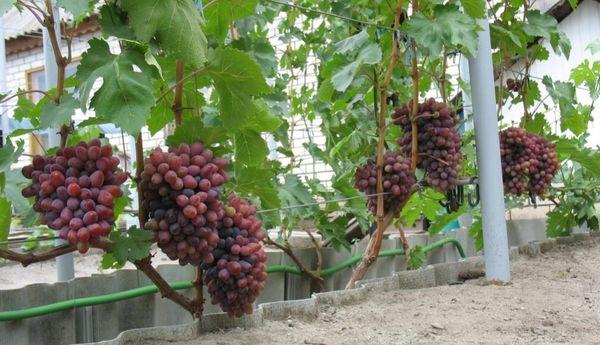
Ripe bunches are large, cylindrical or conical, weighing from 700 grams to 2.5 kilograms. The medium density of the bunches promotes uniform ripening of the berries.
Berries
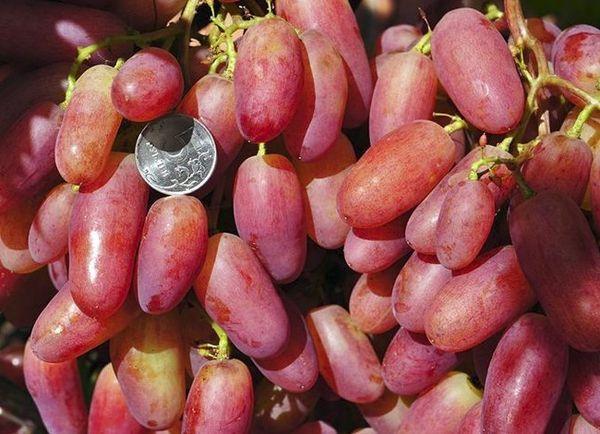
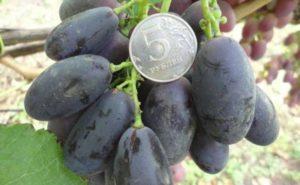
Ripe grapes are large, weighing from 15 to 20 grams, and have a shape resembling a strongly elongated oval.
The berries reach 5 centimeters in length and up to 2.5 centimeters in width. The dense, crisp flesh with a sweet flavor is covered by a thin but firm skin with a protective coating. When ripe, the berries acquire a beautiful pink-amber hue.
Unripe fruits contain a high concentration of acids, but as they ripen, the berries gain sweetness.
Note: Due to the high juice content of its fruit, Yubiley Novocherkasska grapes are often used to make wines and homemade liqueurs.
Frost resistance
In the mild southern climate, the Yubiley Novocherkasska grape easily survives winters as long as temperatures don't drop below -25°C. In temperate and northern latitudes, the vines require additional insulation.
Take a look Also
Productivity
This hybrid grape variety is capable of complete self-pollination, so other grape varieties are not planted nearby. This variety is characterized by high yields. Under favorable weather conditions and proper care, a single vine can yield up to 20 kilograms of ripe bunches.
Important! Once ripe, the fruits can remain on the bush for a long time without falling or cracking.
Transportability
Thanks to their dense skin, the berries can be stored for a long time without losing their taste or appearance, which facilitates the transportation of the harvest over long distances.
Growing regions
The Novocherkassk Jubilee grape variety is cultivated throughout almost the entire territory of the Russian Federation, as well as in Belarus, Moldova, Abkhazia, Georgia, Ukraine, and Armenia.
Disease resistance
From its parent varieties, the fruit crop has acquired strong immunity to many fungal diseases. However, despite its high resistance to fungi, grape vines require annual preventative treatment.
Pros and cons
Before growing a hybrid grape variety, it is necessary to carefully study all the possible advantages and disadvantages of the variety.
Pros:
- The berries ripen in the first half of August.
- Annual fruiting.
- Excellent taste and commercial appearance of berries.
- Abundant harvest.
- Rapid adaptation and survival of seedlings.
- Resistance to frost and temperature changes.
- Large sizes of grape bunches and berries.
- Easy to propagate by any vegetative method.
- The variety has gained resistance to many diseases.
Important! Fruit shoots are prone to overload and therefore require careful monitoring.
Cons:
- During the growing season, the grape bush produces a large number of shoots, which must be constantly dealt with.
- Overloading fruit shoots negatively impacts the taste and ripening time of berries.
- Ripe bunches of grapes are often attacked by birds and wasps.
In northern regions, grape bushes require additional insulation before winter dormancy.
How to plant correctly
The main requirements for growing the Novocherkassk Yubiley grape variety are choosing the right location for planting seedlings and soil composition.
Site selection and preparation
Well-drained sites on slopes and hills, protected from gusty winds and drafts, are suitable for planting vineyards. Groundwater levels should be at least 2-2.5 meters above the soil surface.
Soil preparation:
- The area is dug deeply, cleared of weeds and debris, and thoroughly loosened.
- The soil is mixed with organic and mineral substances.
- 3-4 weeks before planting, dig holes 60-70 centimeters deep and wide.
- A drainage layer of fine gravel is placed at the bottom of the hole, fertile soil is added and it is thoroughly watered.
- A support peg is driven into the planting hole, and support structures in the form of trellises or arches are erected on the site.
Important! Add lime or wood ash to soil with high acidity.
How to choose and prepare a seedling
Planting material is purchased from specialized, proven nurseries, following the following rules:
- Plants that are 1-2 years old take root and establish themselves best.
- The seedling is inspected for damage, rot or fungal growth.
- The roots are well moistened, without broken or damaged shoots.
- The main trunk of the seedling must have fruit buds or green leaves.
A day before planting in open ground, the seedlings are dipped in a solution of clay and water, after which the roots are treated with a solution of manganese and trimmed.
Recommendations for choosing deadlines
In regions with a southern, continental climate, it is recommended to plant grape bushes in open ground in the fall, 4-6 weeks before the first frost.
In the Central Russian region with its moderate and cold climate, fruit trees are planted in the spring. This allows the bushes to take root and establish themselves before the onset of cold weather.
Planting diagram
A warm, windless day is chosen for planting seedlings.
Planting order:
- A seedling is placed into the prepared planting hole.
- The roots are carefully distributed in the hole and covered with soil, trying not to leave voids between the soil and the rhizome.
- The soil under the bush is compacted and watered generously.
- The seedling is tied to a support peg.
Tip! To prevent the soil from drying out too quickly and weed growth, mulch the tree trunk area with dry grass or humus.
Care instructions
Caring for grape bushes involves timely watering, fertilizing and pruning.
Watering
The Yubiley Novocherkasska grapevine is undemanding when it comes to watering. During the growing season, the bushes are watered only 3-4 times. Irrigation is carried out in early spring, before the fruit tree enters the flowering phase and during fruit formation. The final watering is done before wintering, with up to 70 liters of water applied under each bush.
Young seedlings are more demanding in terms of moisture, so in the first year of growth, watering is carried out as the soil dries out.
Mulching
Work on weeding, loosening and mulching the tree trunk circle is timed to coincide with watering.
The soil under the bush is thoroughly loosened, weeds and roots are removed, and a layer of mulch made of peat and wet sawdust is laid on top.
Top dressing
If the seedlings are planted correctly, fertilizing the grapes begins in the 3rd year of growth in open ground:
- At the beginning of spring, nitrogen-containing organic matter is added to the soil.
- During the flowering and fruit formation period, bushes require mineral fertilizers containing phosphorus and potassium.
- In the autumn, grapes are fed with organic matter and a balanced mineral complex.
Important! Before winter dormancy, mulch the tree trunk area with a thick layer of humus or compost.
Formation
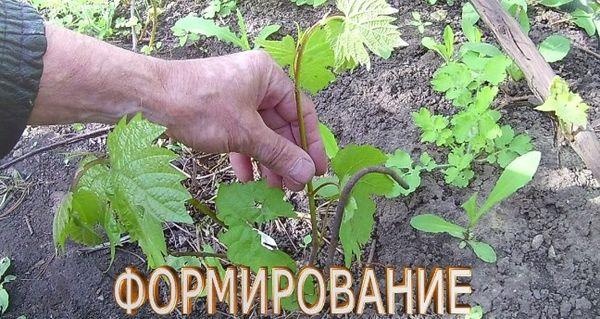
Yubiley Novocherkasska grape bushes tend to grow large and therefore require careful and timely pruning. Pruning also helps shape the plants and remove weak, frozen, deformed, and damaged branches and shoots.
Grape vines produce numerous side shoots on fruiting canes, which need to be monitored and pruned. Excess flower clusters are also removed from the vines, leaving 1-2 clusters per fruiting cane.
In the southern regions, at the end of September, a second grape harvest ripens on the side shoots, although the bunches and berries are no longer of large shape and size.
Preventive spraying
For prevention, grape bushes are sprayed annually with complex chemical and biological protection agents against diseases and pests.
The work is carried out in early spring, before the onset of the growing season, and after the berry harvest.
Protection from wasps and birds
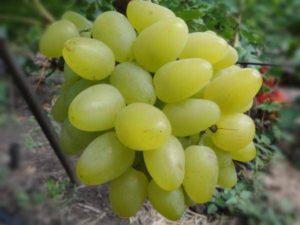
Large, juicy berries are a delicacy for birds and wasps, which feed on the sap. Garden centers recommend purchasing special grapevine nets to protect the berries from birds and insects.
Shelter for the winter
In southern latitudes, the Novocherkasska Yubiley grape variety doesn't require additional insulation. The bushes are watered generously, and the area around the trunk is mulched and covered with spruce branches.
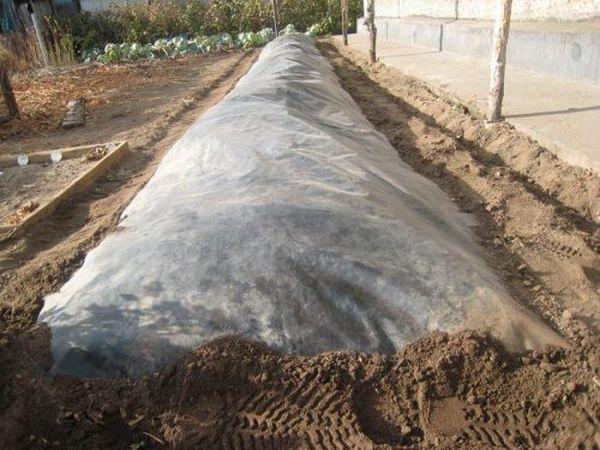
In temperate climates, grape shoots are removed from their supports, placed on dry leaves, and covered with a special fiber or burlap.
In northern regions, grape shoots are covered with a special material and sprinkled with earth and snow on top.
Weeding and loosening
Weeds can cause irreparable damage to grape vines, spreading a variety of pests, fungi, and viruses. Therefore, weeding is carried out as needed.
Through loose soil, plant rhizomes receive access to oxygen and useful nutrients.
Diseases and pests
Often, improper care and unfavorable weather conditions increase the risk of disease and pest attacks. Most commonly, grape vines are affected by various types of powdery mildew.
Powdery mildew
The fungal infection quickly spreads throughout the entire bush, appearing as a grayish or whitish coating on the above-ground parts of the fruit. The berries begin to rot, producing an unpleasant odor. Fungicides and copper-based products are used for prevention and treatment.
Mildew
The disease is caused by a fungus and affects all green foliage of the plant, as well as fruits and shoots. Copper-based products and fungicides are used for treatment.
Harvesting and storage
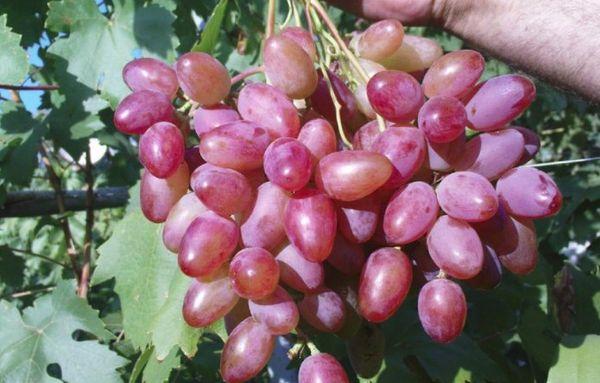
Harvest depends on the climate and weather conditions in the growing region. In temperate climates, grapes are harvested in early to mid-September. Ripe bunches can retain their flavor and appearance for up to two weeks when refrigerated. In specialized storage chambers, grapes are stored for two to three months.
Applications of berries
The Novocherkassk Jubilee grape is a table and dessert variety of fruit crops, recommended for fresh consumption.
Also, due to the large amount of juice in the berries, the fruits are used in the production of wine products, juices, nectars and compotes.
Berries are often used in cooking, added to desserts, dairy products, and baked goods. Experienced home cooks make homemade liqueurs and cordials from grapes.
Tips and advice from experienced gardeners
Experienced gardeners and farmers recommend paying special attention to the constant growth of side shoots and overloading of fruit shoots.
Otherwise, the Novocherkassk Yubiley grape variety is unpretentious, making it suitable for growing by novice gardeners and vegetable growers.
Related posts:
 Description of 30 grape varieties for Siberia, planting and care for beginners
 Beginner's Guide to Growing Grapes in Open Ground in Central Russia
 Description of 30 varieties and types of Muscat grapes, planting, cultivation and care
 How to grow grapes in the Moscow region in open ground without a greenhouse
 Description of the Julian grape variety, planting and care instructions
 The ripening time of grape vines by variety, how to speed up the process, and what to treat the plant with
 Description of the Krasotka grape variety, planting and care technology
 Description and characteristics of the Laura grape variety, planting and care