
- Description and Features
- History of selection
- Main characteristics
- Description of the bush
- Description of bunches and berries
- Productivity
- Transportability
- Frost and drought resistance
- Disease resistance
- Taste qualities
- Applications of berries
- Pros and cons of the variety
- How to plant correctly
- Recommendations for choosing deadlines
- How to choose and prepare a site
- How to select and prepare planting material
- Planting diagram
- Care instructions
- Watering mode
- Top dressing
- Trimming
- Mulching
- Preventive spraying
- Protection from birds and pests
- Preparing for winter
- Methods of reproduction
- Diseases and pests
- Codling moth
- Leaf roller
- Felt itch mite
- Harvesting and storage
- Tips from experienced gardeners
Not every hybrid grape variety boasts exclusively positive characteristics. But the Zarya Nesvetaya grape, developed by an amateur breeder, is a unique fruit variety whose advantages completely outweigh its minor drawbacks. Large, burgundy clusters with delicious, sweet berries quickly gained popularity among farmers, winegrowers, and gardeners.
Description and Features
The Zarya Nesvetaya grape variety easily adapts to a variety of climates. It is recommended for cultivation in regions with southern, continental climates. However, according to gardeners, with proper care, this hybrid grape variety also thrives in northern latitudes.
From the beginning of the growing season until the berries are fully ripened, only 100-110 days are needed, so the grapes have time to ripen even in latitudes with cool, short summers.
Another feature of the variety is its high resistance to fungal diseases, which the fruit crop is not affected by due to its excellent natural immunity.
History of selection
The author of this variety is the well-known folk breeder from the Rostov region, E. G. Pavlovsky, who has developed many unique hybrid forms of fruit crops, all independently.
To create the new hybrid, the breeder used the world-famous Talisman grape of domestic origin, as well as the equally beloved Cardinal variety.
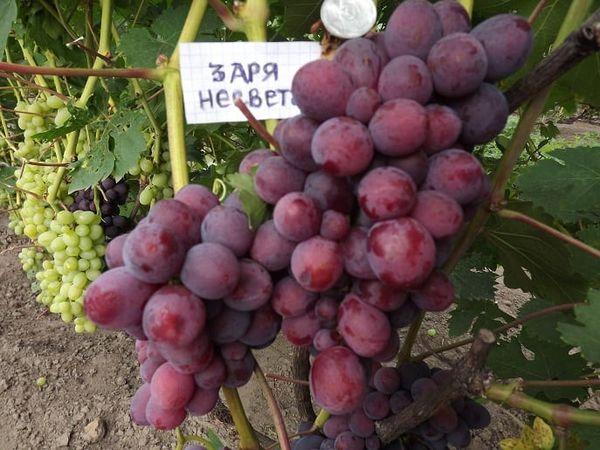
As a result of these efforts, the Zarya Nesvetaya grape variety, resistant to diseases, pests, and weather conditions, was born. The scarlet color of the berries adds to the appeal of this new hybrid fruit variety.
Main characteristics
The new hybrid form of the berry crop received only the best properties and characteristics from the parent pair.
Description of the bush
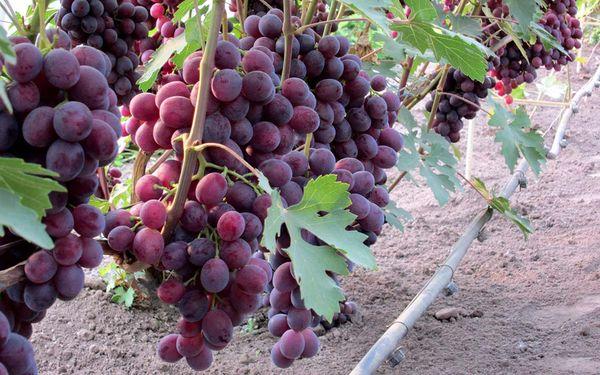
The grape bushes are tall and vigorous, with rapidly growing and ripening fruit shoots of a yellowish-brown hue.
During the growing season, the grape vine ripens by more than 80%.
The leaf blades are rounded with five dissected lobes. The leaf surface is slightly corrugated, hairless, and rich green. Seedlings have leaf blades with a slight bronze tint.
Important! During flowering, the grapevine produces racemes of male and female flowers, allowing the hybrid grape variety to self-pollinate.
Description of bunches and berries
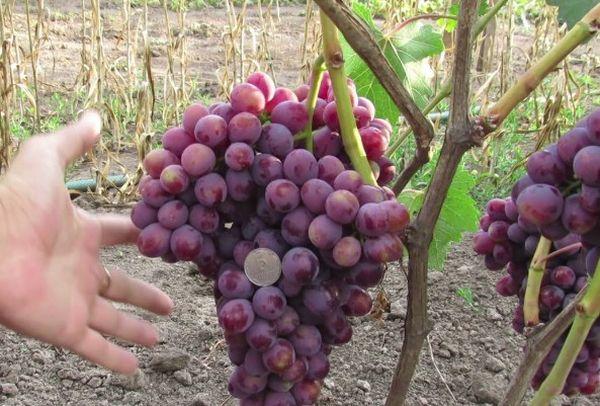
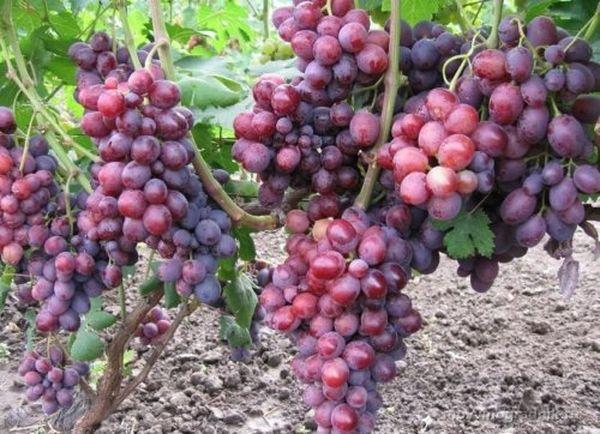
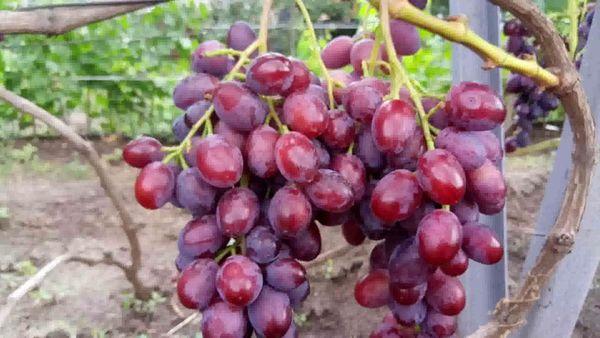
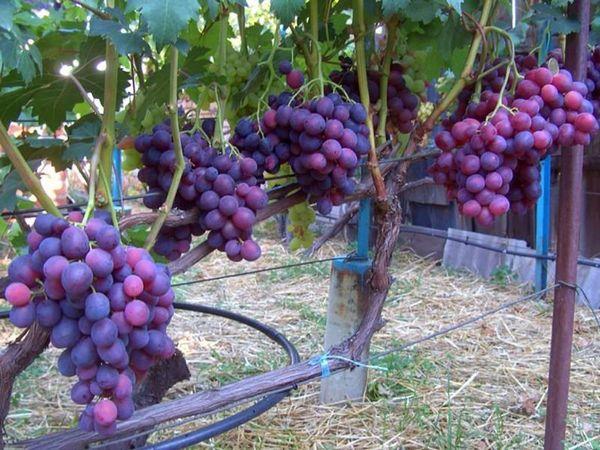
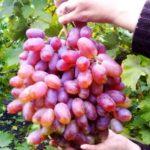
Ripe bunches are large, averaging 700 to 1,000 grams in weight. The grape clusters are conical or cylindrical in shape, with moderate berry density. The berries are also large, averaging 10 to 15 grams in weight, and are evenly distributed within the bunch, promoting simultaneous ripening.
Productivity
The variety's yield is determined by proper care and environmental conditions. Under favorable weather conditions, a single plant produces 25 to 30 kilograms of ripe, beautiful grape clusters.
Important! During prolonged heat and drought, grapes bake in the sun, losing their marketable appearance and flavor.
Transportability
Thanks to their dense skin and pulp, the berries are resistant to liquefaction. Ripe grapes store well and retain their appearance and flavor even during long-distance transportation.
Frost and drought resistance
The Zarya Nesvetaya grape variety adapts easily to temperate climates. Plants require no additional insulation in winter temperatures down to -23°C (-23°F). If temperatures drop below that level, the vines are insulated.
The variety tolerates high humidity well and is unaffected by heavy rainfall. However, prolonged heat and drought have a negative impact on the fruit crop.
Disease resistance
Due to its tolerance of humid climates, the hybrid variety is virtually immune to fungal and viral diseases. However, for prevention, the grape vines are treated annually with special pest and disease control products.
Taste qualities
Zarya Nesvetaya grapes have a high sugar content, up to 20 grams per 100 milliliters of juice, and a moderate acid content, up to 6 grams, which allows them to be classified as a universal dessert variety.
The pulp of the berries is juicy, crispy, with a pronounced muscat flavor and aroma.
Fact! Grapes contain a large amount of beneficial acids and antioxidants that help protect the body from various tumors, cancer, and negative environmental influences.
Applications of berries
Due to the variety's universal purpose, the berries are consumed both fresh and processed.
The fruits are used to make juices, nectars, preserves, marmalades, and jellies. The berries are added to baked goods and desserts, dried, canned, and frozen.
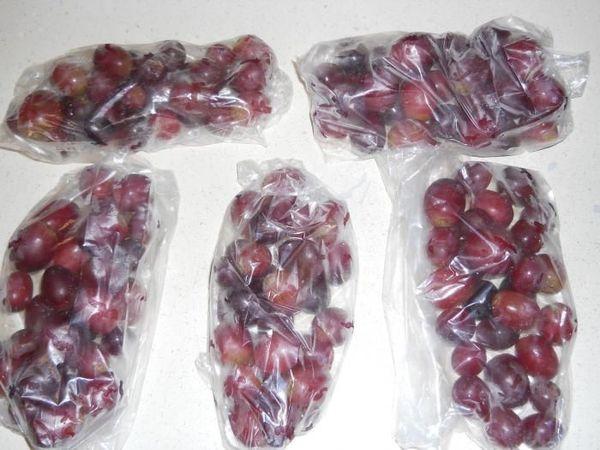
Experienced housewives make homemade wines, liqueurs, and delicious cordials from the Zarya Nesvetaya grape variety.
And the essential oils contained in the berry seeds have found application in medicine and cosmetology.
Pros and cons of the variety
Like any fruit crop, the hybrid form of grapes has both advantages and minor disadvantages.
Advantages:
- Due to rapid ripening, the harvest is collected already at the end of July.
- The variety is distinguished by excellent fruiting and yield indicators.
- The bushes easily adapt to areas with high humidity and harsh winters.
- The parent pair has endowed the Zarya Nesvetaya grape variety with excellent natural immunity to diseases and pests.
- Ripe berries can be stored for a long time and easily withstand long-distance transportation.
In addition to excellent taste and attractive presentation, this fruit crop is easy to care for and grow.
Flaws:
- Grape vines respond negatively to prolonged periods of heat and drought.
- Due to the weak stalk, ripe berries often fall off.
- The hybrid form is prone to overloading and requires careful control of fruit shoots.
Note: Disadvantages of this variety include the plant's intolerance to soil with high acidity.
How to plant correctly
Rules for planting grapes The Zarya Nesvetaya variety involves choosing a location, preparing the soil, and purchasing high-quality planting material.
Recommendations for choosing deadlines
It is recommended to plant seedlings both in the fall, 5-7 weeks before the first frost, and in the spring, before the onset of the growing season.
How to choose and prepare a site
For planting grape bushes, choose flat plots of land protected from gusty winds.
This grape variety doesn't like constant sunlight and thrives in shaded areas. It prefers loose, chernozem soil with low acidity. Lime is essential.
Soil preparation:
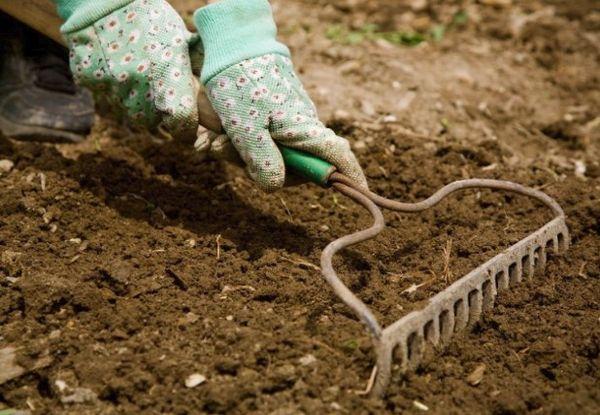
- The selected area is dug to a depth of 30-40 centimeters, while simultaneously removing debris and weeds.
- The necessary organic matter and minerals are added to the soil.
- 4-6 weeks before planting, dig holes 50-60 centimeters deep.
- When planting grapes, the large size of the bushes is taken into account, so the distance between plantings is left at least 1.5-2 meters, and the distance between rows is up to 3 meters.
- A layer of drainage and prepared fertile soil mixture is poured into the planting hole and thoroughly watered.
Tip! To help seedlings root and establish themselves, drive wooden or metal stakes into the holes. For larger bushes, build special support structures such as tall arches or trellises.
How to select and prepare planting material
When purchasing planting material, pay special attention to the appearance of the seedling roots. The rhizomes are well developed, with numerous branches, and are free of damage, bumps, and nodules. The stem of the seedling is smooth, shiny, and has buds or leaves.
A day before transferring to the site, the plants are soaked in a solution of water and clay, and the roots are treated with an antibacterial agent.
Planting diagram
On the day of planting, the rhizomes of the seedlings are trimmed, leaving only the longest and most developed branches.
Planting pattern:
- The plant is placed in the center of the planting hole.
- The rhizomes are carefully laid out in the hole and sprinkled with fertile soil.
- The soil under the plant is compacted and abundantly moistened.
- The seedling is tied to a support.
- The soil under the planted bush is mulched with a layer of compost or straw.
Important! There should be no gaps between the roots and the soil, which could increase the risk of pathogenic fungi, bacteria, and plant-harmful insects.
Care instructions
The growth, development and fruiting of grapes depend on timely and correct agricultural technology.
Watering mode
The Zarya Nesvetaya grape variety is a moisture-resistant plant. Prolonged rainfall does not harm the vines, but excessive moisture causes rhizome rot.
However, during drought, fruit crops require additional irrigation procedures.
Top dressing
Berry bushes are fed alternately with mineral fertilizers and organic matter. The plant especially needs phosphorus and potassium fertilizers.
In total, up to 4 additional feedings are carried out during the growing season.
Trimming
The Zarya Nesvetaya grape variety is easy to prune. Annual sanitary pruning is performed, and the load on the fruiting shoots is regulated by shortening them by 5-7 buds.
Mulching
Mulching the tree trunk circle is combined with watering, loosening the soil and removing weeds.
Humus, compost, dry grass or peat mixed with fine wood sawdust are used as mulch.
Preventive spraying
In early spring, the vineyard is subjected to preventative treatment with chemical and biological agents to protect against insects and diseases.
Protection from birds and pests
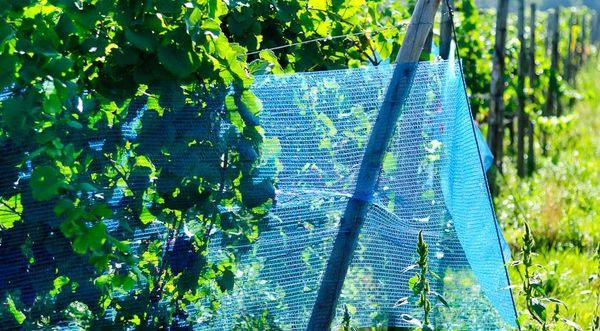
Because of the thick skin covering grapes, wasps pose no threat to the fruit. However, birds and some insects enjoy feasting on the ripening fruit. To protect against birds, shiny objects are hung on the grapevines. Grape clusters are also protected from birds by special nets.
Preventative treatment of bushes with insecticides helps against the effects of insects.
Preparing for winter
In southern and temperate climates, vineyards require no additional winter protection. In northern regions, vines are removed from their supports and covered with special fiber or soil.
Methods of reproduction
Zarya Nesvetaya grapes are propagated exclusively by vegetative methods. According to gardeners and winegrowers, the variety is propagated most quickly and easily using cuttings.
Diseases and pests
Although the hybrid form of the fruit crop has increased natural immunity to diseases and harmful insects, gardeners warn of the danger of attack by certain types of pests.
Codling moth
The small moth poses its main danger in the caterpillar stage, devouring leaves, flowers, ovaries and ripe grapes.
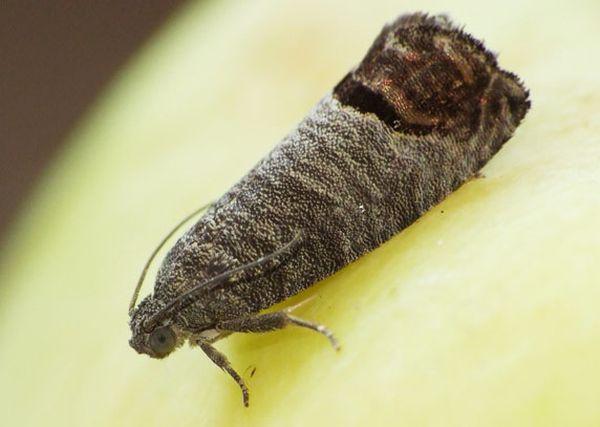
To successfully combat the pest, both chemical and biological pesticides are used. Experienced gardeners also often employ folk remedies.
Leaf roller
A small butterfly that feeds on the sap of grape leaves and fruits. The greatest danger comes from the caterpillar stage, which consumes everything in its path.
To combat leaf rollers, insecticide-based pesticides are used.
Felt itch mite
The felt mite reproduces rapidly, causing damage to vineyards. It primarily attacks the foliage, buds, and shoots. Chemical pesticides are used for treatment and prevention.
Harvesting and storage
Harvest time depends on the weather conditions in the grape-growing region. In the south, berries ripen in late July, while in northern latitudes, full ripening occurs in late August or early September.
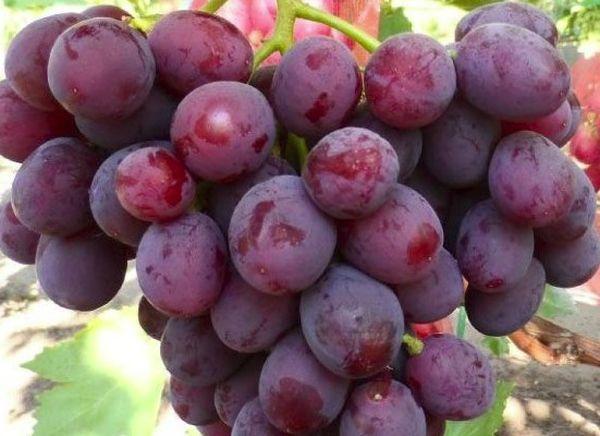
Because of the thin stalk, ripe grapes often fall off, so harvesting is not delayed.
Grapes are stored in a refrigerator or specially equipped chambers.
Tips from experienced gardeners
Gardeners and viticulturists consider the Zarya Nesvetaya grape variety to be an easy-to-grow fruit crop, accessible even to novice gardeners. However, they still recommend following a few simple rules:
- For the first few years after planting, the vine needs to be covered;
- A strong support should be installed immediately upon planting;
- In extreme heat, young plants need additional watering.
Related posts:
 Description of the Podarok Nesvetaya grape variety, planting and care
 Description of 30 grape varieties for Siberia, planting and care for beginners
 The ripening time of grape vines by variety, how to speed up the process, and what to treat the plant with
 How to grow grapes in the Moscow region in open ground without a greenhouse
 Description of 30 varieties and types of Muscat grapes, planting, cultivation and care
 Description of the Julian grape variety, planting and care instructions
 Beginner's Guide to Growing Grapes in Open Ground in Central Russia
 Description of the Krasotka grape variety, planting and care technology