
- Description and Features
- History of selection
- Properties
- Caloric content
- Benefits and harms
- Acidity
- Bush characteristics
- Vine
- Bunch
- Productivity
- Taste qualities
- Winter hardiness and drought resistance
- Disease resistance
- Applications of berries
- Growing regions
- How to plant correctly
- Recommendations for choosing deadlines
- Site selection and preparation
- How to select and prepare planting material
- Planting diagram
- Care instructions
- Watering
- Top dressing
- Mulching
- Garter
- Disease prevention
- Protection from birds and pests
- Preparing for winter
- Pruning and shaping
- How to increase SAT
- Methods of reproduction
- Grafting onto other varieties
- Grafting using woody cuttings
- Cuttings
- Advantages and disadvantages of the variety
- Harvesting and storage
- Tips and advice from experienced gardeners
Although the Academician grape variety was recently bred and registered in the State Register, it is gaining increasing popularity among connoisseurs of this incredibly delicious berry. Enviable yields, unique flavor, early ripening, and consistent fruiting are just a few of its many advantages.
Description and Features
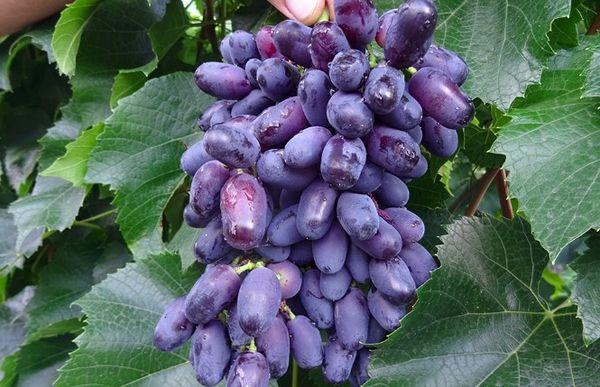
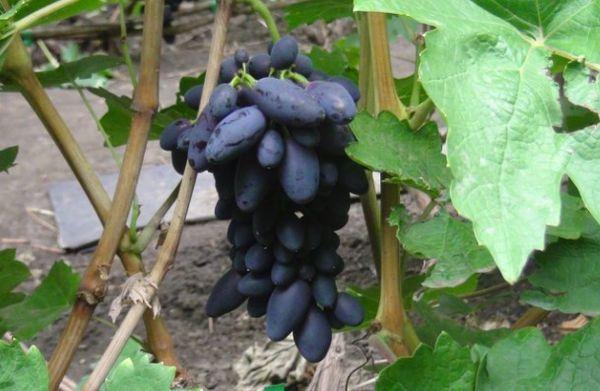
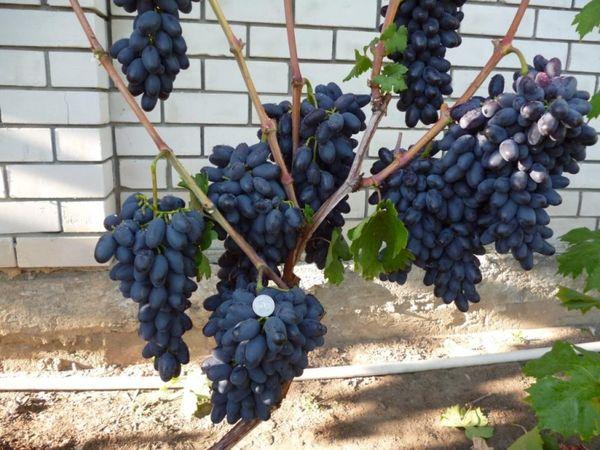
The Academician table grape is distinguished by its ability to thrive. Its dense, attractive berries are uniformly black. Once fully ripe, they do not crack or fall off, remaining on the vine for a long time.
History of selection
The grape was bred at the Magarach nursery in Crimea. The Richelieu and Podarok Zavolzhyu varieties served as the basis. The new grape variety combines all the positive qualities of its parents, has successfully passed trials, and has been included in the Register of Breeding Achievements.
The variety has changed its names several times:
- Academician in memory of Dzheneev;
- Academic;
- Academician Avidzba.
They were received in honor of its founders: the Crimean academician S. Yu. Dzheneev and his successor A. M. Avizdba.
Properties
Academician grapes contain:
- Vitamin A, good for the eyes;
- iron and iodine, which are responsible for the functioning of the thyroid gland.
Besides, grapes contain vitamins C, P, K, B, copper, sodium, silicon, phosphorus, zinc, boron, iron, which have a beneficial effect on strengthening the body and restoring health.
Caloric content
The nutritional value of the Academician variety is as follows:
- carbohydrates - 17.5 g;
- fats - 0.2 g;
- proteins - 0.5 g.
The energy value of berries is 70 kcal.
Benefits and harms
The fiber, minerals, and vitamins found in grapes provide them with beneficial properties and can be used to prevent a number of diseases. However, grapes are not recommended for diabetics.
Acidity
Academician grapes contain:
- sugars - 17.2 g/100 cm³;
- acids - 6.5 g/dm³.
The berries stand out from other varieties due to their balanced combination of sugar and acid.
Bush characteristics
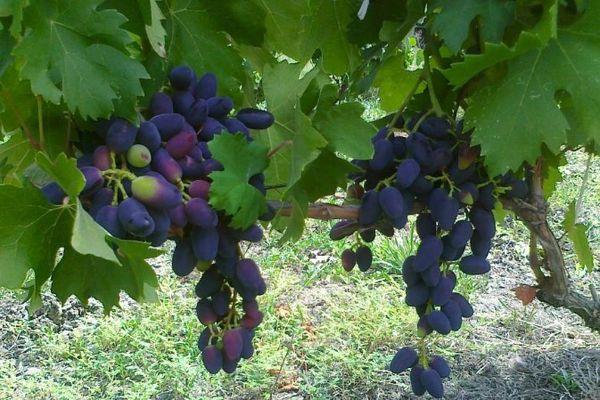
Academician Avidzba is a medium-sized shrub with deeply dissected, five-lobed leaves of medium size. The outer surface of the leaf blade is glossy, while the inner surface is characteristically lightly pubescent. The plant is bisexual and does not require additional pollinators.
Vine
The Academician grapevine is distinguished by its good ripening of annual shoots. It turns brown in autumn. Mature vines are covered with dense, light-brown bark with a slight sheen and pubescence.
Bunch
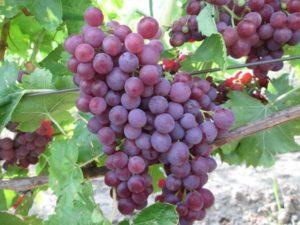
The berries are gathered in large clusters up to 40 cm long and averaging 900 grams. The most robust ones look very impressive and often reach 1200 grams. The clusters are cone-shaped, with a loose structure.
Productivity
The berries ripen in early August, 115 days after waking. The average yield for commercial cultivation of the Academician variety is 203.3 centners per hectare. At home, with proper care, a single plant can yield up to 15 kg.
Taste qualities
The variety produces large, black-blue berries weighing up to 12 g. Their unique flavor, with a slight hint of nutmeg and cherry, is rated at 9.2 points.
Winter hardiness and drought resistance
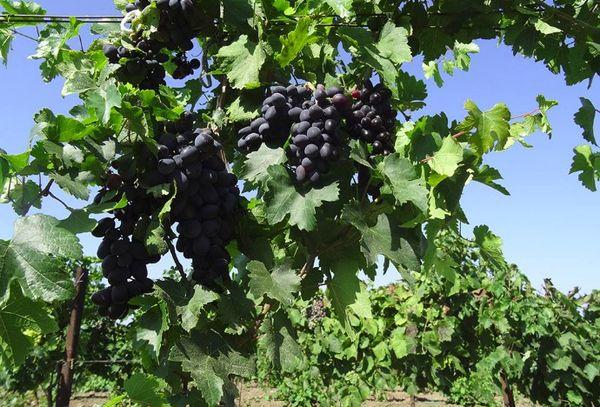
Grapes tolerate winter temperatures down to -25°C. In warmer regions, they overwinter without cover. When grown in temperate climates, they require covering with fabric or spruce branches when the first subzero temperatures arrive. This variety often suffers from heavy rains and recurrent frosts.
Disease resistance
Academician Avidzba is moderately susceptible to common diseases and is quite susceptible to pests. Preventative treatment is required for fruitful growth.
Applications of berries
The plant produces delicious table berries. The berries are primarily eaten fresh. The harvest is also successfully used for home canning and winemaking.
Growing regions
The variety is recommended for cultivation in the following regions:
- Krasnodar region;
- Stavropol Krai;
- Rostov region;
- In Crimea.
Thanks to its unique characteristics, it also bears fruit successfully in the central part of Russia.
How to plant correctly
For timely development and stable fruiting, the Academician grape requires:
- timely and balanced watering;
- loosening the soil in the root zone and removing weeds;
- application of fertilizers according to needs;
- preventive treatment against diseases and pest infestations;
- health pruning and thinning of dense crowns.
High-quality care and timely completion of all the above operations helps to form a healthy plant and obtain a stable harvest every year.
Recommendations for choosing deadlines
There are no definitive recommendations for choosing the right time to plant Academician grapes. Gardeners are still debating the advantages and disadvantages of spring and fall planting. There are numerous pros and cons to each option.
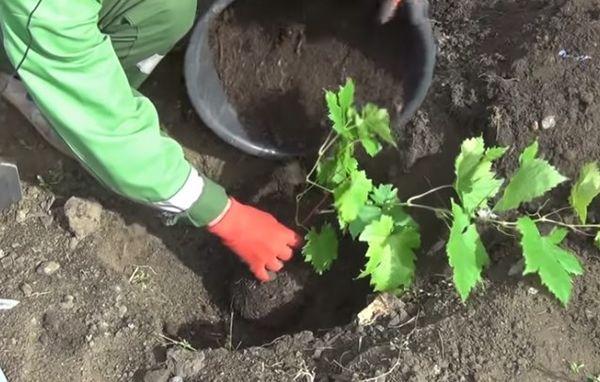
In spring, planting begins in late March or April, when buds begin to open and the soil warms to 8°C. In autumn, grapes are planted after the leaves have fallen. Don't delay planting or wait for frost. The best time for this exciting event is September and October, when temperatures range from 5°C to 15°C.
Site selection and preparation
For uniform ripening of the berries, Akademik Avidzba requires full sun. South and southwest exposures to the plot promote uniform light distribution and berry ripening.
When planting grapes in lowlands, there is a high risk of the root system freezing in winter in regions with low temperatures.

How to select and prepare planting material
When choosing a seedling, winegrowers recommend adhering to the following rules:
- buy seedlings from trusted suppliers and avoid buying at markets;
- choose a seedling with a moist root system at least 20 cm long, tightly packed in plastic film;
- the cut root should have a milky or light brown color, and when squeezed, moisture is released;
- A clean trunk confirms a strong plant.
A healthy seedling guarantees high survival rates and allows you to grow a highly productive plant.
Planting diagram
Loosely spaced seedlings promote fruitful grape growing. Leave at least two meters between plants, and about four meters between rows. This placement ensures that the vigorous Akademik Avidzba receives sufficient sun and good ventilation.
Care instructions
Academician Avidzba is unpretentious. It requires very little for vigorous growth and fruiting:
- watering;
- top dressing;
- mulching;
- garter;
- disease prevention;
- pruning.
All these measures will allow you to grow a healthy bush with a high yield.
Watering
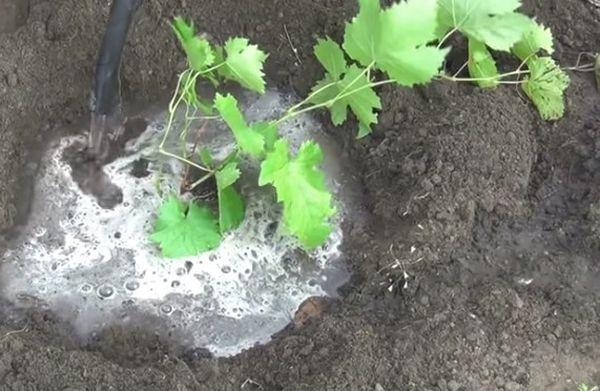
Grapes are watered based on soil and weather conditions. In hot weather, water at least once a week.
Top dressing
In early spring and before flowering, vines are fed with 10 g of ammonium nitrate, 20 g of superphosphate, and 5 g of potassium salt dissolved in a bucket of water. Before the harvest ripens, potassium salt and superphosphate are used. In the fall, potassium fertilizers are applied.
Mulching
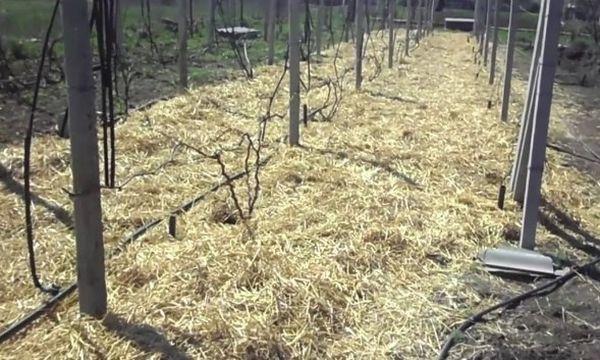
Mulching will prevent weeds and conserve moisture. Using well-rotted manure as mulch will enrich the root zone with organic fertilizer.
Garter
The cover has been removed, but the buds haven't yet opened? It's time to tie up the grapes. The vines are planted in horizontal rows and tied to trellises. As shoots grow to 50 cm, they are planted vertically.
Disease prevention
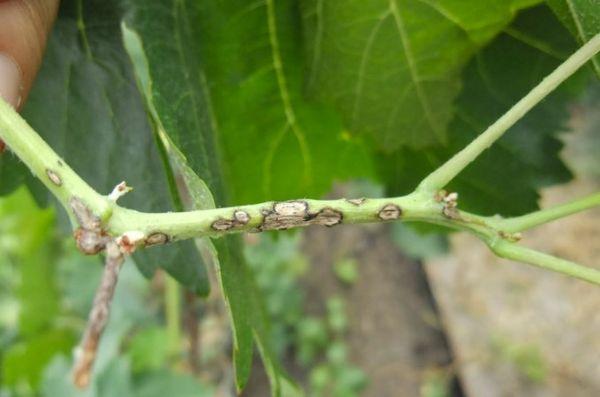
The Academician grape variety often suffers from fungal diseases, especially powdery mildew. It mercilessly damages the vine and, if left untreated, can cause the plant's death. A number of preventative measures can help boost the grape's immunity and prevent disease:
- thinning out a very dense crown;
- timely removal of fallen leaves;
- treating the bush with complex fungicides in spring and autumn.
Visiting reputable nurseries will allow you to purchase healthy seedlings and avoid diseases of young, still weak grapes.
Protection from birds and pests
The Academician grape will leave no one indifferent. It is loved by:
- grape leaf roller;
- felt mite;
- wasps;
- bees;
- ants.
Twice-daily insecticide treatments will help protect against most common pests.
To protect against ants, use a gel that is applied to the trunks.
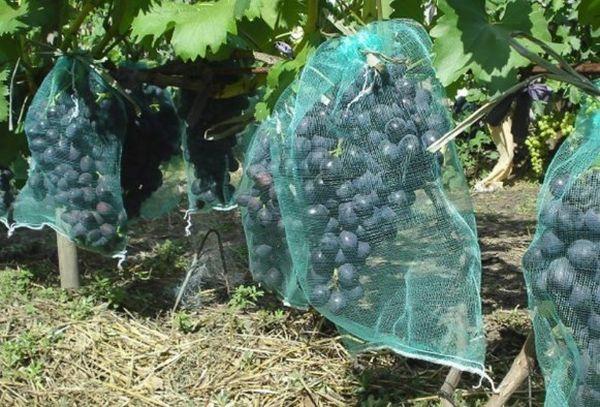
Birds cause significant damage to vineyards. An effective way to protect the tree from these annoying birds is to use nylon or metal mesh.
Preparing for winter
In many regions, the Academician variety requires protection. The vines are laid on a dry surface, rigged with hoops, and covered with several layers of fabric.
Pruning and shaping
Pruning is done in the fall, removing all immature shoots. In June, the tops are pinched. Throughout the summer, excess side shoots are removed.
How to increase SAT
For the Academician grape, the SAT is 2100 degrees. In unfavorable years with low temperatures, yields fluctuate. Several methods are used to increase the SAT:
- seedlings are placed on the southern side of buildings to retain heat longer;
- install protection from cold northern winds;
- the root zone is mulched with manure and covered with dark material or roofing felt;
- use hotbeds and greenhouses.
A set of timely measures will increase crop yields in unfavorable weather conditions.
Methods of reproduction
There are several ways to propagate the Academician grape variety in a country house:
- cuttings;
- shoot layering;
- vaccination.
For propagation, a healthy mother plant with a good yield is selected.
Grafting onto other varieties
They use as rootstock winter-hardy grape varietiesFor example, Amur or American. A scion is cut into a shield. A similar cut is made on the rootstock. A bud is inserted into it and tightly wrapped in plastic.
Grafting using woody cuttings
The scion is grafted onto a grapevine using the "cleft" method. To do this, the top of the scion is cut off, a 5 cm long slit is made, and the scion with a wedge-shaped cut is inserted. The graft is treated with garden pitch and carefully secured.
Cuttings
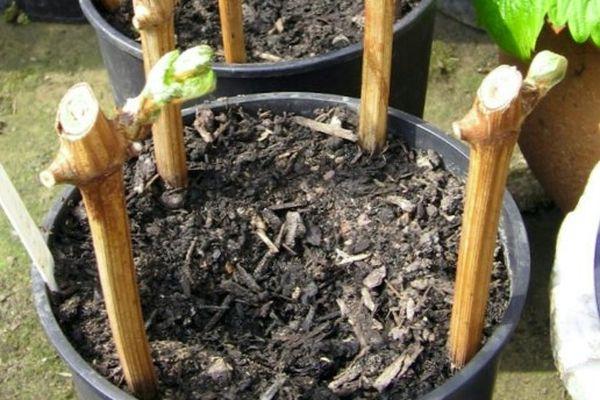
Cuttings prepared in the fall are stored in the basement for the winter, after being soaked in water and placed in a copper sulfate solution. In the spring, they are germinated at room temperature, producing a full-grown seedling by May.
Advantages and disadvantages of the variety
Academician Avidzba has attracted the attention of many gardeners due to its unique qualities:
- early ripening of the crop;
- refined taste;
- large sizes of berries and bunches;
- good transportability;
- high yield.
However, this variety is often susceptible to various diseases. When grown in temperate climates, it requires shelter.
Harvesting and storage
Dry weather is chosen for harvesting. The bunches are cut carefully, taking care not to damage the berries. Boxes or baskets are used for storing the harvest, in which the bunches are laid out in a single row.
Tips and advice from experienced gardeners
To grow a healthy plant you need:
- as the soil dries out, ensure timely watering;
- carry out root feeding with mineral fertilizers;
- protect grapes from diseases and pests.
A successful variety with excellent flavor characteristics is the Academician. Its low maintenance makes it suitable for experimentation by beginning gardeners and allows for good harvests every year.
Related posts:
 Description of 30 grape varieties for Siberia, planting and care for beginners
 How to grow grapes in the Moscow region in open ground without a greenhouse
 Description of the Julian grape variety, planting and care instructions
 The ripening time of grape vines by variety, how to speed up the process, and what to treat the plant with
 Description of 30 varieties and types of Muscat grapes, planting, cultivation and care
 Description of the Krasotka grape variety, planting and care technology
 Beginner's Guide to Growing Grapes in Open Ground in Central Russia
 Description and characteristics of the Alpha grape variety, the subtleties of cultivation