
- In what cases is an apple tree transplanted?
- Optimal timing for planting operations
- In the spring
- In summer
- In the fall
- Preparatory work
- Choosing a location
- Necessary tool
- Preparing the tree and the transplant site
- Excavation technology
- Transportation rules
- Algorithm for carrying out planting work
- seedling
- Trees aged two to three years
- Trees are four to five years old
- Mature trees
- Columnar apple trees
- Dwarf varieties
- Caring for a tree after transplantation
The apple tree is one of the most beloved fruit trees among gardeners and homeowners, capable of growing, bearing fruit, and delighting people for many years. Sometimes, for various reasons, the need arises to remove a tree from its long-standing location. Therefore, it's important to know how to transplant a mature, fruit-bearing apple tree without causing serious damage.
In what cases is an apple tree transplanted?
It's not uncommon for mature plants to be transplanted to new locations in garden plots. There are numerous reasons for choosing a new location, including construction, changes in landscape design, shade, lack of space, unsuitable soil, improper growing conditions, and disease. Both young and mature trees, particularly apple trees, are no exception.
Optimal timing for planting operations
When digging up and replanting apple trees, the most important factors influencing the subsequent survival and development of the tree are timing and weather conditions, soil and air temperature.
In the spring
Spring repotting should be done as early as possible, before the sap begins to flow and the buds begin to open. It's best to do this in cloudy or rainy weather, without wind.
Spring replanting is carried out if it was not possible to replant in the fall - it was dry, hot, or frosts set in early.
In summer
The optimal time for summer replanting is late June or the first half of July. Transplant the apple tree with a large root ball. Before replanting, remove almost all foliage and water the tree thoroughly to prevent the root ball from disintegrating during transfer.
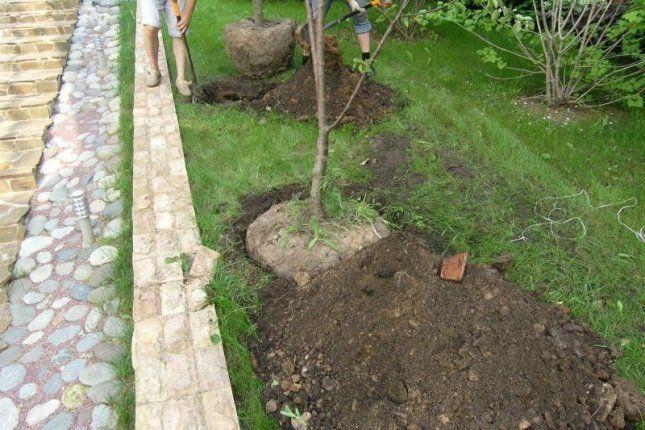
After planting, water the apple tree regularly and thoroughly for the first couple of weeks. Evening misting is beneficial, as is alternating root watering with overhead irrigation. The root zone is mulched with organic matter (cut grass, seedless plant parts, and green manure). During hot periods, shade the apple tree for better survival.
In the fall
In the fall, apple trees are replanted when all the leaves have fallen, and on older trees, all the fruit. The tree should enter a dormant state. Sometimes, some leaves cling tightly and refuse to fall. In this case, the gardener must prune the remaining foliage themselves.
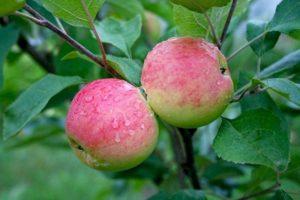
Apple trees develop fine fibrous roots at temperatures above 4°C (39°F). Replanting should not be done in early fall, when temperatures are still quite high. However, delaying transplantation until frost is expected is also not recommended, as late replanting can cause the apple tree to die in winter. The optimal time is from late September to late October, depending on the growing region, three weeks before the onset of frost.
Preparatory work
To successfully transplant an apple tree, you need to select the right location in advance and prepare garden tools for digging with minimal damage to the tree.
Choosing a location
The site should be free of rocky, weedy, or waterlogged soil. The planting hole should be 4-5 meters from any nearby trees or buildings. When choosing a site, follow these basic guidelines:
- drained, healthy, fertile soil without stagnant water;
- the tree should be well lit by the sun throughout the day;
- the transplant site is not exposed to cold northern winds or summer dry winds.
Necessary tool
To transplant, you will need a sharp saw, pruning shears, a spade and shovel, ropes, fabric, and a garden wheelbarrow.
Preparing the tree and the transplant site
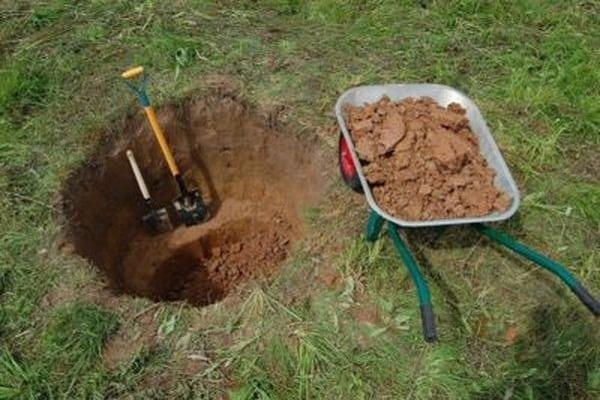
Apple trees thrive best in well-drained, light loams and chernozems with a slight acidity. Peaty, clayey, and sandy soils will impede their growth. In these cases, the planting hole is filled with a prepared nutrient-rich substrate. The hole should be dug 20-30 centimeters wider than the root system or root ball.
If the groundwater level is low in the spring, a drainage layer of broken brick or fine gravel should be placed at the bottom of the hole. Before digging, the soil should be generously watered, and almost all the foliage on the apple tree itself should be trimmed.
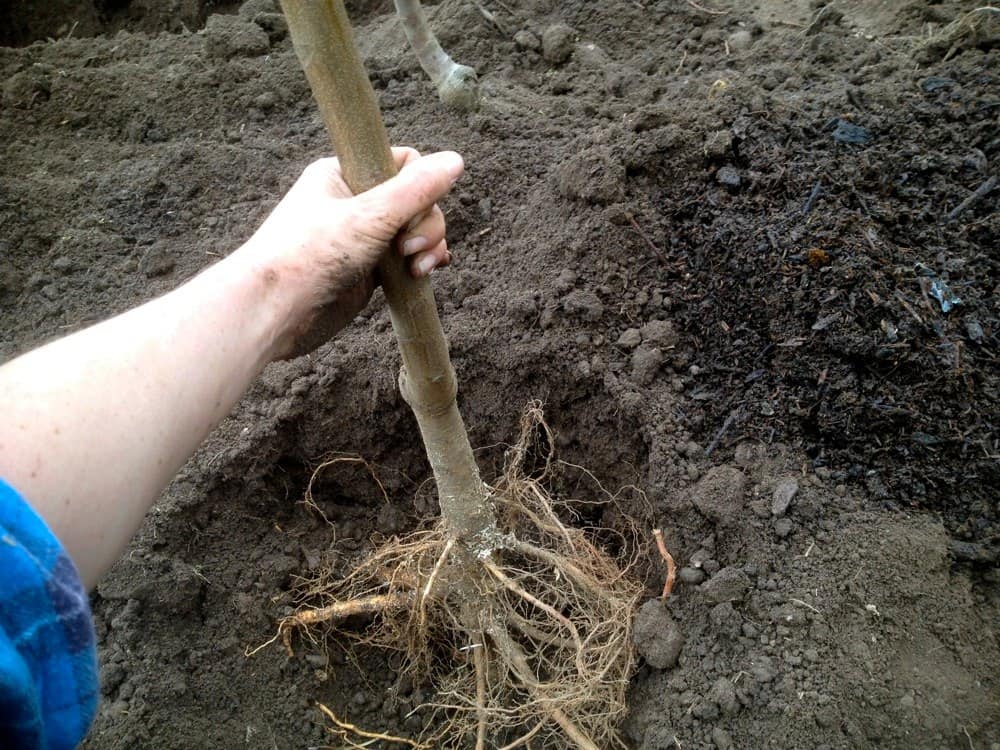
Excavation technology
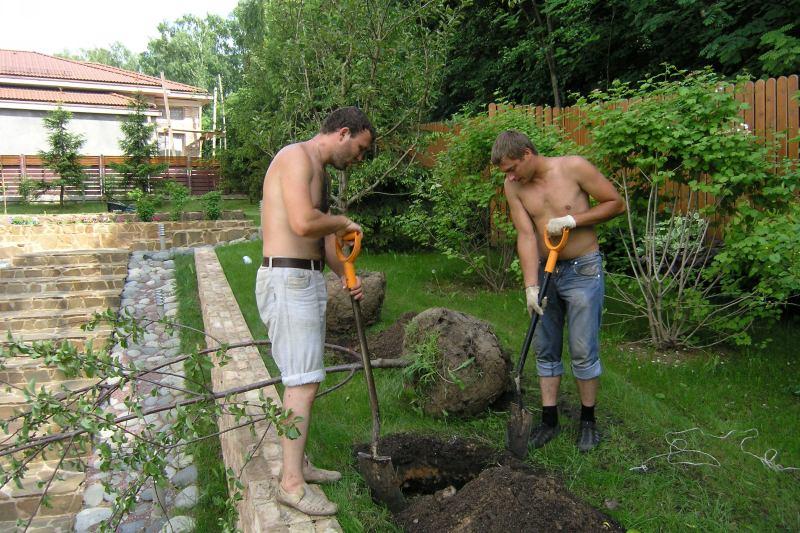
To transplant a root ball, dig around the perimeter with a shovel, cutting off excess roots. If the tree is young, the root ball is gently supported and gradually lifted with a shovel. For mature trees, thick roots are cut with a saw, and a wooden block is driven under the root ball to act as a lever.
Digging up mature trees requires the work of several people. In wet, clayey soil, no additional support is required for the root ball. Otherwise, after digging, the root ball is wrapped in plastic, burlap, or cloth. The wrapping prevents the root ball from crumbling.
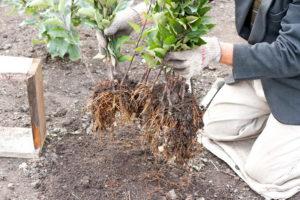
Transportation rules
If the root ball is small and the new planting site is located close to the old one, transport it by grasping the root ball with your hands and simply carrying it. For convenience, you can support it with your chest or stomach, tilting the tree slightly toward you. Larger trees require several people to carry.
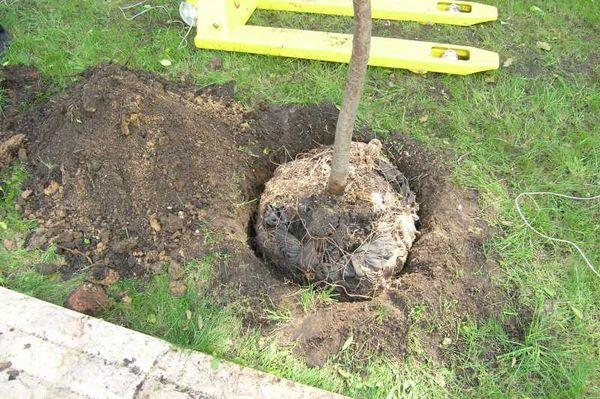
If the new planting site is located a considerable distance away, it is convenient and effective to use a garden wheelbarrow to place the tree on.
Algorithm for carrying out planting work
To ensure the tree's survival, it is not enough to simply dig it up; it must be done correctly, in compliance with the required agricultural practices.
Necessary conditions for a successful transplant:
- compliance with the required transplant deadlines;
- transplantation is carried out after the leaves fall in autumn and before the buds open in spring;
- digging with a lump of earth at least 50 centimeters wide;
- correct choice of location for transplantation, preparation of planting holes;
- planting an apple tree with the same orientation (cardinal directions) of its branches as in the previous location;
- ensuring regular watering and shading after transplanting.
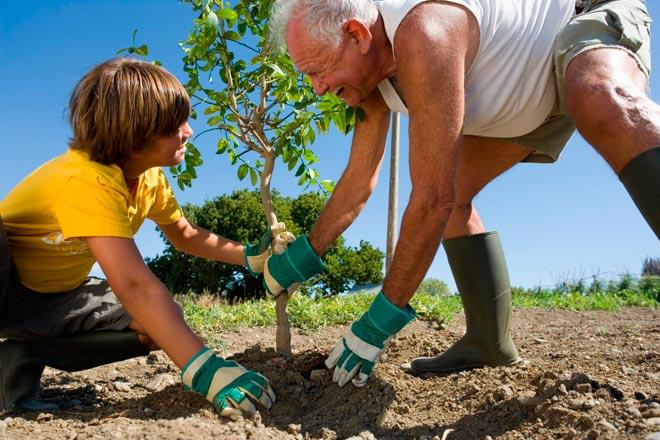
seedling
When planting or replanting bare-root seedlings, protect them from wind and sun until planting, and prevent the root zone from drying out. This can be easily accomplished by covering the seedling in the shade with moist soil and wrapping the root zone tightly with thick cloth.
Before planting, inspect the roots, cutting off any rotten, deformed, or overly long ones.
The tree is then soaked for a day in water or a solution of growth stimulant and fungicide. When planting, a wooden stake is placed in the center of the hole, to which the young apple tree stem is tied. The seedling is covered with soil, being careful not to bury the root collar, lightly compacted, and watered thoroughly.
Trees aged two to three years
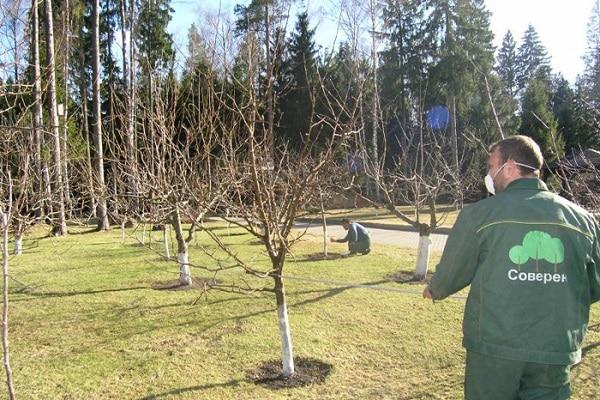
This is the most appropriate age for replanting an apple tree. At 2-3 years old, the tree is transplanted with a root ball; it is less susceptible to trauma and takes root quickly. However, when replanting a bare-root tree, the crown must be trimmed back to the size of the seedling's root system. The transplantation procedure is carried out in cloudy weather, minimizing the time the roots are exposed to the air.
Trees are four to five years old
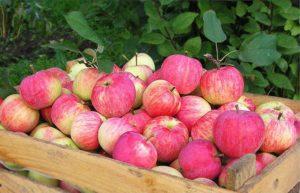
Transplanting a five-year-old apple tree is more difficult than younger trees, but the general rules remain the same. The difficulties stem from the larger size of the root system, and therefore the larger the root ball, crown, and planting hole required.
When replanting with a lump of earth, the apple tree is dug up to a diameter of approximately one meter, carefully trimming the longer roots.
Before the procedure, the tree is watered generously and the soil is allowed to settle. Then, the transferred root ball is wrapped in burlap and thick agrofibre for stability. The tree is lifted out using a lever, loaded onto a wheelbarrow or stretcher, and transported to the new location.
Mature trees
A large, mature apple tree is transplanted only in the fall, at least a month before frost. This will require sacrificing a significant portion of the crown. Apple trees can be replanted up to 15 years of age, but some reports suggest it can be as late as 20 years. However, this is a labor-intensive procedure, requiring considerable effort, available equipment, and several assistants.
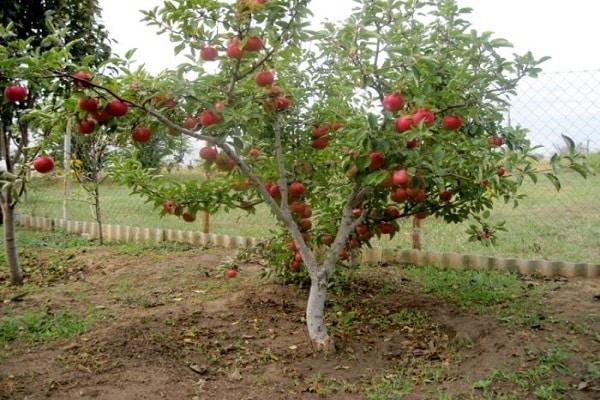
Nurseries use special tractors with a spoon-shaped bucket that digs into the ground, envelops the root ball, and transports the tree, complete with soil, to a new planting site. The result is a mature seedling with a closed root system.
Columnar apple trees
These trees age faster than vigorous varieties. However, the rules for replanting columnar apple trees are the same as for regular, classic apple trees. An important requirement is protection from strong winds, which is taken into account when choosing a new location.
Dwarf varieties
The rules for replanting are the same as for regular apple trees. When replanting, choose a location that is as sheltered from the wind as possible. Many gardeners plant them along fences or building walls.
Caring for a tree after transplantation
After the procedure, the transplanted apple tree is provided with regular, abundant watering, shade during hot periods of the day, and, ideally, constant shade for a couple of weeks after transplanting. After watering, loosen the soil around the tree trunk.
A successful agricultural practice is mulching the soil with organic matter. After planting, the apple tree is watered with a rooting stimulant solution, and the first feeding and plant protection treatments are carried out a week later.
Related posts:
 How to plant walnuts, care for them, and grow them at home
 Description and cultivation of the 15 best cherry plum varieties for the Moscow region, planting and care rules
 Descriptions of the 20 best cherry varieties for the Moscow region, their planting and care
 Peach tree care and agricultural secrets, pest control
 Description and characteristics of the 27 best plum varieties for the Urals, planting and care
 Methods for planting and propagating cherries at home
 Signs and treatment of apple tree cancer, varieties resistant to the disease
 How to properly plant apple trees with seedlings in spring and autumn, care instructions