
- The main reasons for the appearance of hollows in apple trees
- Methods of sealing a hollow
- Filling
- Cementing
- Step-by-step instructions
- When to seal holes
- What is needed to carry out treatment work?
- Preparing the affected area for treatment
- Cleaning
- Disinfection
- Hole sealing technology
- What should you do if:
- When treating an old apple tree
- A hollow has formed in the seedling
- If the hollow is at the root or through
- If affected by fungi
- Lots of rotten wood
- Infested with ants
- There is a nest
- The juice is flowing
- Prevention
Spring inspections of garden trees often reveal damaged bark with hollows. Gardeners are interested in how to properly repair a hollow in an apple tree. Tree treatment involves a series of steps involving tools, solutions, and agricultural methods. Before beginning treatment, it's important to consider the causes and explore existing treatment options.
The main reasons for the appearance of hollows in apple trees
An unprotected apple tree is exposed to external factors, including temperature fluctuations, severe frosts, and snowstorms. The top layer of bark begins to crack, and ulcers appear on the tree, triggering the process of rot. Fungal infection occurs, progressively damaging the inner layers, eventually leading to the formation of a cavity.
Another cause is improper pruning or grafting; gardeners often damage fruit trees themselves. Without sufficient information on the technique of cutting branches "to the ring," they prune shoots too close to the trunk or leave a stump. Over time, the cut area deteriorates, forming a hole of varying size.
A hole in an apple tree may be the result of a rodent attack; with proper care in the fall, including whitewashing, this situation can be avoided.
Methods of sealing a hollow
The most effective treatment methods are filling and cementation. Each method requires specific procedures that differ from one another. The main criterion for choosing filling or cementation is the size of the hole.
Filling
The filling method doesn't require any special skill; it simply requires preparing the materials, a disinfectant, and performing the mechanical steps. The filling process involves sealing the cavity with a wooden plug cut to the diameter of the hole. It is then secured with garden pitch or oil paint. The wood is pre-treated with fungicidal solutions to kill fungi.
Cementing
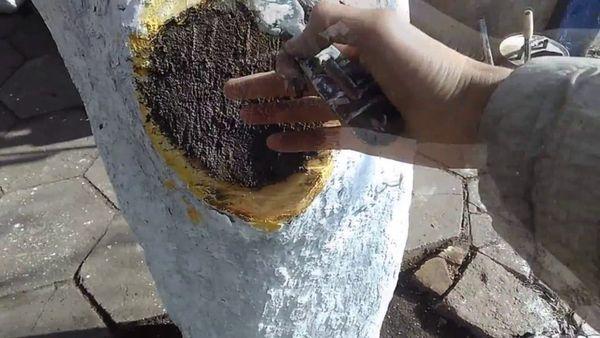
Cementing is a method of filling large apple tree hollows. A cement mortar is prepared in advance, along with purified sand and lime. Before cementing, the interior and exterior parts are sprayed with copper sulfate or Bordeaux mixture. A warm day should be chosen for filling the hole; dry weather will allow the mortar to set faster.

Step-by-step instructions
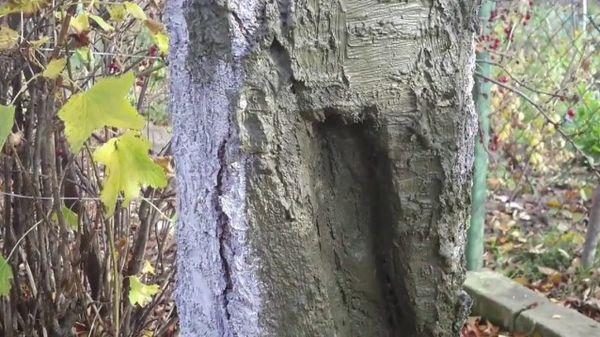
Proper treatment requires basic knowledge of agricultural care and step-by-step instructions for its application. The process of sealing an apple tree cavity involves the correct timing of treatment, the right tools and materials, disinfection of the affected area, and proper procedures.
When to seal holes
Gardeners who have encountered this problem advise that it's important for the tree to be in a dormant state, meaning its metabolic activity is low. The growing and fruiting seasons are also avoided, as this is when sap flow is most abundant. You can check this by cutting a branch and separating the bark from the cambium.
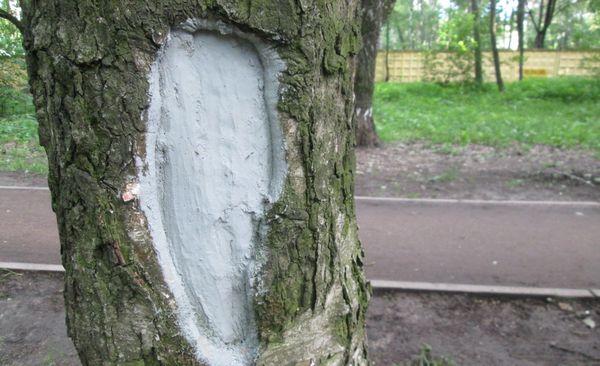
A predominantly green cambium indicates active processes, meaning it's time to wait until the plant's productivity has decreased. Autumn is considered the most favorable season, when the fruit tree has calmed down and is ready to receive treatment and appropriate winter preparation.
What is needed to carry out treatment work?
To carry out medical work, you will need agricultural tools:
- a metal brush - if the cavity is very small in size and in the initial stage of destruction, then sweep away the outer dust;
- a garden knife, a chisel - if there is rot on the bark, the damaged layer is cut off to the healthy one;
- a spoon with a curved handle and a pointed edge - for cleaning hard-to-reach places in the hollow;
- Drill - Enlarging the hole for internal cleaning of wood.
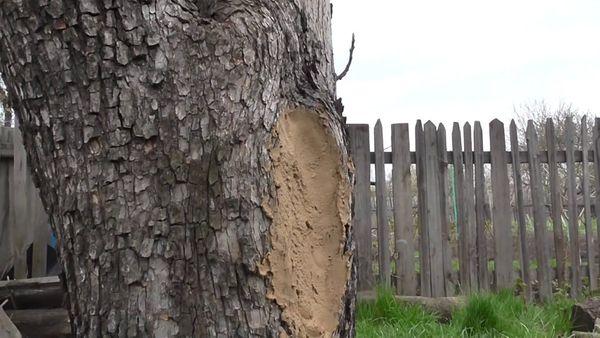
All the tools are readily available; the key is to use them carefully, without making any sudden movements. They make it easy to clean apple tree bark of fungal deposits, rotting surfaces, and internal debris. However, safety precautions must be observed and the tools must be treated with a potassium permanganate solution.
Preparing the affected area for treatment
Treatment of the affected areas is carried out in several stages: first, the hollow is cleaned inside and out, then the surface is disinfected by spraying.
Cleaning
Cleaning the apple tree's hollow area will remove debris, debris, and rotted wood. Using the appropriate tools, do the following:
- A metal brush is used to clean the surface from various deposits and irregularities.
- In accessible places, scrape away rotting bark down to healthy wood and sweep away debris with a brush.
- The hollow inside is scraped out with a curved spoon, especially in those places that are difficult to reach with a chisel.
- If it is impossible to get inside the apple tree, use a drill to enlarge the hole.
- After all treatments, the resulting debris is swept away again with a metal brush.
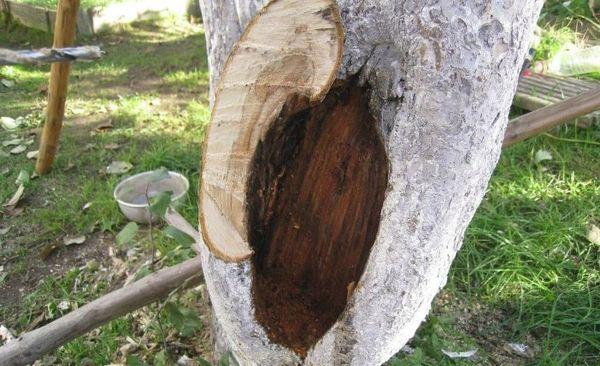 Remove debris from damaged areas immediately into a bag and do not allow it to come into contact with the soil. Failure to do so can cause serious damage to the garden plot, which can become contaminated with various bacteria.
Disinfection
The next stage of treatment is disinfection of the cleaned area. Spraying with diluted solutions is best. For this purpose, choose:
- Copper sulfate, 200 g is poured into 10 liters of clean water.
- Add 500 g of ferrous sulfate to 10 liters of prepared liquid.
- They make a strong composition from potassium permanganate.
- Ready-made preparations "Raek" and "Oxyhom" are used for spraying.
Some gardeners use dry treatment with wood ash or crushed Streptocide. The apple tree hollow is thoroughly coated with the mixture. The tree is left for several hours; if using a liquid solution, wait until the bark is completely dry.
Hole sealing technology
A large apple tree hollow is sealed with cement:
- in a container mix 2 parts cement with 6 parts sand, add 1 part lime;
- add the required amount of water to obtain a creamy, homogeneous composition;
- pebbles or pieces of red brick are used as internal filler;
- the hole is sealed with the mixture and left to dry;
- apply several layers of oil paint.
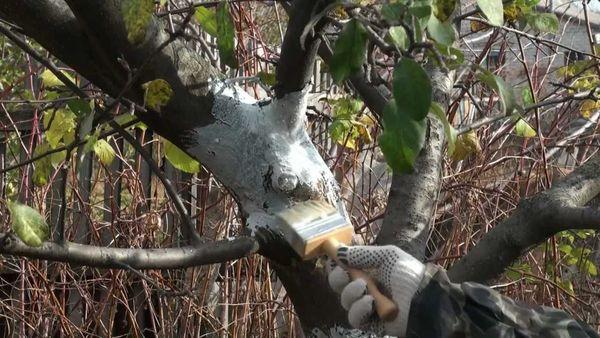
It is recommended to seal damaged wood on a well-dried surface. After carrying out preventative cleaning and disinfection procedures, proceed as follows:
- fill the hollow with one of the fillers;
- cut out a wooden plug;
- insert it tightly into the hole and cut off the protruding part;
- Cover the top with garden pitch or oil paint.
What should you do if:
When treating an old apple tree
An older apple tree has thick bark; if the bark is damaged, a complex cavity forms. First, the unwanted part is cut off, then treated with a copper sulfate solution. After drying, the area is covered with polyurethane foam and secured with garden pitch. In most cases, filler is not used.
A hollow has formed in the seedling
Small holes are visible on a young apple tree, which are treated with garden pitch. It is used for protection from external influences, disinfection, and treatment of narrow cracks.
If the hollow is at the root or through
An apple tree with a hollow root is fragile and can break; this type of damage is considered dangerous. Gardeners recommend cutting it down. New shoots may later form on the stump. If possible, cement the root hole.
If affected by fungi
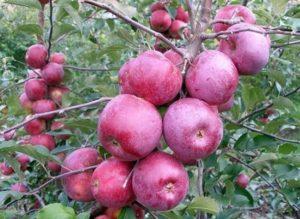
A neglected tree hollow can become infected with fungus, causing widespread bark rot both inside and out. Bordeaux mixture and sulfur solutions are used for disinfection. Treatments are repeated up to five times every 15-20 days.
Lots of rotten wood
Rotting root layer increases debris in the hollow. In this situation, careful cleaning with a chisel is essential. The debris is disposed of in a bag. Next, to eliminate bacteria, the surface is treated with fungicidal compounds. The deep hollow is cemented.
Infested with ants
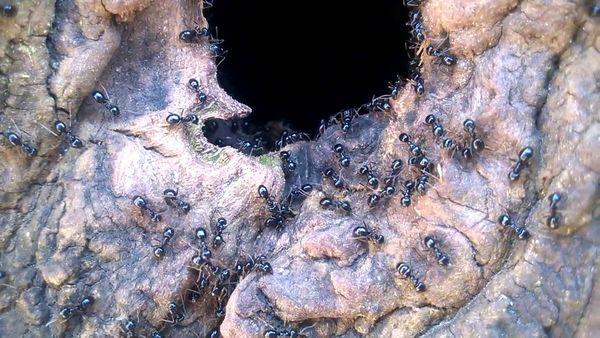
Insects in apple tree hollows are a common garden problem. They can be eliminated by deep cleaning. The cleaned insects are placed in a bucket and filled with boiling water.
To exterminate ants at the base, the tree trunk circle is treated with insecticides.
There is a nest
A hollow tree often serves as a nesting site for birds. If birds are discovered, wait until the chicks hatch and leave the hollow. The hole is then cleaned, disinfected, and treated using one of several methods.
The juice is flowing
If sap is leaking, it indicates recent damage, possibly caused by bark beetles or bark beetles. Another possible cause is improper pruning. Remove any unevenness from the bark with a pruning knife, disinfect the area, and apply a mixture of "Rannet" and garden pitch for half an hour.
Prevention
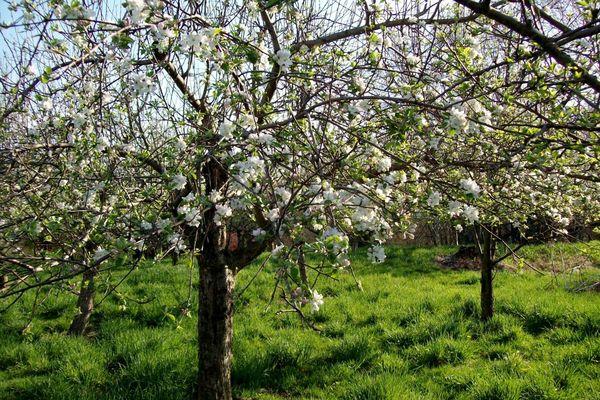
To prevent this, whitewash the tree in the fall or cover the trunk with a protective material to prevent rodents from chewing through the hole. To speed up the healing process, trim the damaged edges back to the cambium each year. The apple tree recovers if bridge grafting is performed. Transplanting healthy bark onto the affected area is also acceptable.
Related posts:
 The best eggplant varieties for growing in a polycarbonate greenhouse: planting and care
 Methods for planting and propagating cherries at home
 Is it possible to soak treated cucumber seeds before planting and how to do it correctly?
 Methods of dealing with caterpillars on apple trees, how to treat them correctly and what is the best way to do it
 Causes and treatment of eggplant pests and diseases, how to combat them at home
 How to control carrot flies with medications and folk remedies
 The best grape varieties for growing in the Urals, planting and care rules in summer
 Causes and treatment of cherry diseases, methods of pest control