
- Selection and cultivation area of the Zavetnoye apple tree
- Subspecies and variants of fruit crops
- What's good about this variety?
- Are there any disadvantages?
- Description and characteristics
- Size and annual growth
- Crown and branches
- Foliage and buds
- Fruiting of the tree
- Flowering and pollinators
- Ripening time
- Yield and average fruit weight
- Harvesting and storage
- Fruit tasting and the scope of apple trees
- Winter hardiness and drought resistance
- Susceptibility to diseases and pests
- How to plant Zavethnoye in a plot
- Required soil composition
- Selecting and preparing a landing site
- Dimensions and depth of the planting hole
- Timing and step-by-step algorithm for planting a seedling
- Caring for the variety
- Watering mode
- We apply fertilizers
- We trim and shape the crown
- Loosening and mulching the tree trunk circle
- Prevention and protection of wood
- Covering a fruit tree for the winter
- Methods of reproduction
- Main problems and methods of their solution
- The apple tree isn't growing?
- Are rusty spots forming on your leaves?
- Is it possible to transplant a 10-year-old tree?
- Gardeners' reviews of the variety
The Zavetnoye apple tree is a popular choice for many gardeners. To achieve excellent results, it's important to follow the basic recommendations of experts. The plant requires regular soil moisture, disease prevention, and pruning. Loosening and mulching the soil are essential.
Selection and cultivation area of the Zavetnoye apple tree
This variety was developed by scientists at the Siberian Horticultural Research Institute. The plant was created by crossing the Melba and Osennyaya Radost varieties. It was developed in 1958, but was only added to the State Register in 1995.
The Zavetnoye apple tree is considered a semi-cultivated plant. It is grown in Siberia and the Urals. It is also suitable for planting in Tyumen, Omsk, and Tomsk Oblasts.
Subspecies and variants of fruit crops
The cultivar has no subspecies. Its parent varieties, Melba and Autumn Joy, are similar to the plant. They produce similar fruits and share the same flavor.
What's good about this variety?
The key benefits of the plant include the following:
- frost resistance;
- fruiting begins 4 years after planting;
- scab resistance;
- resistance to parasites;
- high yield;
- simultaneous ripening of fruits;
- long shelf life;
- excellent transportability.
Are there any disadvantages?
The plant's key disadvantage is its weak resistance to extremely low temperatures in winter. In such weather, even mature trees can freeze.
Description and characteristics
Before planting a plant, it is worth familiarizing yourself with its main characteristics and features.
Size and annual growth
This plant is called a dwarf tree. The tree does not exceed 2-2.5 meters in height. In some cases, it can grow up to 3.5 meters.
Crown and branches
The plant is characterized by a spreading, loosely dense crown. This structure allows sunlight to easily penetrate the center, allowing the fruits to ripen simultaneously. Good ventilation is a reliable preventative against scab.
Foliage and buds
The plant is characterized by small, elongated leaves. They are dark green in color and have a matte texture. The leaves have a concave blade.
Fruiting of the tree
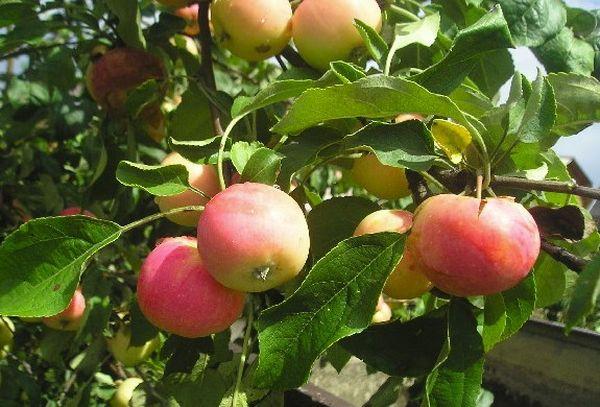
The tree produces a good harvest. The fruits are characterized by excellent taste and attractive appearance.

Flowering and pollinators
The apple tree is characterized by small white flowers with a distinct aroma. For better pollination, it is recommended to plant varieties such as Bagryanoe and Altayskoye Rumyanoe. Firebird is a good option.
Ripening time
The first fruits are harvested four years after planting. The number of apples increases each year. Ripening occurs in late August or mid-September, depending on the regional climate.
The fruits ripen at the same time, which makes harvesting much easier.
Yield and average fruit weight
This variety is characterized by stable yields. Regardless of the tree's age, it produces up to 70 kilograms of fruit annually. Ripening occurs in the second half of September. A distinctive feature is its ability to be stored for a long time—until mid-winter.
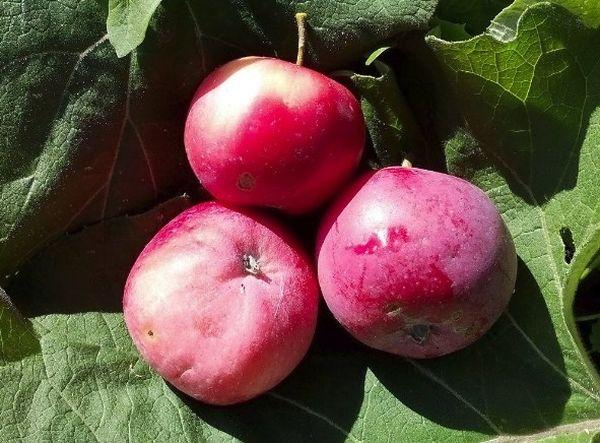
In the first few years, apple trees produce fruits up to 80 grams. Subsequently, their weight decreases to 40-60 grams. This is due to the increased number of fruits, which causes them to become smaller. However, the fruit's flavor remains unaffected.
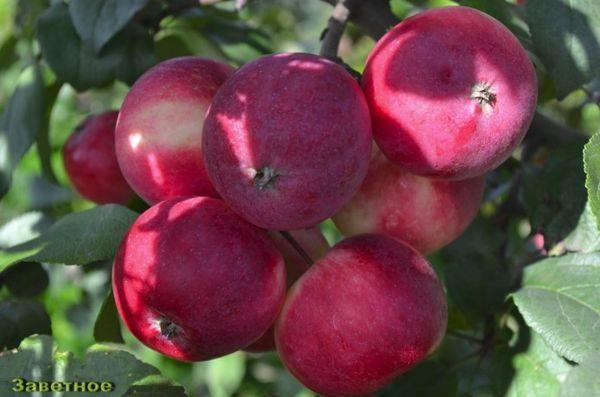
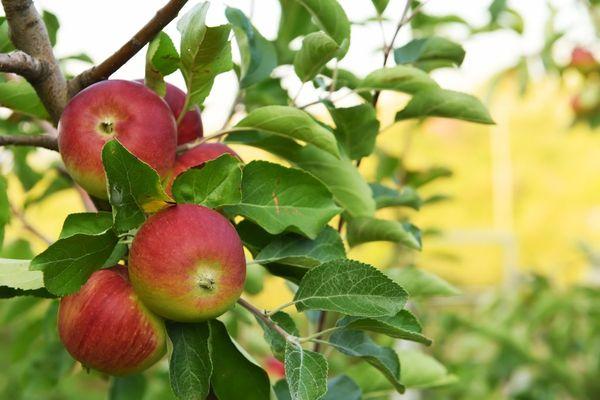
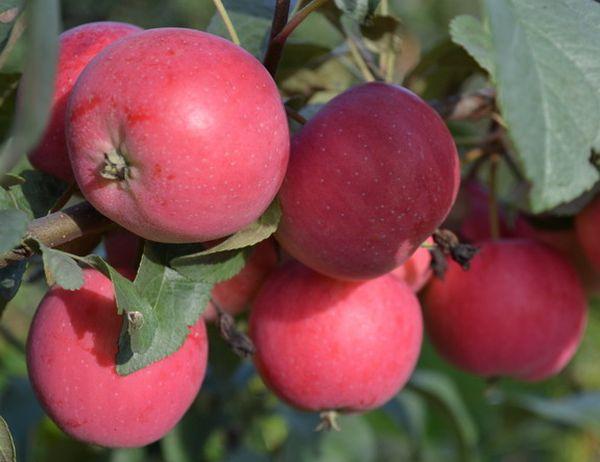
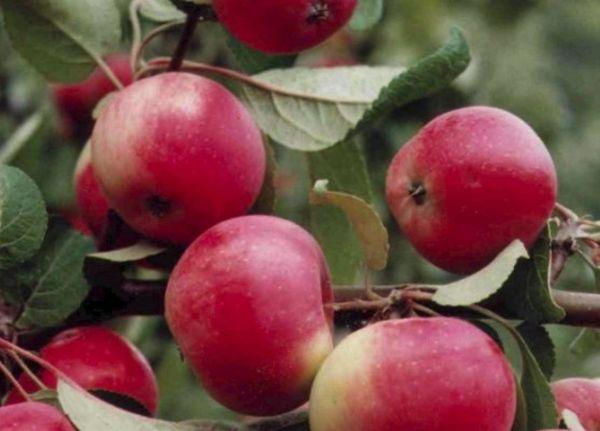
They are also characterized by their beautiful appearance. The Zavetnoye apple tree produces small white fruits with a bright red blush.
Harvesting and storage
In a cool place, the harvest can be stored for 5-6 months. During this time, the apples retain their excellent taste and appearance.
Fruit tasting and the scope of apple trees
These fruits are characterized by dense yet tender and juicy flesh. It produces a distinct crunch when broken. These apples have a pleasant strawberry flavor.
This variety is distinguished by its versatility. The fruits can be eaten fresh or used in cooking. The apples are often used to make jams and compotes. They can also be dried.
The fruit contains a large amount of pectin. Therefore, they are often used to make jellies, mousses, and jams. They are also suitable for making wine or cider.
Winter hardiness and drought resistance
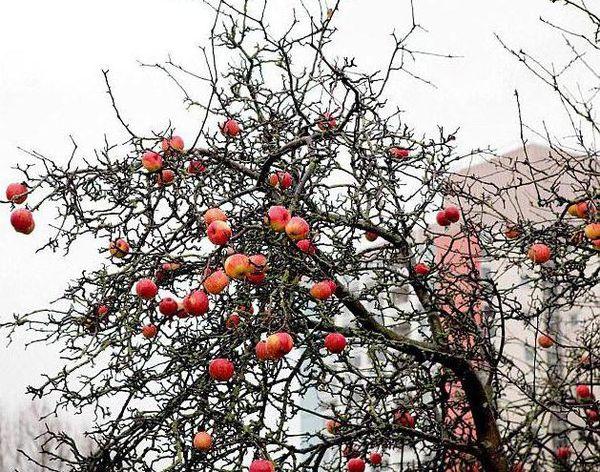
The variety is considered frost-resistant, so it can be grown in Siberia and the Urals. However, the perennial bark can be damaged by low temperatures. Temperatures as low as -40°C (-40°F) can cause the plant to freeze.
The crop doesn't require frequent or abundant watering. However, in dry weather, the plant can be watered once a month. This will help increase yields.
Susceptibility to diseases and pests
This apple variety is highly resistant to scab and other diseases. To prevent problems, spray the plant with a fungicide solution before flowering.
How to plant Zavethnoye in a plot
Even beginners can plant this apple tree variety in their garden. However, fall planting is not recommended, as the plant will not survive well and may die. In the fall, you can prepare a hole for planting and fill it with soil.
Another characteristic of the plant is the ability to insulate the trunk. Sawdust should not be used for this purpose, as it retains moisture, causing the soil to become overly soggy.
Required soil composition
This apple tree variety requires black soil. It can also be planted in loamy or sandy loam soil. If necessary, peat, sand, clay, and humus can be added to the soil.
Selecting and preparing a landing site
This variety requires a warm, wind-protected location. During winter, this area should accumulate snow. Planting the crop in lowlands is not recommended. Groundwater should be 1.5 meters below the soil surface.
Dimensions and depth of the planting hole
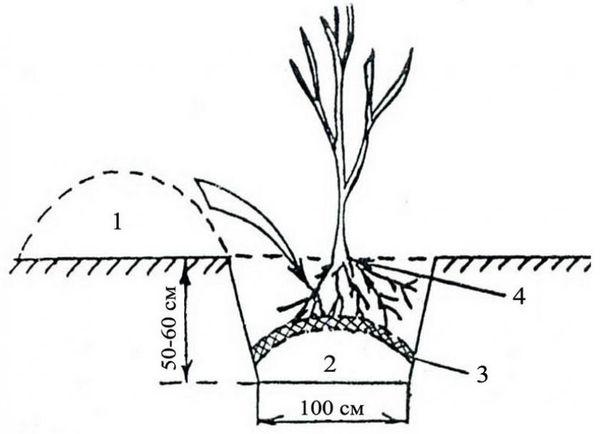
To prepare a hole for planting, it's important to determine its dimensions. Typically, a hole measuring 60 x 60 centimeters is ideal. Fill the prepared hole two-thirds full with a mixture of fertile soil, manure, and mineral fertilizer.
Timing and step-by-step algorithm for planting a seedling
It's recommended to plant apple trees in the spring. The soil should warm up to 8 degrees Celsius. It's best to wait for stable warm weather, which in Siberia doesn't arrive until April. To begin planting, follow these steps:
- straighten the root system of the crop and place it in the hole;
- cover the trunk with soil so that the root collar is 5-8 centimeters above the soil surface;
- attach a stake to the trunk and tie the plant in a figure eight;
- water the soil;
- Cover the plant from above with a composition based on sawdust, dry grass and peat.
Caring for the variety
For a culture to thrive, it needs high-quality care. This care must be comprehensive.
Watering mode
It's recommended to water the soil twice a year. This should be done in the spring, before flowering, and in the fall, after the leaves have fallen. It's recommended to pour 100 liters of water under the apple tree. During dry weather, two additional waterings are recommended – in July and August.
We apply fertilizers
In the fall, the soil around the plant should be fertilized with mullein. In the spring, to prevent the development of diseases, spray with mineral fertilizers. Urea is recommended for this purpose.
We trim and shape the crown
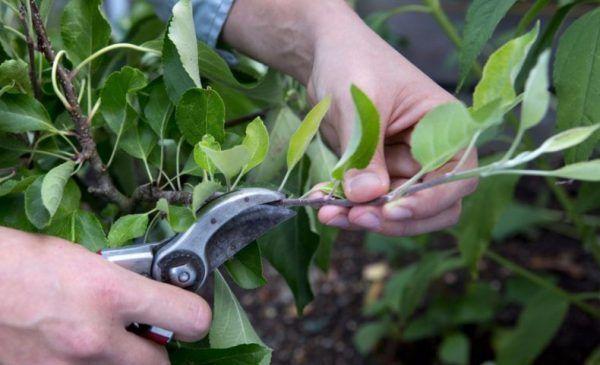
In spring, before the sap begins to actively flow, remove frozen and damaged branches. It's recommended to shape the crown into a bush. It is important to try to preserve all horizontal branches, since they are the ones that produce the most fruit.
Loosening and mulching the tree trunk circle
Regular loosening of the soil around the apple tree is recommended. This provides the root system with oxygen and nutrients.
Mulching the tree trunk area is also crucial. Dry leaves or grass clippings are used for this purpose. This prevents moisture loss and inhibits weed growth.
Prevention and protection of wood
This apple tree variety is resistant to most diseases. However, experienced gardeners recommend preventative treatments:
- It is recommended to use trapping belts against codling moths;
- bird feeders are installed to protect against pests;
- To control mice, synthetic materials are used for bark and various chemicals;
- To combat scab and other diseases, spray in the spring with a mixture of 10 liters of water, 700 grams of urea, and 50 grams of copper sulfate.
Covering a fruit tree for the winter
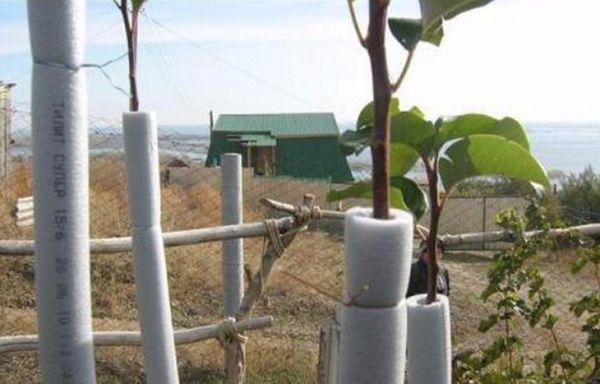
To prepare the plant for winter, remove all the leaves from under it. It's recommended to cover the trunk with spruce or artificial materials. This will help protect the tree from rodents. Snow will cover the trunk and lower branches of the apple tree.
Methods of reproduction
Apple trees can be propagated in different ways - by graftingPropagation by cuttings and root suckers. To obtain rootstock and subsequent grafting, it's best to use seedlings from root cuttings. Planting material should be collected in the spring, before the sap begins to flow. The cuttings should be 20 centimeters long. It's recommended to store them in a cellar, covered with sand.
You can also root the plant by layering. To do this, bend the shoots to the ground, secure them, and cover them with soil. Roots will appear over the summer. By fall, you'll have fully grown seedlings. In the spring, it's recommended to trim them with pruning shears and plant them in their permanent location.
Main problems and methods of their solution
Growing this apple variety can lead to various problems. In such situations, it's important to take prompt action.
The apple tree isn't growing?
The rootstock is over-planted. This causes bark rot during watering. Consequently, the tree's growth is stunted and it dies.
Are rusty spots forming on your leaves?
This symptom indicates the development of scab. To combat this disease, it is recommended to treat the crop with a fungicide.
Is it possible to transplant a 10-year-old tree?
A mature tree is large and has strong roots. Attempting to move it to a new location can lead to the development of various diseases. If this cannot be avoided, prepare a planting hole and fill it with compost. It is recommended to water the tree generously immediately after transplanting.
Gardeners' reviews of the variety
Reviews of the culture confirm its popularity:
- Victoria: "I have several varieties of apple trees in my garden, but the Zavethnoye is my favorite. It produces sweet and juicy fruit. I use it to make jams and compotes. The fruit can also be eaten fresh. Moreover, the tree produces a very rich harvest."
- Oleg: "A neighbor recommended planting a Zavetnoye apple tree. This plant easily tolerates severe frosts and is virtually immune to common diseases. Its care requires only two waterings and pruning in the spring. We got our first harvest four years after planting. The apples are delicious and sweet!"
The Zavetnoye apple tree is deservedly popular among gardeners. To achieve successful cultivation, it's important to select adequate and comprehensive care. It's also essential to promptly treat the plant for diseases and pests.
Related posts:
 Methods for planting and propagating cherries at home
 Description and rules for growing Solaris grapes
 Growing and caring for hazelnuts in open ground, rules for planting hazelnuts
 Conditions for growing mandarin at home and rules for caring for the tree
 The best grape varieties for growing in the Urals, planting and care rules in summer
 Rules for planting and caring for pears in open ground, how to grow them correctly
 The best methods for growing grapes from seeds at home
 Peach tree care and agricultural secrets, pest control