
- What measures can help save a tree from frost?
- Protection from rodents and pests
- Autumn pruning
- Last watering before frost
- Insulation of the trunk and roots
- Preventive treatment against diseases
- Digging and fertilizing
- Sequence and rules for performing procedures
- Specifics of preparing apple trees for winter in different regions
- In the Moscow region and central Russia
- In the Altai region
- In the Urals and Siberia
- In the southern regions
- What to do
- In case of frost cracks
- If the tree is frozen
To properly prepare apple trees for winter, it's important to provide them with balanced care. To ensure the tree survives the cold season, a comprehensive set of maintenance measures is essential. These include protection from rodents and pests, ample soil moisture, and soil tillage. Insulating the tree is also crucial. This is especially important in areas with harsh climates.
What measures can help save a tree from frost?
To prepare trees for winter, a number of steps must be taken. It's important to keep in mind that caring for young and columnar trees has its own unique requirements.
Protection from rodents and pests
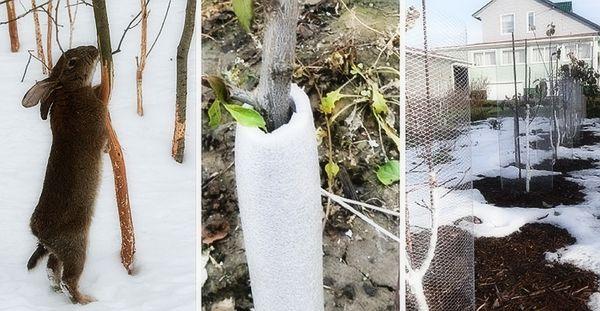
Fruit trees often suffer from rodent attacks. Mice, for example, damage the bark of apple trees, making them more susceptible to low temperatures. To avoid such problems, it's important to take action.
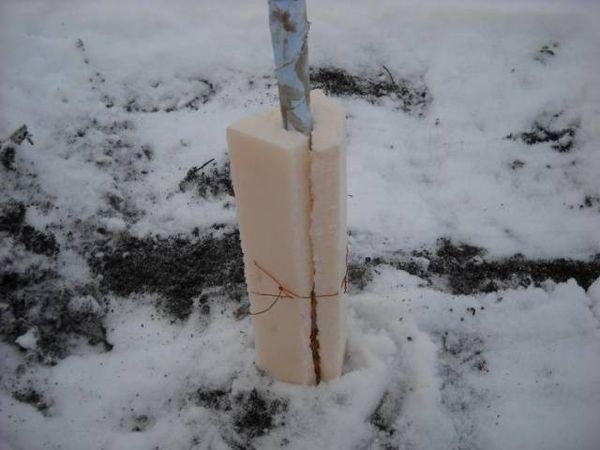
To combat small pests, cover the tree trunk with available materials. This could be roofing felt or tar paper. Using spruce branches is also considered a good method. Raspberry stems are also suitable. The best time to carry out this procedure is late fall.
Protecting trees from harmful insects is crucial. These parasites successfully overwinter in the bark and, with the arrival of spring, cause significant damage to the apple tree.
Following these recommendations will help you avoid such problems:
- Remove leaves from under trees. Fallen leaves harbor dangerous insect larvae. Therefore, it is recommended to collect and burn them in the fall.
- Remove fallen fruit. They can also harbor pest larvae.
- Treat with iron sulfate.
- Attract birds. This can be done with bird feeders. The birds will destroy dangerous beetles and other pests.
- Whitewash the base of the trunk with lime mortar. It's recommended to add copper sulfate. This method will not only help prevent pest attacks but also protect the tree from frost cracks and burns.
Autumn pruning
Crown shaping and pruning of old branches should be done in the fall, after the sap flow has completed. It's important to prune before frost sets in. Dead branches should be completely removed, and the remaining branches should be trimmed back by a third. It's recommended to make the cut at an acute angle, using sharpened tools.
The cut area should be treated with garden pitch. Oil paint can also be used. It is not recommended to leave stumps after pruning. It is best to shape the tree into a bush-like form. Its height should be 3 meters.

Last watering before frost
In summer, watering is recommended in August. After this, the apple trees begin to shed leaves, and shoot growth stops. The final soil watering should be done in October, before frost sets in. To do this, it's recommended to dig a hole around the apple tree and fill it completely with water.
Once the moisture has been absorbed, repeat the process several more times. Up to 200 liters of water can be applied to each mature tree.
It's important to keep the soil well-moistened. This will facilitate the roots' wintering.
Insulation of the trunk and roots
To adapt your apple tree to winter, it's worth insulating the roots and trunk. To do this, we recommend the following:
- loosen the soil around the trunk;
- cover it with a layer of mulch - for this purpose, use pine needles, sawdust, humus;
- hill up the plant – the height of the hill should be 30 centimeters;
- cover the tree with snow.
Particular attention should be paid to preparing young apple trees for winter. For this purpose, additional insulation materials such as fabric, paper, and roofing felt are used. Nylon, spruce, and burlap also produce good results.
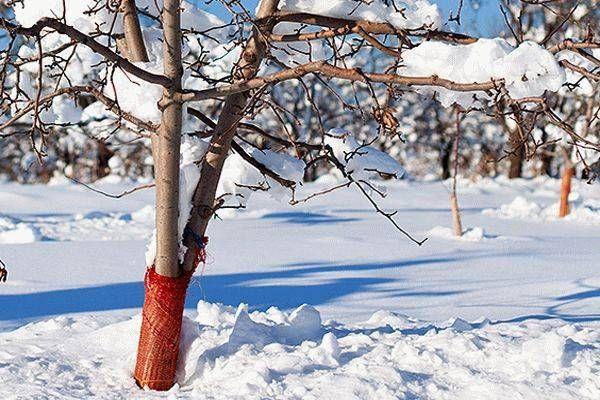
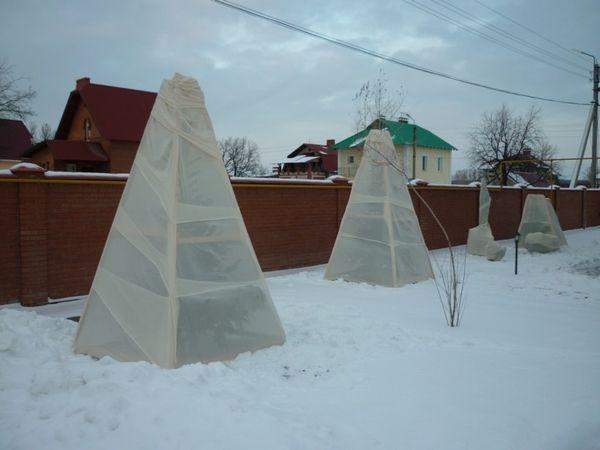
Preparing columnar apple trees is crucial. These trees are short and therefore require complete cover. To do this, follow these steps:
- take wooden planks;
- make a cone-shaped frame out of them;
- cover the apple tree with it;
- place a layer of peat inside;
- wrap the structure with tarpaulin.
Preparing young plants for winter requires staking. To do this, drive a stake into the ground and tie the tree trunk to it. This will help protect the seedlings from the wind.
Preventive treatment against diseases
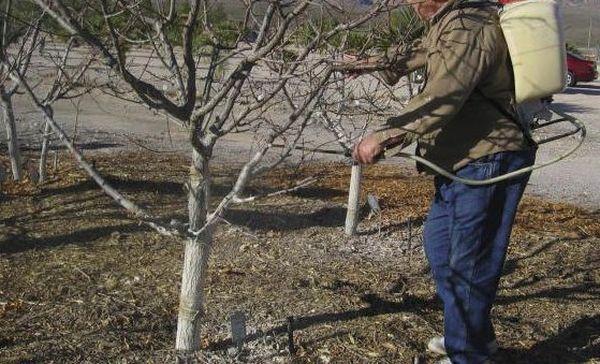
To prevent the development of dangerous diseases, it is recommended to use a 3% solution of Bordeaux mixture. This treatment will help prevent the development of fungal infections.
To carry out the procedure, you should follow these steps:
- Make a working solution.
- Put on gloves and a respirator.
- Pour the Bordeaux mixture solution into a sprayer and apply it to the apple trees. It's recommended to do this on a sunny, windless day.
Digging and fertilizing
After harvesting, it's a good idea to apply mineral fertilizer to the tree. During this period, the plant accumulates nutrients. This procedure should be performed 2-3 weeks after harvesting. This will help avoid a prolonged growing season.
When digging the soil, it's a good idea to add fertilizers containing potassium and phosphorus. This will completely stop the shoots from developing and allow them to mature, increasing the plant's frost resistance.

Sequence and rules for performing procedures
Insulating apple trees begins with cultivating the tree's trunk. The soil around the tree's trunk should be covered with a layer of mulch. Pine needles, leaves, soil, sand, peat, or sawdust can be used for this purpose. The size of the mulched circle should match the diameter of the tree's crown. Snow can also be used as additional cover, helping to protect the tree from severe frosts.

It is recommended to insulate the trunk and crown after the sap flow has ceased. The trunk and main branches should be wrapped in non-woven fabric, newspaper, or thick material.
Columnar and dwarf varieties are recommended to be completely covered. The same applies to annual crops.
Specifics of preparing apple trees for winter in different regions
The specifics of insulating apple trees directly depend on the climatic characteristics of the region.
In the Moscow region and central Russia
Saplings growing in the temperate climate zone require proper winter preparation. It is recommended to prune the trees, water them thoroughly, apply fertilizers containing potassium and phosphorus, and mulch the soil. Proper insulation of the plant's roots is crucial.
The Moscow region is characterized by unpredictable winters. Sudden thaws are often followed by freezing temperatures. Excessive soil moisture can cause root rot, and soil icing can cause crusting on the trunk.
In the Altai region
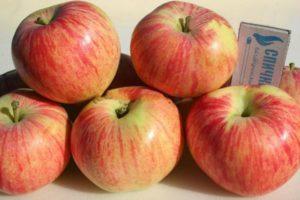
This region is characterized by less than favorable weather conditions. Therefore, it is recommended to carefully insulate the apple tree. To ensure the plant survives the winter more easily, it is important to choose the right variety. Varieties such as 'Souvenir Altaya' and 'Gornoaltaysky' are suitable for this region.
In the Urals and Siberia
These regions are characterized by harsh climate conditions. Therefore, it is recommended to carefully insulate seedlings. The covering layer should be at least 1-1.5 meters high. The lower part should be mulched with straw, peat, sawdust, soil, and fallen leaves. The mulch layer should be at least 20-30 centimeters thick.
In the southern regions
In warmer regions, apple trees don't require shelter. To ensure the tree survives light frosts, it's a good idea to cover the soil with a layer of mulch. Spruce branches, leaves, or sawdust are good options for this. It's also acceptable to insulate the base of the trunk with non-woven material. It's important that the material doesn't interfere with air circulation.
What to do
Sometimes there are situations when the efforts made to insulate apple trees do not produce the desired results.
In case of frost cracks
This disorder is caused by a sharp drop in temperature and a prolonged thaw. As a result, depressions appear on the trunk and at the base of branches.
Frost cracks are most often caused by sudden temperature fluctuations. This results in rapid contraction of the outer parts of the trunk. This causes fluid to escape from the cells. This fluid freezes, causing stress to the wood, which ultimately leads to rupture.
The tree's color changes, and blood vessels become clogged. Pests and diseases can actively thrive under the detached bark.
To avoid such problems, it is worth following these recommendations:
- choose frost-resistant apple tree varieties depending on the regional climate;
- choose the right place to plant the crop;
- monitor soil fertility;
- monitor the condition of trees.
If frost cracks do appear, it's important to take the necessary measures promptly. Treatment should begin in the first spring and continue until the cracks are completely healed. Treatment involves the following:
- Use a knife to cut away dead bark along the frost crack until white tissue appears.
- Treat the damaged area with a 5% solution of copper sulfate.
- Seal with a mixture of clay and cow dung. You can also use garden pitch.
- Wrap the trunk with burlap or film.
- Tie a deep wound with wire.
This procedure is performed annually until the tree is fully healed. In the spring, the wound should be freed from its bindings and the edge of the excess bark should be cut off, stimulating its growth.
If the tree is frozen
In this case, it's worth inspecting the tree and finding the grafted area. Then, consider several situations:
- Young branches are growing above the graft. This means the tree is still alive. In this case, the gardener should select the most vigorous shoot and shape the crown around it. The dead trunk should be cut off and treated with garden pitch.
- Branches have appeared below the graft. This indicates the apple tree is dead and will need to be replaced.
- The shoots grow from the roots, while the rest grow above the graft. In this case, the scion shoots are cut off, and the strongest one from the branches above the graft is selected. This is then used to shape the crown.
Properly preparing apple trees for winter helps them survive the cold and avoid the development of dangerous diseases. It's important that this process be comprehensive and include many important components.
Related posts:
 Methods for planting and propagating cherries at home
 Description and cultivation of the 15 best cherry plum varieties for the Moscow region, planting and care rules
 Peach tree care and agricultural secrets, pest control
 Descriptions of the 20 best cherry varieties for the Moscow region, their planting and care
 Description and characteristics of the 27 best plum varieties for the Urals, planting and care
 How to plant walnuts, care for them, and grow them at home
 Conditions for growing mandarin at home and rules for caring for the tree
 Characteristics and description of the Shokoladnitsa cherry variety, pollinators and fruiting