
The hybrid variety Centurion is a cabbage that meets the needs of both gardeners and farmers. Its dense, compact heads are ideal for sale or winter storage in your own cellar. This productive hybrid was added to the State Register of Breeding Achievements of Russia in 2010 and is recommended for cultivation in various regions of the country.
General characteristics of the plant
The cabbage plant has a well-developed root system and holds firmly in the soil, not collapsing under its own weight. This is further enhanced by its short stem with a compact rosette of leaves. The plant's low spreading habit allows for dense planting, spacing seedlings 40 cm apart and planting 4-5 plants per square meter.
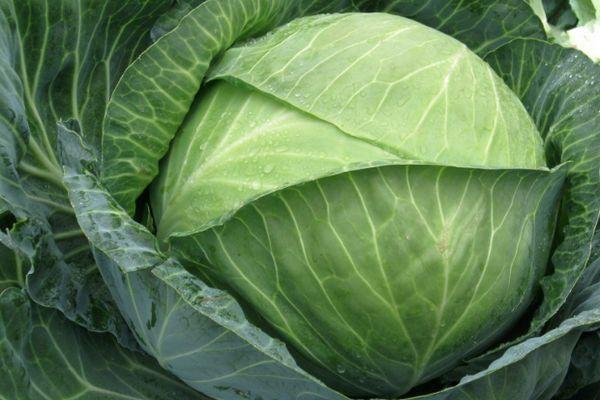
The rosette leaves are glaucous in color, have short petioles, and do not droop to the ground as they age. Lower leaves do not need to be removed, protecting the crop from slugs and diseases. Besides this advantage, the short petioles also ensure high consumer quality of the cabbage heads.
The Centurion variety is resistant to fusarium wilt and downy mildew, and is slightly affected by thrips.
Cabbage is undemanding in terms of growing conditions and watering, easily tolerating intense heat and dry soil. The Russian summer, with its abundant rainfall and relatively cool temperatures, is ideal for it, but it can also grow in southern regions. Once the cabbage reaches technical maturity, it can withstand even the first autumn frosts.
The variety's yield is inferior to proven domestic varieties such as Moskovskaya Pozdnyaya or Nadezhda, but it remains stable across years and is quite high. Up to 20 kg of marketable produce can be obtained from 1 m².
Consumer qualities
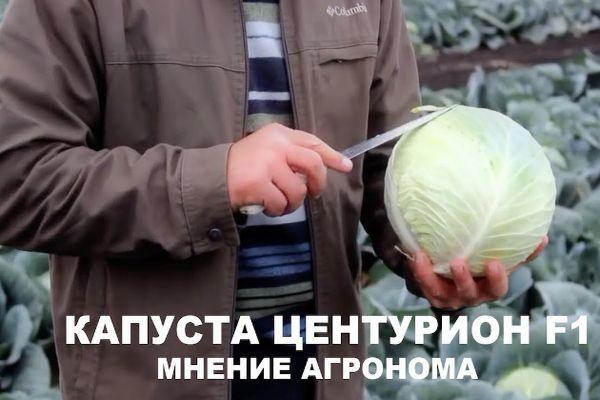
The first heads of technical maturity are harvested 120-130 days after sowing the seeds. By this time, Centurion F1 cabbage has reached a firm consistency; its surface does not spring back when pressed. It's best to delay harvesting for a few days to allow the cabbage to develop a sweeter flavor.

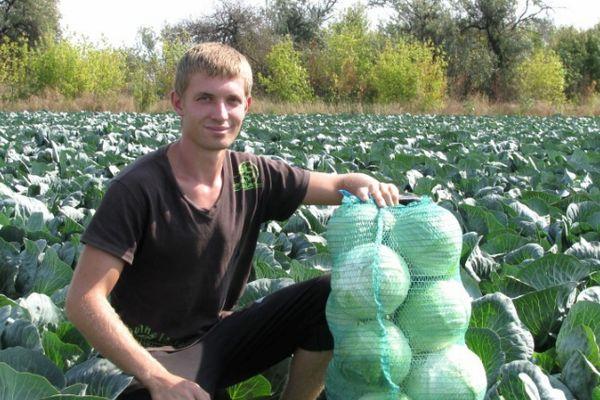
The heads are round. The average weight is 2-2.5 kg, but with proper care and watering, gardeners can grow larger cabbages—up to 5 kg. The heads are covered with tightly fitting green leaves, which protect the delicate inner parts from frost and wilting during storage.
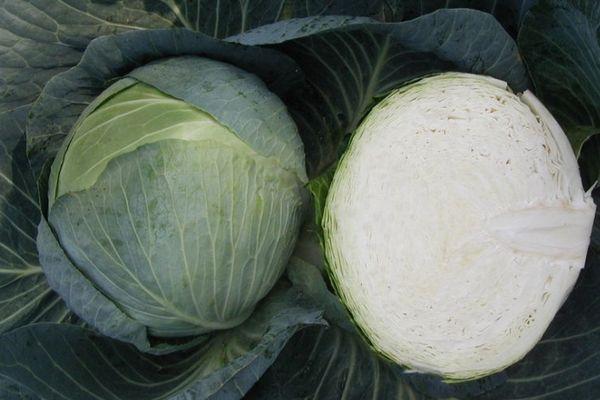
The taste is excellent. Gardeners describe the Centurion cabbage's flavor as sweet, without bitterness. They especially like the plant's short stalk, which occupies a very small portion of the head and doesn't even reach its center. The bulk of the vegetable consists of white or slightly cream-colored, tender leaves with virtually no tough parts. Processing this cabbage leaves very little waste, and most of the vegetable is edible.
The high content of vitamins and microelements makes Centurion cabbage is one of the best varieties for human consumption.
Its primary purpose is to prepare fresh vegetable dishes. This delicious and tender cabbage can be included in any salads and appetizers, and in some cases, it can even replace Napa cabbage. The lack of tough stalks and large veins allows for a tender, finely shredded cabbage or large slaws with a pleasantly crunchy texture.
Centurion cabbage is perfect for stuffed cabbage rolls with any filling: just separate the leaves, without wasting time peeling off the tough parts. This vegetable, with its rich cabbage aroma, is also perfect for any hot dishes, borscht, or bigos.

Mid-late-ripening cabbage varieties, including Centurion, are also used for winter preservation. Firm, compact heads of cabbage, securely covered by their outer leaves, store well until February without any special treatment. Simply pull them up by the roots and remove the rosette leaves from the stems. Hang the cabbage in this form, root-side up, in a cool, dry cellar.
Centurion cabbage is also good for pickling. Its high sugar content ensures the fermentation process is more complete, allowing the preserved cabbage to last until the next harvest. It can be pickled shredded, whole, or halved. Centurion cabbage can also be preserved in other ways: marinated, or used in salads and appetizers. Homemade cabbage rolls are also made from the large leaves, which are then frozen.
Agricultural technology of the variety
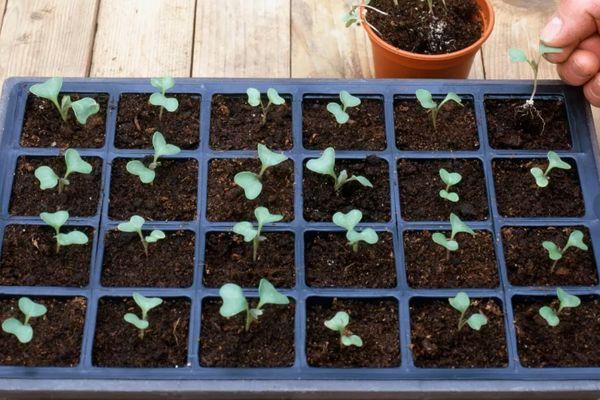
Mid-season cabbage is best grown from seedlings. This way, it will reach technical maturity by the end of the gardening season. To prevent the heads from splitting, the Centurion variety should not be sown too early. This can be done in late March or early April, approximately 1-1.5 months before the expected planting date. The seedlings should have time to form 5-6 true leaves and a well-developed root system.
If the seeds haven't been treated by the manufacturer for diseases, soak them in a weak solution of potassium permanganate or Fitosporin for 30-40 minutes. This will kill fungal and bacterial spores and allow you to save most of the young plants. Treated seeds don't need to be soaked. They can be distinguished by the color of each seed.
Prepare the substrate from equal parts sand, garden soil, and humus, adding 1 tablespoon of ground chalk or dolomite flour for every 5 kg of the mixture. Place the mixture in a seeding container and soak it in a hot, dark solution of potassium permanganate. Once the soil has cooled, you can sow the Centurion cabbage.
The soaked seeds should be slightly dried to make it easier to scatter them evenly. Apply a thin layer (0.5 cm) of dry sand or soil over the seeds. Cover the box with plastic wrap and place it in a warm place for germination. Cabbage sprouts within 1-3 days, so keep an eye on the sowing. When the first sprouts appear, remove the plastic wrap.
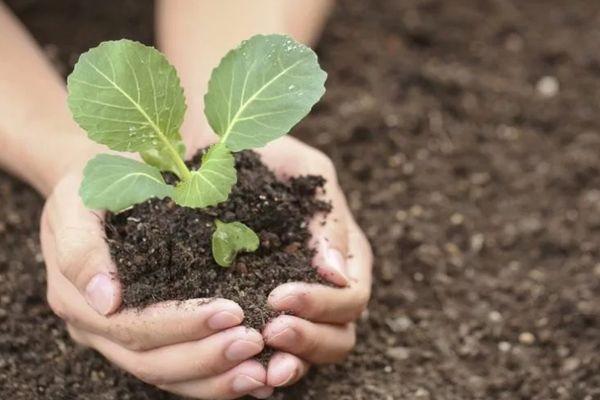
During the first few days of growth, seedlings require little or no watering. The soil condition can be used to determine when to water: if it's dry to a depth of 0.5 cm, gently water the seedlings with warm water and potassium permanganate (a light pink solution).
When the seedlings develop 2-3 true leaves, they should be transplanted either into individual cups or into a common container, spaced 7 cm apart. The plants should be planted deep enough to reach the heart-shaped cotyledon leaves. After transplanting, care for the cabbage consists of timely watering. Fertilizing is not required.
The planting site in the garden is chosen based on light availability. Centurion cabbage requires long days and plenty of sun. It's not recommended to plant it in a site with heavy, acidic soil or in a location previously occupied by cruciferous vegetables (turnips, rutabagas, mustard, etc.).

To prepare the soil for cabbage, you need to add 1-2 buckets of humus with sawdust, 1-1.5 kg of dolomite flour or other calcareous material and complex fertilizers with a high content of potassium and phosphorus (Agricola Vegeta, Kemira and others) per 1 m².
You should not overuse nitrogenous mixtures and organic matter: this will lead to an increase in green mass and a lack of heads of cabbage.
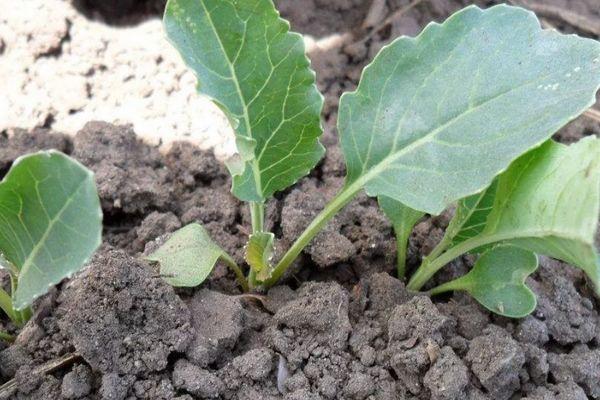
Plants are spaced 40 cm apart. 10-15 days after planting, the cabbage should be earthed up to prevent the growing mass of leaves from toppling the fragile stem.
Related posts:
 Carrot care guidelines for outdoor cultivation to ensure a good harvest
 How to properly grow a peach tree from a seed at home, planting and care
 Is it possible to grow an apricot tree from a seed in your garden? How to plant and care for it?
 Instructions for use and composition of the herbicide Centurion, dosage and analogues
 The best eggplant varieties for growing in a polycarbonate greenhouse: planting and care
 Description of the best varieties of onions, planting and care in open ground
 The best grape varieties for growing in the Urals, planting and care rules in summer
 Planting and caring for cherries, feeding and growing rules
An excellent variety; I grow this cabbage exclusively in open ground. The fruits grow large, so the leaves are easy to pick apart. This cabbage makes delicious cabbage rolls.