
- The origin of the Irbit potato
- Pros and cons of the variety
- Description of the culture
- Size and appearance of the bush
- Productivity and characteristics of root crops
- Planting potatoes in the garden
- Selecting a site
- Preparing planting material
- Landing plan and timing
- How to care for a plant
- Frequency of watering
- How and when to feed potatoes
- Loosening and mulching the soil
- Hilling up the beds
- Preventive treatments
- Harvesting and storage
- Reviews of vegetable growers about the Irbitsky crop
In the spring, most gardeners, vegetable growers, and farmers face the pressing question of choosing the right potato variety to plant in their plots. After all, the crop needs to be high-yielding, have excellent flavor, have a long shelf life, and require minimal maintenance.
The Irbitsky potato falls into this category, according to descriptions, reviews, and photos. The value of this new variety lies in its excellent taste, high yield, and minimal labor required for cultivation and care. Furthermore, the Irbitsky potato is completely undemanding to climate conditions.
The origin of the Irbit potato
The Irbitsky potato variety is a relatively new development. It was registered in the state register in 2009. Ural scientists and breeders worked on developing this new fruit and vegetable crop, striving to combine the vegetable's best characteristics into one variety.
This new variety was developed and created for cultivation in the Siberian and Ural regions, and is therefore resistant to the region's climatic conditions and easy to care for.
Due to its unique properties, the Irbitsky variety quickly gained popularity and is now grown in many countries.
Pros and cons of the variety
The Irbitsky potato is the pride of Ural breeders and is therefore considered an elite variety of fruit and vegetable crop.
Advantages of the variety:
- The plant is resistant to climatic conditions.
- The variety is distinguished by its productivity and is grown for industrial purposes.
- Good taste.
- Duration of storage of root crops.
- Natural immunity to viral or fungal diseases.
- The Irbitsky potato variety is widely used in the food industry and cooking.
- The variety is undemanding to soil and care.
- The seed material does not degenerate.
- Strong, large root vegetables can withstand long transportation.
 Important! No serious defects have been identified for this potato variety. However, with improper care or unfavorable climatic conditions, the crop's yield decreases.
Description of the culture
This vegetable crop is characterized by rapid growth and ripening. The root crop is harvested 2-2.5 months after planting in open ground.
Size and appearance of the bush
Medium-height, upright bushes with spreading branches. The leaves are small, serrated along the edges, and green in shades. During the growing season, large inflorescences appear on the bushes, opening to purple and reddish flowers.
Take a look Also
Productivity and characteristics of root crops
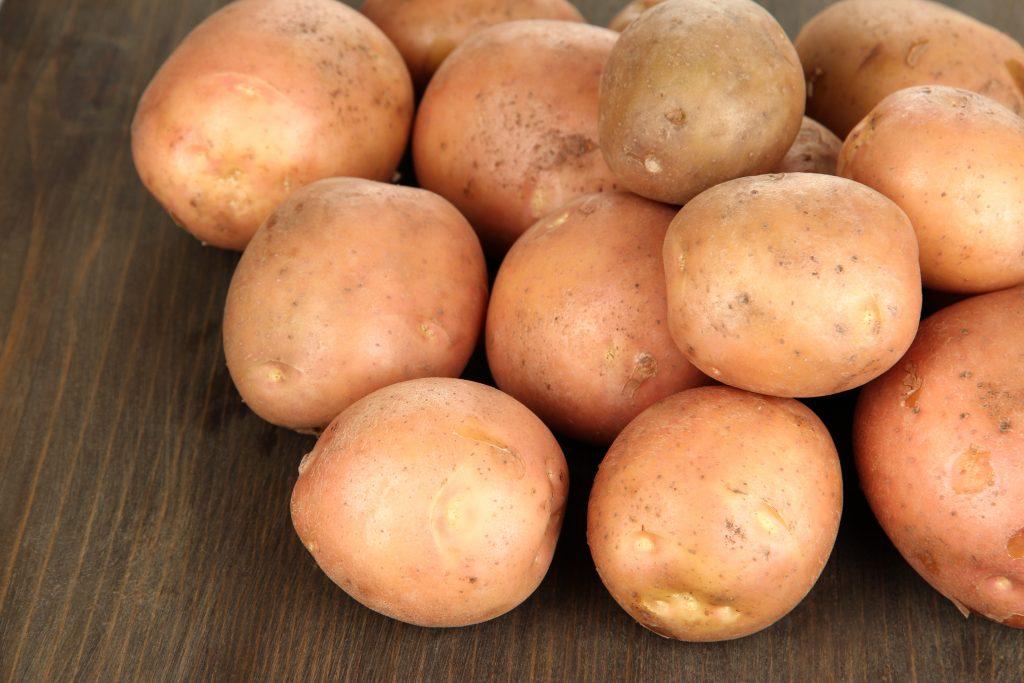
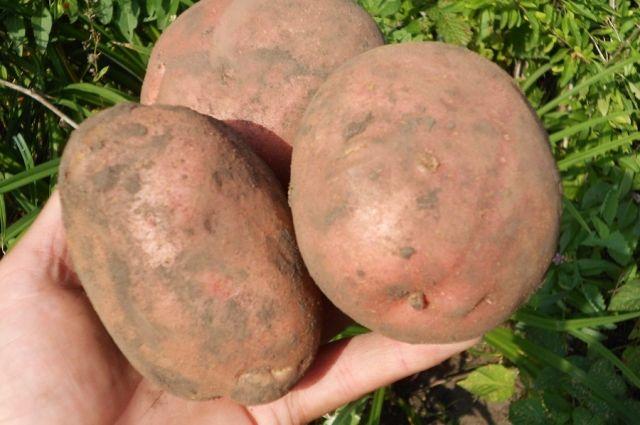
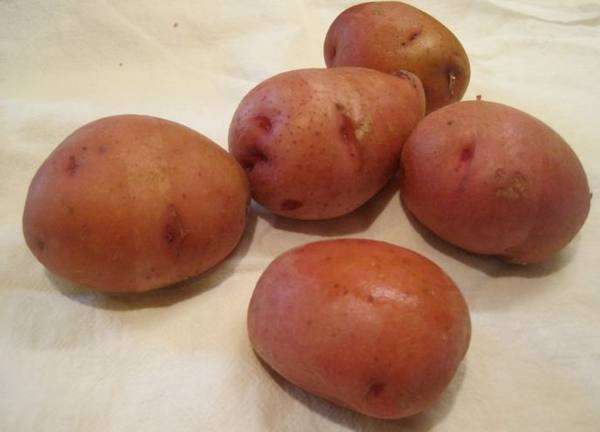
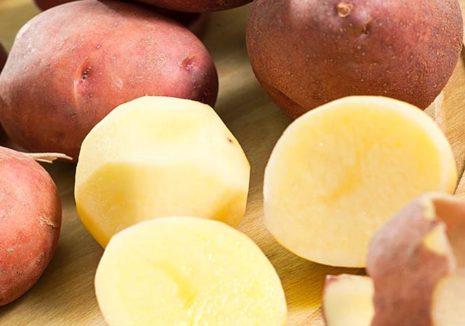
Irbit potatoes are distinguished by large, oval or round roots weighing up to 200 grams and pink skin. The flesh is light with a yellow tint, with a starch content of 13 to 17%.
When cooked, the roots retain their shape and color. This variety is recommended as a general-purpose variety and is often used for the industrial production of chips, dried potato concentrates, and frozen potatoes.
In cooking, this variety is used for all kinds of dishes. The crop has a high yield. Commercially grown plants yield 25 to 40 tons of root vegetables per hectare. Gardeners report that a single potato plant yields 2 to 3 kg of large vegetables.
Planting potatoes in the garden
To obtain a large vegetable harvest, the main conditions are high-quality planting material and the correct timing of its planting in open ground.
Selecting a site
The Irbitsky potato variety thrives in well-lit, draft-free areas. It's easy on the soil, but it's not recommended to plant it after tomatoes or sunflowers. Good predecessors include cucumbers, legumes, any greens, beets, or peppers.
Soil preparation for planting begins in the fall. The soil is dug to a depth of 30-40 cm, mixed with humus, and loosened.
Before spring planting, the beds are dug again and organic or mineral fertilizers are added. Lime is added to soils with high acidity.
 Important! It is recommended to change the potato planting site every 3-4 years.
Preparing planting material
Planting material is selected from the previous harvest or purchased from specialized stores. Twenty-five to twenty-five days before planting, the root vegetables are germinated. For this purpose, medium-sized tubers are selected, free of obvious damage, signs of rot, and fungal growth.
The root vegetables are placed in a bright, warm location and left until the first shoots appear. Before planting outdoors, the roots are treated with special disinfectants. This preventative measure helps prevent the development of diseases during the plant's growth and maturation period.
Landing plan and timing
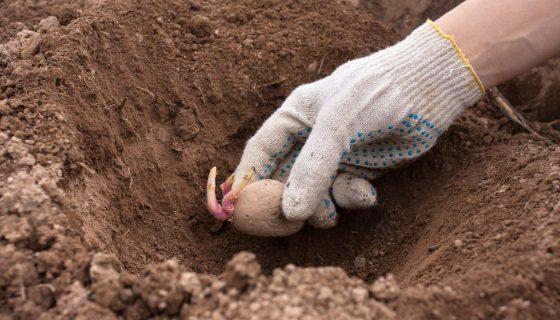
In the prepared soil, dig holes 30-35 cm apart or use a harrow. The distance between the beds is 60 to 70 cm. Place the prepared tubers in each hole and plant them no more than 10 cm deep. Smaller tubers are planted 5-8 cm deep. Larger tubers can be cut into several pieces, as long as each piece contains a sprouted bulb.
Take a look Also
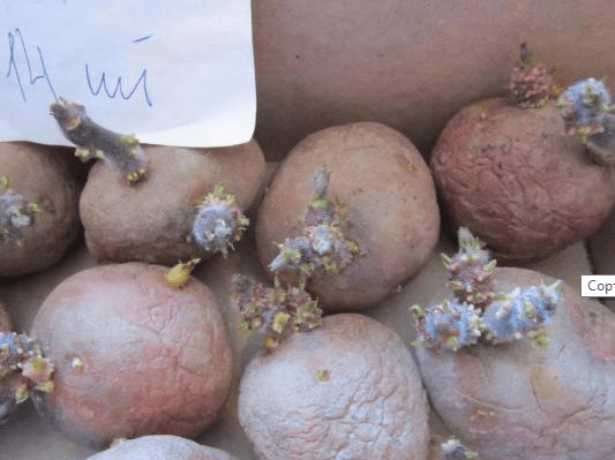 Important! If unsprouted tubers are planted in open ground, the growing season and harvest ripening period will be delayed by 2-3 weeks.
Potato planting times depend directly on the region's climate. The crop takes 60 to 85 days to mature. Therefore, in southern latitudes, the vegetable is planted as early as April, while in northern latitudes, the soil warms to 8-10 degrees Celsius. In central regions, planting begins in early May.
How to care for a plant
By following standard agricultural practices for growing and caring for the Irbitsky potato variety, you'll get a high-quality, abundant root crop.
Frequency of watering
This vegetable variety tolerates drought and prolonged hot weather well. However, during the inflorescence and flowering period, the plant requires additional soil moisture.
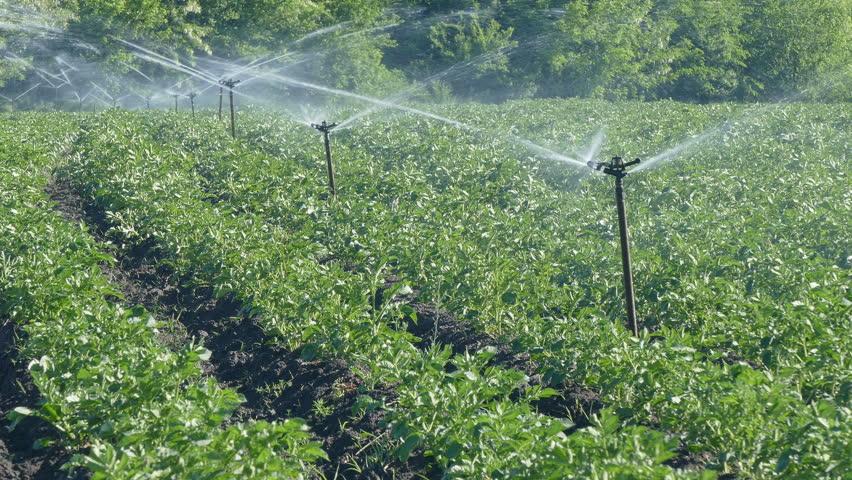
The crop is first watered after the young seedlings emerge. Subsequent watering schedules are calculated based on the region's climate and the potato's growth rate.
How and when to feed potatoes
All potatoes appreciate additional feeding and fertilizer, and the Irbitsky variety is no exception. For best growth and fruiting, the plant is fed and fertilized several times per season.
Important! Excessive nitrogen fertilizers in the soil stimulate the active development of the above-ground part of the plant, which negatively impacts the ripening of root crops.
Initially, young seedlings are fed with fertilizers containing phosphorus and potassium. Organic fertilizers are then used. When potatoes begin to bloom, it is fed with ash and chicken droppings.
Loosening and mulching the soil
Soil loosening is carried out in conjunction with irrigation. Loosening the soil removes weeds and improves oxygen access to the plant's root system. Loosening also helps maintain the necessary soil moisture.
Similar results can be achieved by mulching the beds with dry grass or sawdust.
Hilling up the beds
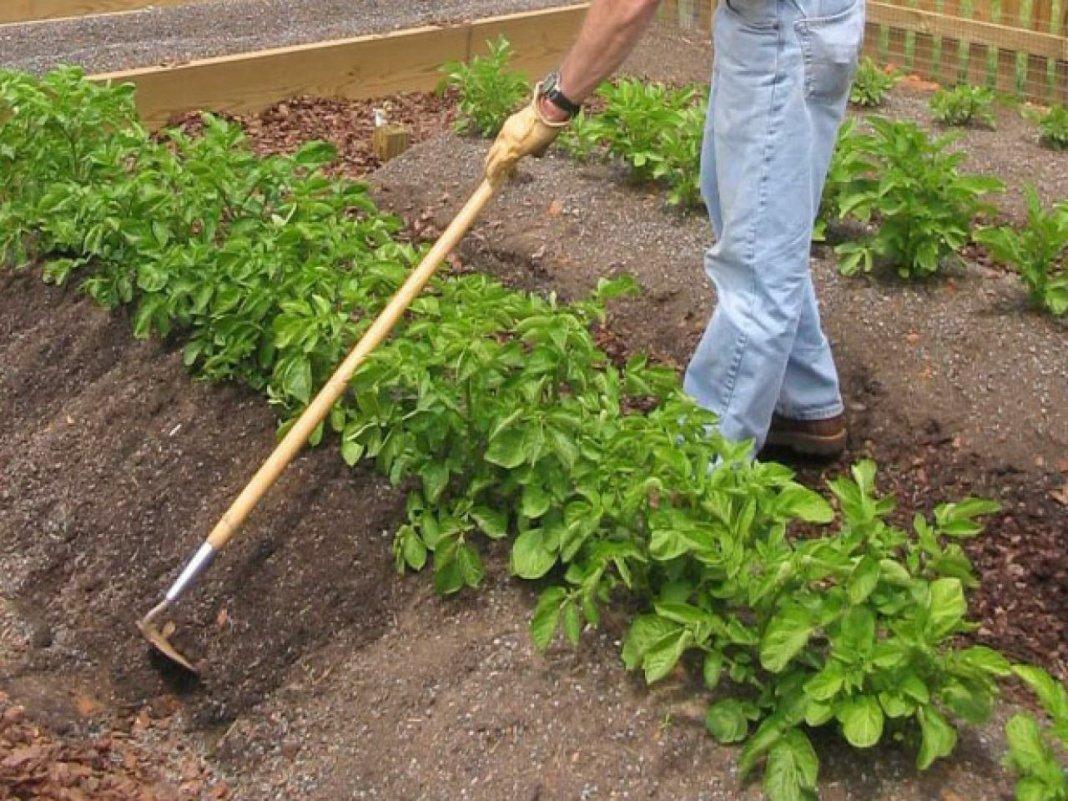
Hilling up potato beds promotes proper growth, development, and ripening. This work is usually carried out in conjunction with watering and fertilizing. This process is repeated several times throughout the growing and ripening period. Potatoes are first hilled up when the plants reach 20-25 cm. Subsequently, hilling is carried out as needed.
Preventive treatments
The Irbitsky potato variety is resistant to many diseases and pests. However, some pests still attack this vegetable variety. Colorado potato beetles, wireworms, and mole crickets are particularly common.
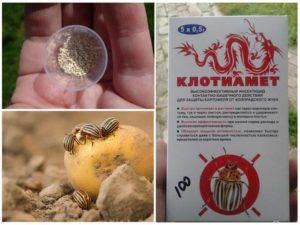
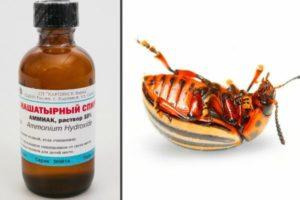
If the damaged areas are small, Colorado potato beetles are collected mechanically and then destroyed. For larger infestations, special solutions or proven folk remedies are used. To avoid such problems, simply follow the care instructions and water and fertilize your plants regularly.
Harvesting and storage
The potato plant's readiness to harvest is determined by its bushes. As soon as the tops and leaves begin to yellow and wilt, it's time to harvest the root crops. A few days before harvesting, the tops are trimmed. It's best to harvest the potatoes with a pitchfork, as this reduces the risk of damaging the tubers.
The dug-up root vegetables are cleaned of soil and dried in the sun for several hours. The harvest is then moved under a canopy and finished drying. Afterwards, they are packed into bags, boxes, or nets and stored for long-term in a cool, well-ventilated, dark place. Under the right conditions, Irbitsky potatoes will easily keep until spring.
Reviews of vegetable growers about the Irbitsky crop
Sergey Pavlovich. Krasnodar
The variety is disease-resistant, yields a large crop, and requires very little care. Last year, there was intense heat and drought, and we couldn't get to the dacha. After almost a month of absence in the heat, the Irbitsky potatoes were fine, and we harvested an excellent crop, as expected.
Irina Sergeevna. Bryansk
We'd heard a lot of good things about this potato variety and decided to try planting some ourselves. The tubers are large, uniform, and practically uniform in size. The Irbitsky potato itself is delicious and doesn't overcook, making it suitable for almost any dish.
Svetlana. Michurinsk
The soil at our dacha is very poor, so potatoes didn't grow there. But we bought a new variety called Irbitsky, and now we have a large potato harvest every year.
Related posts:
 Description of the best potato varieties of domestic and foreign selection
 Description of the best potato varieties for 2025, selection for regions
 Description and characteristics of the Rodrigo potato variety, cultivation and care
 Description and characteristics of the Gulliver potato variety, planting and care
 Why potatoes aren't growing well in the garden, and what to do to ensure a bountiful harvest
 Description and characteristics of the Krasavchik potato variety, planting and care
 Description and characteristics of the Arosa potato variety, planting and care
 Description and characteristics of the Bellarosa potato variety, planting and care
I bought the "Irbitsky" potato variety. The yield is good, with 6-7 large potatoes per plant. The specifications say the potatoes don't overcook, but mine are completely overcooked, and I can't even make mashed potatoes. It's a shame. Why is that?
Perhaps you're taking the term "don't overcook" too literally. Breeders have learned to develop varieties with different shapes, frost resistance, and early maturity. But the characteristics of the potato product are a bit more complicated. Try cooking over low heat. There are some subtleties here, too. You're unlikely to find a variety that "doesn't overcook at all."