
Gardeners sometimes wonder why their beloved strawberries are drying up and not turning red. There can be many causes for this problem, so the key is to identify them promptly and take the necessary steps to eliminate them. Experienced gardeners take preventative measures in advance to protect the future harvest.
Causes of strawberry drying and ways to combat them
There are several common reasons why garden strawberries fail to ripen and dry out right on the bushes. Early detection and treatment significantly increases the chances of saving the harvest.
The influence of weather
Unfavorable weather conditions negatively impact the growth and development of any plant, and strawberries are no exception. Deviations in berry development are caused by the following factors:
- extreme heat;
- prolonged drought;
- night return frosts;
- high humidity due to frequent and heavy precipitation.
Each of these factors has a detrimental effect on garden strawberries, but the greatest danger is prolonged drought and summer heat. It is in this type of weather that the berries most often dry out before they have a chance to ripen.
To prevent this from happening, you need to install a drip or sprinkler irrigation system on your property.
Lack of moisture
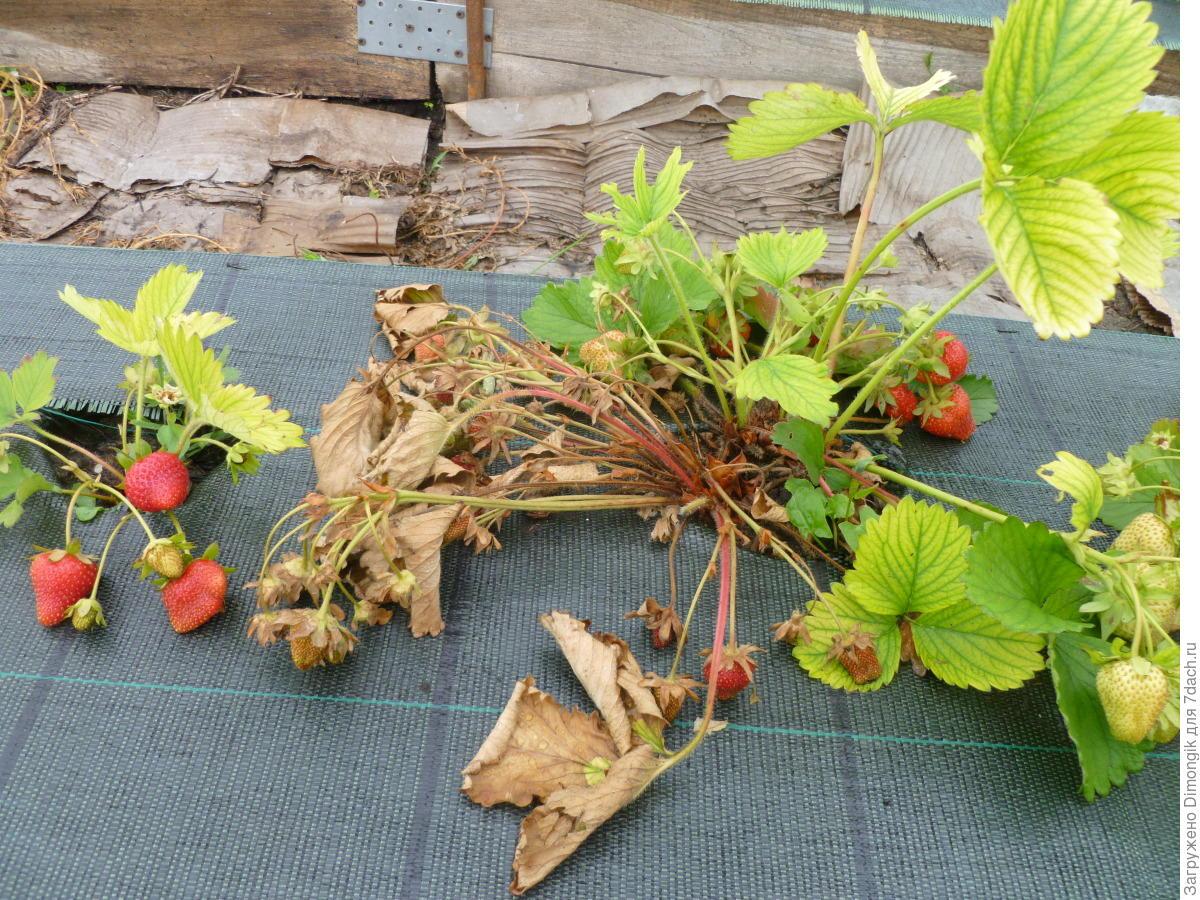
Sometimes the gardener notices that the edges strawberry leaves are turning yellow, and the harvest ripens slowly. This is due to insufficient irrigation. This problem occurs when air temperatures exceed 30°C. Under such conditions, the plant simply dies from lack of moisture. It is necessary to constantly ensure that the soil is moist. It is recommended to water garden strawberries daily, adding 5 liters of water under each bush.
Take a look Also
Fungal diseases
Problems with strawberry crops are sometimes caused by fungal infections in the beds. These fungi cause the fruit to dry out and the plants to die.
Verticillium wilt
This disease is considered one of the most dangerous. It causes the bush to wilt, the symptoms of which are not immediately noticeable to the gardener. Initially, the disease affects only the lower leaves, where characteristic brown spots become visible. Over time, the rest of the plant also becomes spotted and dries out. Even if signs of the disease are detected at an early stage, strawberry bushes will have to be destroyed to prevent further infection.
Late blight
Late blight is easy to spot, as characteristic brown spots become visible on the leaves. This disease is dangerous for strawberries, as it causes fruit rot. If left untreated, you could be left with no harvest at all. Effective remedies for late blight include copper sulfate, Fitosporin, and Bordeaux mixture. Alternatively, gardeners use a solution of laundry soap or whey in water.
Powdery mildew
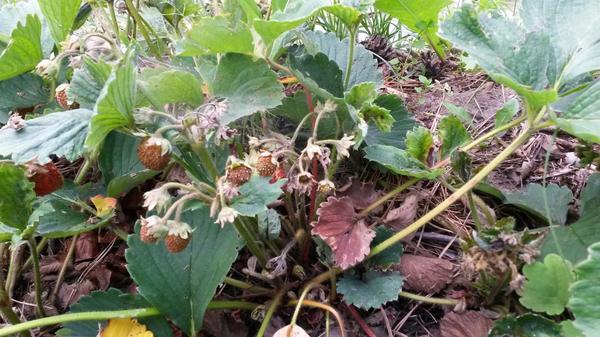
This disease is considered the most common. Initially, it affects young strawberry leaves, but if immediate action is not taken, the infection spreads to the berries and even the tendrils. A characteristic sign of the disease's progression is a white coating, after which the leaf blades curl into tubes and dry out. Optimal conditions for the development of powdery mildew on strawberries are high temperature and humidity. To combat the disease, an aqueous solution of milk whey is effectively used.
Gray rot
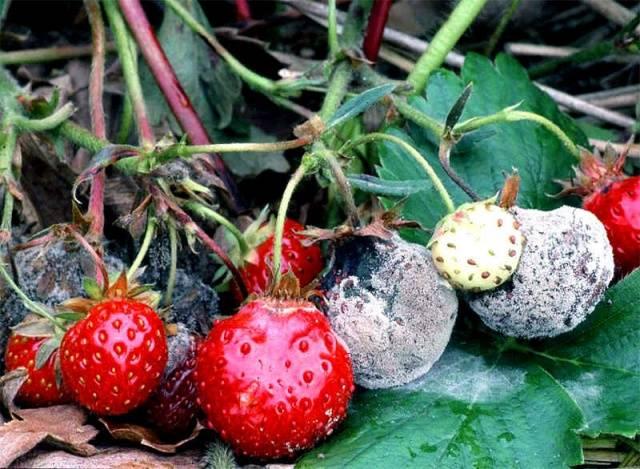
This disease can appear not only on strawberry bushes but also on other garden crops. The first sign of infection is brown spots on the leaves, which increase in size over time. After some time, the spots spread to the fruit, causing them to rot. The rotted strawberry fruits continue to feed on the sap of the mother plant, causing the leaves to turn yellow. The danger of the disease is that it is untreatable, so all affected bushes are dug up and burned.
Strawberry pests
Drying of strawberry fruits is caused not only by diseases, but also by the negative impact of pests.
Nematode
Strawberries often wilt due to nematodes, thin, transparent worms that are either cylindrical or elongated. When the pest lands on the foliage, it begins to suck the plant's sap, causing it to dry out. Nematodes can be controlled by treating the plants with a copper sulfate solution or garlic infusion.
Strawberry mite
This insect is difficult to spot with the naked eye due to its small size. Like nematodes, strawberry mites feed on plant sap and cause the bushes to dry out. Signs that this pest is infesting your garden include:
- slow growth and development of bushes;
- the presence of a yellowish oily coating on the leaves.
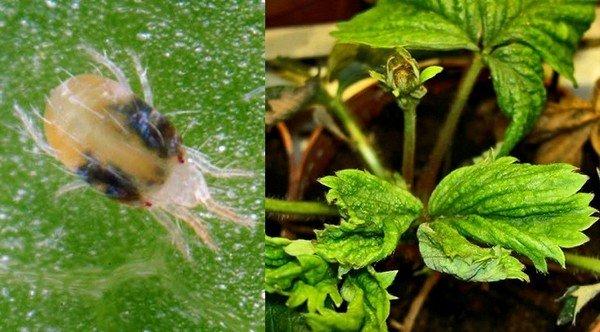
Karbofos is effective in combating mites. It is recommended to treat garden beds with its solution at least twice a week.
Strawberry-raspberry weevil
The weevil's effects quickly destroy strawberry bushes. Birch tar or a solution of laundry soap can be used to save the plants.
What to do if the cause cannot be determined?
If the exact cause of strawberry bushes turning yellow and berries drying out cannot be determined for any reason, experienced gardeners recommend replanting the plants and observing them for a while. Sometimes, after this, the yellowing disappears and the bushes' growth returns to normal.
This circumstance indicates a lack of nutrients and microelements in the soil.
Preventive measures
Preventing disease and pest damage is always easier than treating strawberries later. The following measures are recommended:
- organize timely and regular watering of strawberry beds;
- apply fertilizers and fertilizers several times per season (in particular, superphosphate, wood ash and humus);
- Spray strawberry bushes with a soda solution to prevent fungal infections.
If a particular disease or pest infestation has previously occurred on the site, preventative treatments must be carried out in advance to prevent a relapse. Early recognition of the causes of strawberry yellowing and their elimination will help keep the harvest safe and sound, and the plants will remain healthy and unharmed. Gardeners should periodically inspect their beds even after fruiting has finished, and also carefully prepare strawberries for winter.
Related posts:
 Description of the Florence strawberry variety, planting and care features
 How to grow strawberries at home
 Description and characteristics of the Vima Zanta strawberry variety, planting and care scheme
 Description of the everbearing strawberry variety Selva and cultivation technology
 Signs of disease and pest attacks on strawberries, treatment methods
 The best varieties and cultivation of everbearing strawberries, fertilizing and propagation
 Description and how to plant the Garland strawberry variety
 Description and characteristics of the Korona strawberry variety, planting and care scheme