
Gardeners begin harvesting onions in the second half of July. To preserve their nutritional value and ensure long-term storage, the vegetable must be fully ripe. If dug up too early, the roots won't have time to develop; if dug up too late, they'll become overripe and the scales will begin to split. How to know when to dig up onions and what characteristics to look for will be discussed below.
How to determine the ripeness of root vegetables
So, it is correct to determine onion harvest time The following characteristic signs will help:
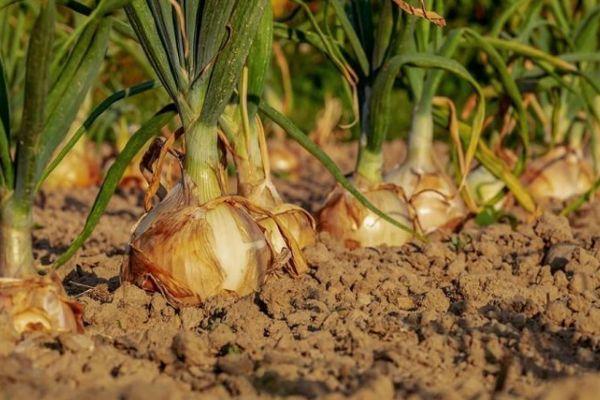
- Up to 70% of yellowed feathers should fall to the ground. This sign will not be obvious if the summer was rainy.
- Thin, drying neck.
- Completely dry skin of the onion at the base.
The signs match, it’s time to dig up the harvest.
Collection Features
The second half of summer—people say it's time to "harvest the garden." If external signs of ripeness are difficult to detect, and the time for harvesting root vegetables is approaching, there's a scientific approach to determining ripeness. Onion ripening depends on location and climate conditions, and takes between 68 and 83 days.
It's necessary to calculate the time from planting date to harvest, taking into account weather conditions and varietal characteristics. Rainy weather increases the number of days needed for ripening, while hot weather decreases it.
How to speed up ripening
During rainy summers, due to the abundance of moisture, the above-ground growth of onions continues, delaying the formation of the bulb. The neck does not dry out and remains thick and juicy. There is a high risk of losing the harvest.
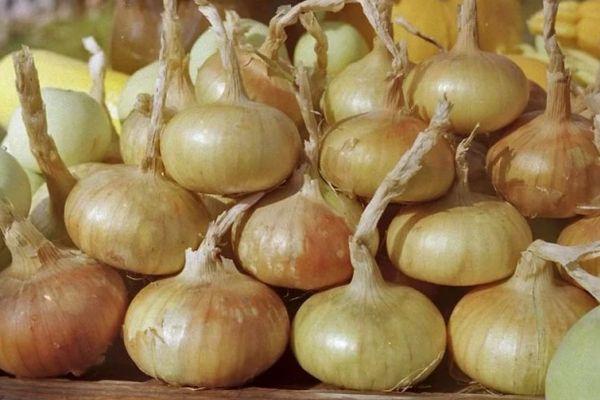
There are several ways to avoid this:
- Stop watering the bed 15-20 days before harvesting. Insufficient moisture will stunt plant growth and shorten the ripening period.
- A common method is to cut off the onion tops 7-10 days before harvesting. This is a common practice among less-skilled amateur gardeners. This often leads to significant yield losses. Bacteria and microorganisms can enter the bulb through the cut, leading to infection and bulb rot.
- An effective method is to prune the roots 5 centimeters below the base. This method is only effective if you don't miss the deadline and complete the necessary work no later than a month before harvest. You can use any convenient tool.
- If you planted the vegetable late, use the following method: 10 days before the expected harvest, use a garden trowel or your hands to move the soil away from the root crop, exposing about half of the bulbs.
- You can lift the turnips with a pitchfork 2-3 weeks before the expected harvest date, partially damaging the root system. This will accelerate the ripening process due to the lack of nutrients. The nutrients and microelements found in the plant's stem will facilitate this process.

Preparatory work
Cleaning technology onions and drying method Vary depending on weather conditions. Simple preparatory work promotes rapid ripening and long-term storage of the harvested crop.
It's raining all of July. Cover your crops well in advance to avoid over-watering. If necessary, trim the roots with a shovel and remove excess soil from the bulbs. Take your time—the results will be rewarding.
Peculiarities of collection under favorable conditions
Provided the summer was normal, onions will ripen between July 20 and August 15. Proper onion harvesting techniques will allow you to preserve the harvest over the winter without unnecessary losses.
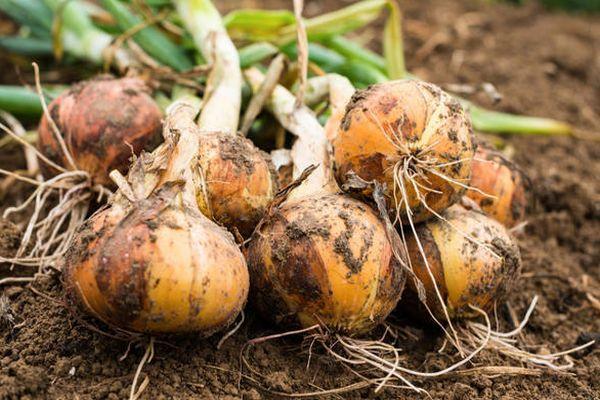
Start cleaning before sunrise.
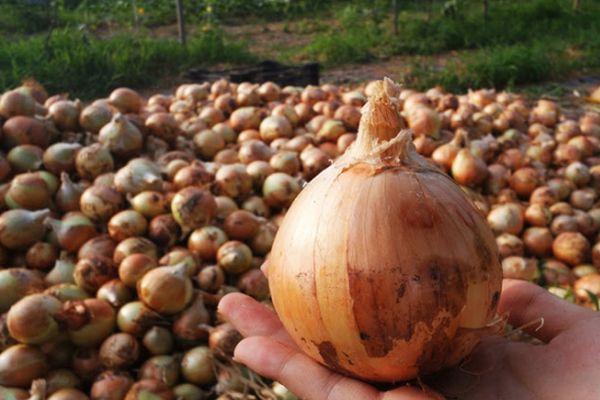
- When the plump roots turn yellow and 60-80% of them have fallen onto the beds, and the collar has dried out and become quite thin, it's time to begin harvesting the roots, preferably in sunny weather. Complete the harvest within 10 days. This will allow the crop to fully ripen without losing its essential qualities.
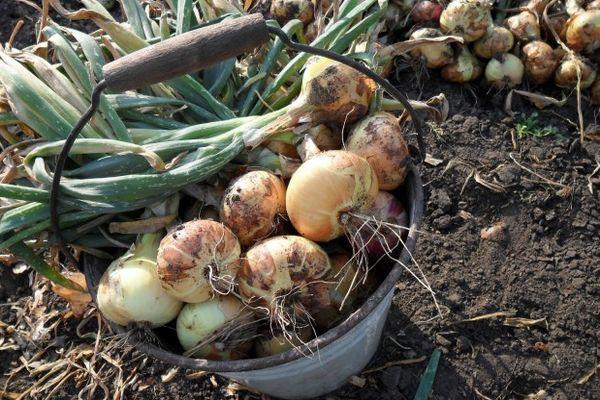
- If the soil is loose, it's best to pull the bulbs out by hand, pulling them by the dried stem. This will ensure they're prepared for storage as carefully as possible. In hard soil, use a shovel. Dig shallowly, leaving half the bulb exposed. Then, gently pull the dried stems out, shaking them gently to release excess soil from the roots. Avoid tapping the bulbs with a shovel to avoid mechanical damage.
Drying bulbs before storage
Ideally, dry directly in the sun. The onions will last a long time if they are covered in golden scales that peel off easily, and the stems are firm and completely dry.
- The dug-up harvest should be dried without removing the feathers; drying time is 1-2 weeks. In sunny weather, you can dry the harvest directly in the garden or in a dry, ventilated area. Lay the harvested vegetables in a single layer on wooden pallets to ensure a constant supply of fresh air. This will speed up the drying process and reduce the risk of rotting.
- Drying directly in the garden bed has some nuances. Arrange the vegetables in several rows, avoiding curling. The greens should not rest on the onion heads. If the soil is not dry enough, turn them frequently, and cover them at night. After the initial drying, move them under a canopy for further processing.
- Dried bulbs should be sorted, removing roots and excess stems. Note: leave the stem at least 4-5 centimeters long. Trimming it too short will significantly reduce the shelf life. Separate damaged, rotten bulbs, and bulbs with green bases from the rest of the bulbs; they will not store well. These bulbs should be used first. If the stem is completely dry, you can leave it on and braid the harvest for better storage.
Assembly considerations in rainy weather
Onion harvest time is approaching, but the weather isn't offering sunny days? How do you choose the right day, and how should you harvest the onions? These are the questions many gardeners ask themselves. If there's prolonged rain, the onions should be harvested no matter what, otherwise they'll rot right there in the garden.
- Dig under and pull out the leaves. Remove any remaining soil with your hands.
- After digging up the bulbs, it's best to immediately separate the roots and tops and remove any excess skins. However, this can be done later, after allowing the onions to dry out slightly for 2-3 days.
- Transfer the vegetables from the garden to a dry, ventilated area. Place them on wooden or mesh trays, turning them periodically. Within 2-3 weeks, the onion will be covered with a new layer of skin. This will allow it to be stored.
How to collect testicles
Due to the characteristics of onions, viable seeds are collected only from mother onions. To obtain viable seed, a two- or three-year cycle must be completed, depending on the variety and conditions. In the first year, farmers sow the seeds densely to get onion setsIn early spring, mother onions are grown from sets; after full ripening, live seeds can be collected.
To harvest high-quality testicles, it is necessary to know when and by what signs to determine their maturity:
- A full-fledged umbel should form. Harvesting should begin only when the first cracked capsules appear on the umbels. Ripe seeds should be black. Harvesting is carried out in several stages, as the umbels mature unevenly.
- If the season has been dry, the bulbs will ripen by the end of July. If the weather has been normal, harvesting may take until the 20th of August. If the bulbs haven't ripened before the frost, another method involves pulling the bulbs out and keeping them indoors until they are fully ripe.
- Use garden shears to cut the umbels. Removing them by hand will cause too much seed to fall to the ground. You can cut them with an extra 5-10 centimeters. Tie them into small bundles and hang them, under a sheet of newspaper, to collect the ripened and fallen seeds.
- The further procedure is quite simple: dry umbrellas are peeled by hand over any convenient surface or in a bag.
Store seeds in a cool, dry, dark place. Temperatures should not exceed 15 degrees Celsius, and humidity should not exceed 50%. Temperature fluctuations are highly undesirable.
Storage secrets from a seasoned gardener
To understand proper storage and the appropriate containers, it's important to pay close attention and understand the basics. At what temperature do onions retain their nutritional value, ensuring they'll be enjoyed all winter without sprouting? You'll need to consider not only pre-treatment but also creating favorable storage conditions. Selecting a room with the right temperature and humidity, and preparing the right containers—these are the bare minimum to ensure onions stay fresh, juicy, and retain essential micronutrients and vitamins throughout the winter.
Take a look Also
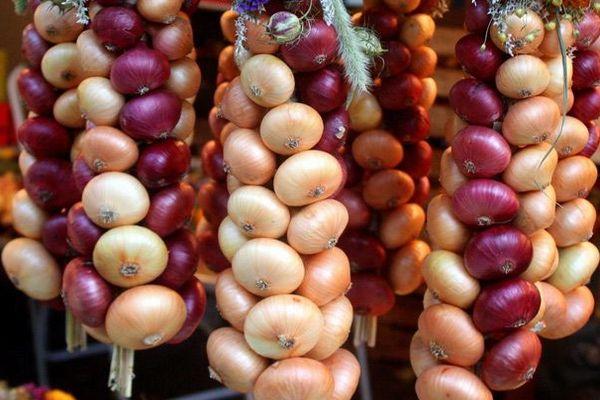
Not every variety is suitable for long-term storage, so keep this in mind. The most convenient storage options (tested by generations of farmers) are the following:
- The main advantage of a wicker wooden basket is its simple design and eco-friendliness. Its aesthetic appeal is also unquestionable. Onions will "breathe" in this container.
- A modern solution is to choose plastic or wooden crates. The sides should not be too high. These containers promote good air flow.
- Cardboard boxes with pre-punched holes in the sides. An environmentally friendly, breathable material.
- Nylon stockings have proven themselves to be a good choice. They are a reliable and practical container, and are suitable for cellar storage.
- You can braid the feathers using twine. This is not only a practical but also an aesthetically pleasing way to decorate any kitchen. It adds a nice touch of variety. The required length of dried feathers is about 10 centimeters.
- A regular nylon mesh will also work.
- Fabric bags made from burlap or sackcloth will ensure the necessary storage time.
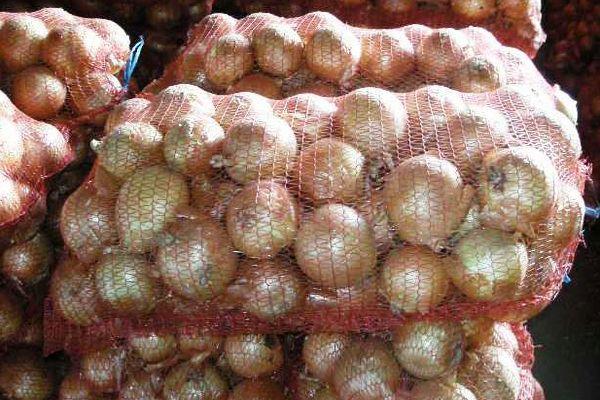
There aren't many storage conditions for onions. The room temperature shouldn't drop below freezing. Sudden temperature fluctuations will also negatively impact the onions' shelf life, and the growing season may begin prematurely.
Humidity should ideally be below 30%. Fresh air is essential, so attics in outbuildings are often chosen. Long-term refrigeration is impossible due to the lack of fresh air.
Whatever storage method you choose, sort the onions at least three times during storage. Don't throw away the peels from boxes or crates—they absorb moisture well. Place a bucket of sawdust or wood ash in the storage area to maintain the required humidity.
By following these simple recommendations, you will preserve your harvest until spring.
Related posts:
 Description of the best varieties of onions, planting and care in open ground
 Description of shallot varieties, cultivation and care, when to harvest
 Control of onion pests using chemical and folk remedies
 50 types and varieties of perennial onions with descriptions, cultivation, and care
 The beneficial properties of white onions, description of varieties, cultivation and care
 How and when to plant onions to get large bulbs
 Types of onion varieties with names and descriptions, their differences and cultivation
 Description of the Exhibition onion variety, growing from seedlings, planting and care