
- Why cucumbers are tied up in a greenhouse or hothouse?
- When is it necessary to garter?
- Materials and instruments for the procedure
- Patches
- Leg-split
- Thin ropes
- Methods and step-by-step instructions for tying up cucumbers in a greenhouse and hotbed
- Horizontal garter
- Vertical
- Mixed method
- On the stairs and arch
- Using trellis mesh
- How to properly tie cucumbers in a polycarbonate greenhouse
- Garter to the support
- Use of trellises
- Tying to the metal frame of the greenhouse
- We choose the best method depending on the cucumber variety
- Is it possible to grow cucumbers without garters?
Not only beginners, but also experienced vegetable growers will find the advice useful, What is the best way to tie up cucumbers? In a polycarbonate greenhouse. There are many ways to perform this procedure. Each differs in the equipment used, the type of construction, and some other features. Staking reduces the risk of infection and increases the yield.
Why cucumbers are tied up in a greenhouse or hothouse?
To obtain a bountiful, high-quality harvest, cucumbers require proper care. In addition to timely watering and fertilizing, it is recommended to properly tie the stems to a support.
The procedure is characterized by a whole list of advantages:
- all parts of the plant will receive sufficient light and air;
- a large number of ovaries will remain on the branches;
- convenient for picking green cucumbers;
- the risk of spreading infections is reduced;
- saves space;
- It is easier to loosen, water and process cucumber bushes.
If cucumber vines are left to creep along the ground, they will not receive enough daylight. The likelihood of ovary shedding and the development of fungal infections increases.
When is it necessary to garter?
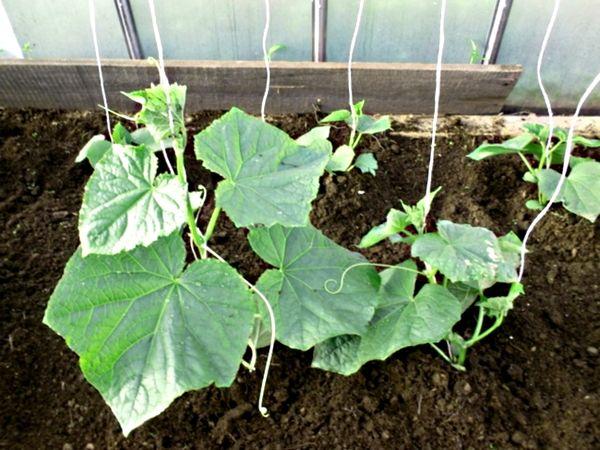
In greenhouses, staking begins when the stem reaches a height of 29 cm. During this period, the first two pairs of true leaves form. Delaying this period increases the risk of stem damage.
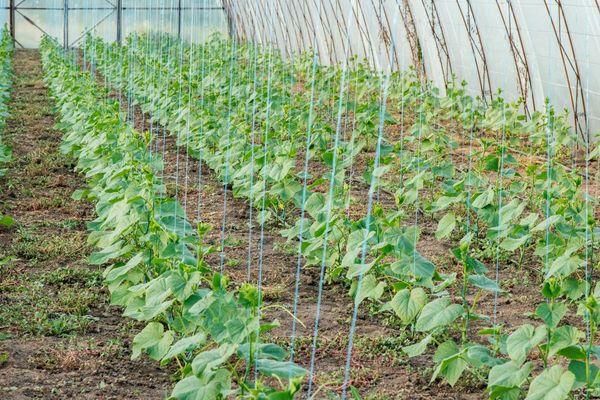
All procedures are carried out in stages. It is recommended to install supports near each plant as soon as the first shoots appear. This will allow for the procedure to be completed in a timely manner and avoid damaging the root system.
Materials and instruments for the procedure
A two-meter trellis is attached to a profile located on the side wall or above. It can be made from a variety of materials.
In addition to thick ropes and rags, ordinary tree branches are used as supports. The bark is stripped from long branches, one end is dug into the soil near each bush, and the other is attached to the top of the structure. This type of support is suitable for a greenhouse or low-rise hothouse.
Patches
For this project, prepare strips of fabric 4.8 cm wide and at least 27 cm long. It's best to cut them from cotton fabric. If they're short, you can sew them together.
Take a look Also


Fabric strips are the safest for staking. They don't dig into plant tissue even when firmly secured. However, this type of support is not very strong and doesn't last long.
Leg-split
Twine is considered convenient and durable. It resists rot and mold. It's best to choose jute twine, as synthetic twine is not recommended. Synthetic fibers make the support slippery and sharp. The twine will cut into the plant tissue, leaving wounds and cuts.
A piece of twine is lowered from the top crossbar to each stake installed near the cucumber plant. A loop is then made under the first pair of true leaves, 30 cm above the ground.
If many side branches are formed, then additional twine is attached to tie them up.
Thin ropes
It's best not to use thin ropes to tie up cucumbers. They won't hold the plant stems well and can damage the surface tissue. This can lead to wounds, weakened immunity, and slower cucumber development.
Methods and step-by-step instructions for tying up cucumbers in a greenhouse and hotbed
There are many ways to tie up cucumber vines. Each method differs in the type of equipment used. When choosing a staking method, consider the size of the greenhouse, the variety of cucumbers planted, and the layout of the beds.
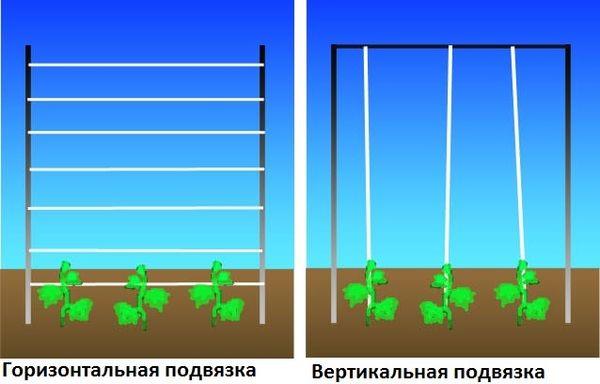
Horizontal garter
Metal or wooden supports at least 220 cm high are installed on both sides of the bed. A rope is stretched between the supports at a distance of 26 cm from the ground. Subsequent tiers are installed at intervals of 34 cm.
The disadvantages of this tying method include the fact that as the cucumber vines grow, they will become intertwined. Furthermore, once the top reaches the top horizontal row, the vines will begin to droop downwards.
Vertical
This method is suitable for spacious rooms with high ceilings. The frame is installed from the ground to the highest point of the greenhouse. You can simply attach hooks to the ceiling crossbar. A string stretched from the stake of each cucumber plant is tied to each hook.
Another option involves installing two supports, with wire or a wooden crossbar attached above. A rope is then pulled from a stake installed near each cucumber plant and secured to the top crossbar.
Mixed method
If cucumbers are planted in a circle, it's best to use a mixed staking method. Wooden stakes or metal rods are installed in a circle, then secured at a single point at the top. The result is a cone-shaped structure, over which a large-mesh net is stretched. The tendrils, intertwined around the net, form a tent.
On the stairs and arch
Cucumber vines can be used to decorate a plot. To do this, plant the plant near metal structures designed for climbing flowers. Specialty stores offer a choice of arch-, pyramid-, or ladder-shaped supports.
Metal or plastic arches are installed over the cucumber beds, and ropes are strung between them. The ends of the ropes are secured to small stakes driven into the ground on either side of the bed.
Using trellis mesh
Several support poles are installed in the cucumber bed, with a large-mesh net stretched between them. Avoid using fine-mesh netting, as the plant stems thicken over time, and the leaves become large, increasing the risk of damage.

Trellis mesh can also be stretched between pre-installed plastic or metal arches. The mesh should be made of a strong and durable material. A single broken mesh can damage the entire plant. Plastic mesh is best. It's durable and resistant to corrosion and rot.
How to properly tie cucumbers in a polycarbonate greenhouse
Simultaneously with staking, the bush is trained. Fruits are primarily formed on the central stem, so side branches are removed or shortened to prevent the plant from wasting energy and nutrients on their growth.
Cucumbers grown vertically should be side-sonned as follows:
- up to the first 4 leaves, remove all ovaries and shoots from the ground, which will help strengthen the root system of the plant;
- then cut off the side branches in the area of the next three leaves, without touching the ovaries;
- in the next three leaves, the ovaries are left, and the side branches are pinched, leaving one ovary and one leaflet;
- the next three leaves have ovaries left, and the side shoots should be trimmed, leaving two ovaries and two leaves;
- After collecting the first cucumbers on the lower tier of the plant, remove the leaf blades;
- As soon as the main stem reaches the top of the trellis, the top is pinched.

Mistakes that vegetable growers often make when tying up cucumbers:
- You should start the procedure on time, when the bushes are still small, otherwise the risk of damaging the branches increases;
- too tight loops on the stem lead to a disruption in the supply of micronutrients, and the plant begins to dry out;
- If the twine is pulled too tightly along its entire length, there is a high probability of pulling the plant out of the ground along with its roots;
- Once the plant reaches its maximum length, the top should be pinched or twisted around twine.
You can tie it to any support, the main thing is to do this procedure correctly.
Garter to the support
Tying cucumber vines to a support is simple:
- pegs are installed near each cucumber root;
- the stem is tied to a support as the plant grows;
- It is allowed to tie the stem with fabric scraps, twine or thick ropes.
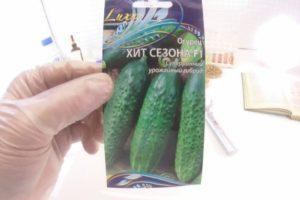
This type of support is the easiest to install, but cucumbers often outgrow it. Therefore, a trellis or net is more effective.
Use of trellises
The most effective option is to use a trellis. If you only have a few cucumbers, a single-row trellis 210 cm high is sufficient.

To secure cucumbers on a trellis In a greenhouse, you need to perform a series of sequential steps:
- prepare a twine, its length should be twice the length of the structure;
- the upper end of the twine is attached to the upper crossbar with a movable loop, and the lower end is lowered to each bush;
- the plant is twisted on a rope clockwise under each leaf;
- make a simple loop around the stem and secure it to pegs or hooks.
You should not squeeze the stem too much, as it will become thicker as it grows.
Tying to the metal frame of the greenhouse
Instead of an overhead support, many vegetable growers use metal frame supports. It's important that the structure of the structure itself is strong and reliable. Twine can be pulled through not only vertically but also at an angle.
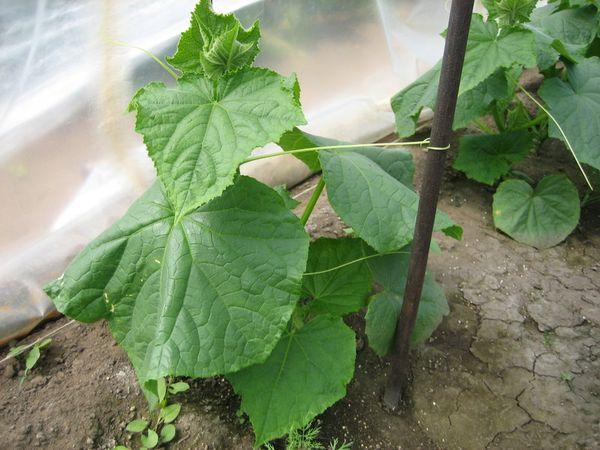
We choose the best method depending on the cucumber variety
For cucumber varieties that tend to produce a large number of lateral shoots, horizontal staking is a good option. Netting or arches are also effective.
For plants with tall stems and hybrid varieties of cucumbers, it is advisable to install a vertical support.
Is it possible to grow cucumbers without garters?
It is possible to grow cucumbers in a greenhouse without staking, but this will result in a decrease in yield and other unpleasant side effects:
- Cucumber vines that have grown over the ground take up a lot of space, so it will not be possible to plant another crop nearby.
- It is difficult to get to the roots of each bush, making watering and fertilizing difficult.
- Light, heat, and air are limited in quantity to all parts of the plant, which increases the risk of fungal diseases and causes many ovaries to fall off.
- The harvesting process is becoming more difficult.
To get a good, abundant harvest of cucumbers, you should spend a little time and effort on installing a support for tying and shaping the bush.
Related posts:
 Description of unusual methods for planting and growing cucumbers
 How to care for cucumbers in open ground from planting to harvesting
 How to properly plant cucumbers in open ground with seeds, and at what depth
 How to make a cucumber trellis with your own hands from scrap materials
 How to properly plant cucumber seedlings in a greenhouse and care instructions
 Description of the best varieties of Chinese cucumbers, planting, growing and care
 How to grow cucumbers in a polycarbonate greenhouse: planting and care guidelines
 Is it possible to soak treated cucumber seeds before planting and how to do it correctly?