
- The history of breeding work for the Alyonushka plum
- Growing region
- Description and botanical information
- Tree dimensions
- Pollinators
- Productivity and fruiting
- Scope of application of berries
- Features and characteristics of the variety
- Susceptibility to diseases and pests
- Resistance to low temperatures and drought
- Landing rules
- Selecting the timing and site
- Preparing the planting hole and seedling
- Planting technology
- Specifics of caring for a fruit tree
- Irrigation
- Fertilization
- Crown formation
- Caring for the tree trunk circle
- Preparing for winter
- Preventive treatments
- Reproduction of the variety
- Gardeners' reviews
The plum is considered one of the most demanding garden trees, but for lovers of the fragrant and sweet fruit, it's easy to put in the effort and grow a neat tree in your own garden. Domestic gardeners are drawn to the plum variety with the beautiful Russian name "Alenushka." With proper cultivation and care, you can enjoy ripe fruits in the summer, and plum jam and pastila in the winter.
The history of breeding work for the Alyonushka plum
The plum variety Alyonushka belongs to the Chinese representatives of fruit and berry crops. They are distinguished from traditional plums by their appearance and taste. A large number of new varieties and hybrids have been developed from Chinese plums.
Alenka gained popularity relatively recently—in the early 2000s—but its development began in the 20th century. Breeders G. B. Zhdanova and A. F. Kolesnikova, researchers at the All-Russian Research Institute of Oryol Oblast, were responsible for its development. The variety was developed by cross-pollinating seedlings of two varieties—Kitayanka and Shara Krasnogo.
Although the plum was included in the list of breeding achievements in 1976, it was only allowed for cultivation in 2001.
Growing region
The Alyonushka Chinese plum variety is zoned for the Central Black Earth Region of the Russian Federation. Here, it produces abundant fruit and overwinters successfully. Alyonushka thrives not only in the Central Black Earth Region, but also in the Moscow Region and the Northwestern Region.
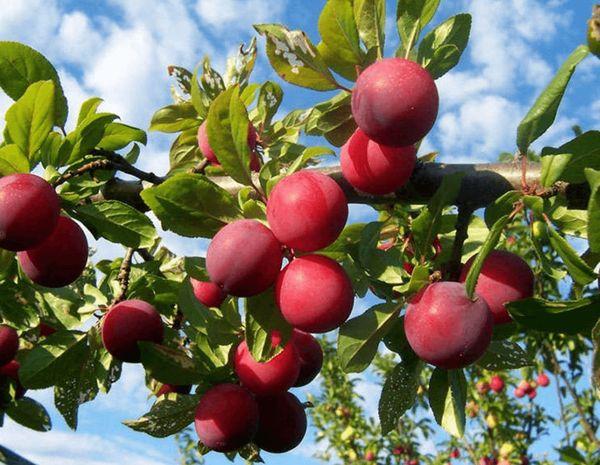
The variety's winter hardiness also produces good harvests in Ukraine, Belarus, and other countries with a similar climate.
When growing Alyonushka, it is important to take into account its characteristics and create all the necessary conditions.
Description and botanical information
Fans of the Alyonushka variety highly praise its taste. However, in many respects, Chinese plums differ significantly from ordinary plums.
Tree dimensions
The plum tree grows to 2-2.5 meters in height. The crown is sparsely foliated, pyramidal in shape, with sturdy brown or reddish-brown shoots. The branches extend from the trunk at an angle of 30-40 degrees.
The characteristic presence of small, convex lenticels, sparsely spaced on the branches, is characteristic. The buds are conical, medium-sized, and slightly deflected from the shoot. Unlike the common garden plum, the leaves are longer and more pointed.
Take a look Also
Pollinators
Like other Chinese plum varieties, Alyonushka is not prone to self-pollination. To ensure pollination, other plum tree varieties must be planted nearby.
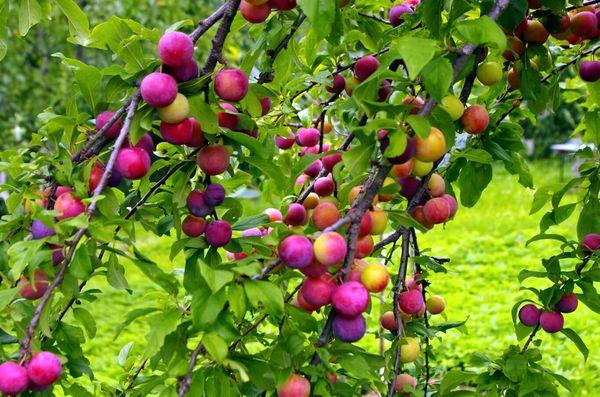
Preference should be given to the following varieties:
- hybrid cherry plum;
- early-fruiting plum;
- Manchurian plum.
The inflorescences contain three small buds. This is why the tree is densely covered with blossoms during flowering. The calyxes, with white petals, are bell-shaped.
Productivity and fruiting
Alyonushka blooms in early May. The flowering period is very short—only 3-5 days. Despite abundant blooms, pollination can be very difficult. Cold and windy weather, including frost, can interfere.
Fruiting begins quite early—2-3 years after planting, the harvest can be completed. Peak productivity occurs in the 7th-8th year. Fruit ripening begins in early to mid-August.
The harvest is abundant – on average, up to 147 centners per hectare.
Scope of application of berries
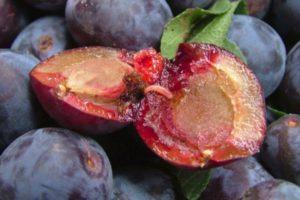
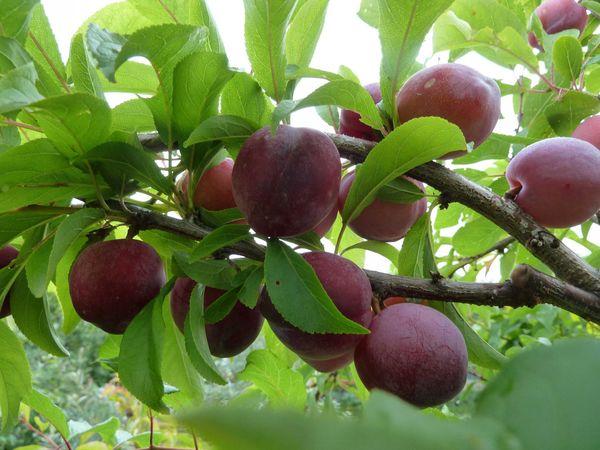
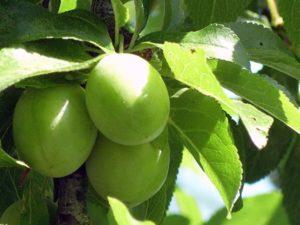
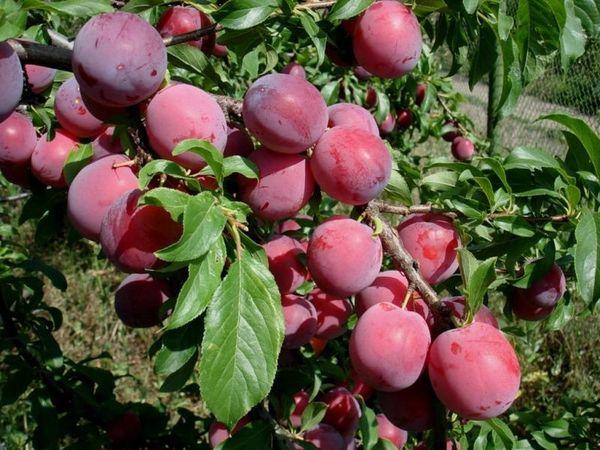
The Alyonushka plum variety is suitable for both home gardens and commercial cultivation. The fruits are medium-round, with juicy orange flesh. They are sweet with a slight tartness, and have aromas of apricot and melon.
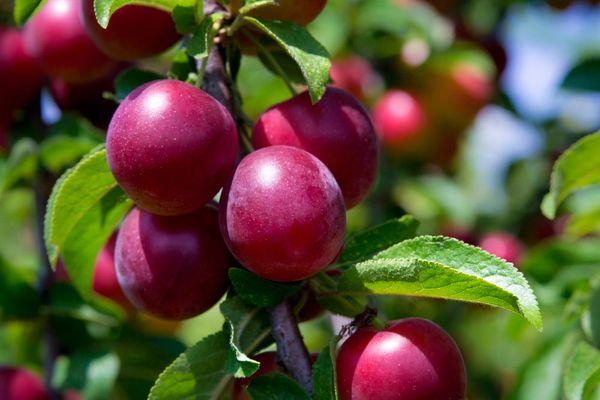
The stone is small and difficult to separate from the pulp. However, the fruits separate easily from the stalks. Alyonushka received a tasting score of 4.2-4.8. Its sweet taste and fruity aroma make it a table plum. It is eaten fresh, but also used to make compotes, preserves, marshmallows, and jams. The fruits are suitable for transportation, but not for long-term storage.
Features and characteristics of the variety
The Alyonushka fruit and berry variety has its own characteristics, advantages, and disadvantages. Knowing these can help a gardener decide whether to purchase a seedling or not.
Susceptibility to diseases and pests
Alenushka's positive characteristics include resistance to certain diseases, such as monilial blight and holey spot. Its drawbacks include the inability of young shoots to repel aphids, which can result in a significant reduction in yield.
Resistance to low temperatures and drought
The Alyonushka plum has average winter hardiness, according to research conducted at the Michurin Agrarian Academy. The tree's flower buds easily tolerate frosts down to -40 degrees Celsius. However, the tree doesn't fare well in warm winters with little snow. During these periods, the bark is prone to rotting, leading to trunk rot. Therefore, seedlings should be planted in light soils and elevated areas.
Landing rules
When planting the plum seedling variety Alyonushka, you should take into account several rules, which will be discussed below.
Take a look Also
Selecting the timing and site
First, you need to decide on a planting location. This plum variety prefers sunny, wind-free spots, such as a sheltered area near a fence. Low-lying areas are unsuitable for planting, as there is a high risk of the lower trunk becoming rotted. The groundwater level should not exceed 1.5 meters.
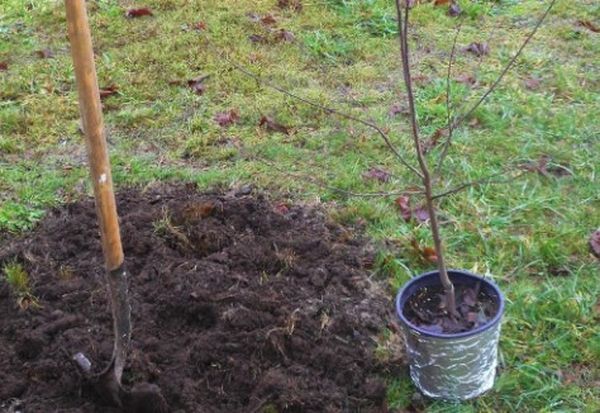
Alyonushka seedlings root well in warm, windless weather. For this reason, it's recommended to plant them in mid- to late spring.
Preparing the planting hole and seedling
The soil for planting should be light, loose, and fertile. The plot should be prepared a month before planting: dig and remove weeds. If the soil is highly acidic, add an ash solution at a rate of 300 g per 10 liters of water. Slaked lime works well to reduce acidity.
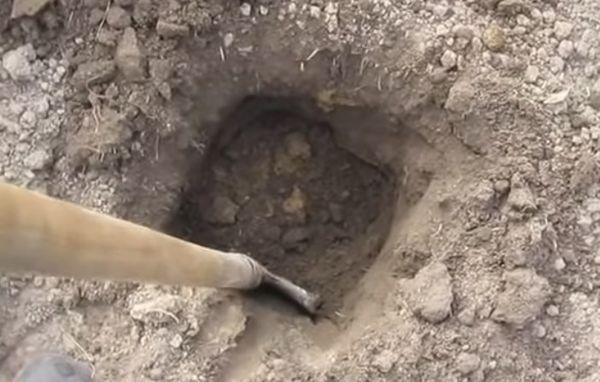
The planting hole should be dug immediately before planting the seedling. The optimal size is 0.5 m in diameter and the same depth. If fertilizer was applied in the fall, no additional fertilizing is required for spring planting.
Planting technology
Correct planting is carried out using the following technology:
- Carefully straighten the root system of the seedling and lower it into the hole.
- Holding the tree in place, bury the roots and trample the soil around the trunk.
- You should act carefully, trying not to damage the root system.
- The root collar should be 5-6 cm above ground level.
- Form a small mound around the bottom of the trunk and fill it with 1 bucket of water.
- Tie the tree to a peg.
Before purchasing a seedling, pay attention to its root system, trunk, and stem. They should be undamaged.
Specifics of caring for a fruit tree
Proper care for Alyonushka involves fertilizing, watering, sanitary pruning, and preparing for the winter period.
Irrigation
The Alyonushka Chinese plum variety is not completely drought-tolerant, so it requires regular irrigation. During dry periods, watering the tree up to once a week is sufficient. In normal weather, water up to once every two weeks. Necessary watering:
- before plum blossom;
- after the flowers fall;
- summer period – with an interval of 7-14 days.
To prevent fruit cracking, irrigation should be suspended during the fruiting period until October-November.
Fertilization
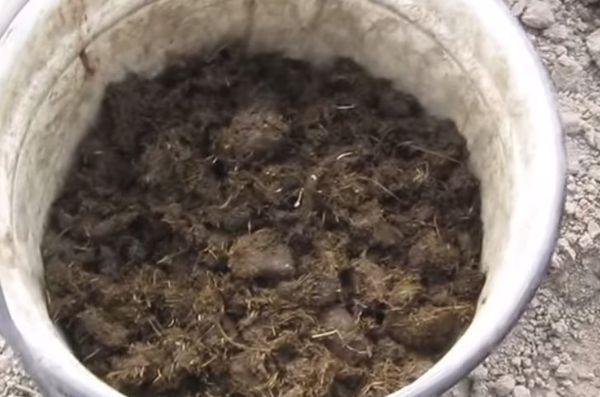
For the first 2-3 years after planting, the plant does not require additional feeding. Once flowering begins, fertilizer should be gradually added. A useful fertilizer is a mullein infusion diluted 1:5, or a bird droppings infusion diluted 1:10. In summer, potassium-phosphorus fertilizers, combined with a small amount of wood ash, are suitable.
Crown formation
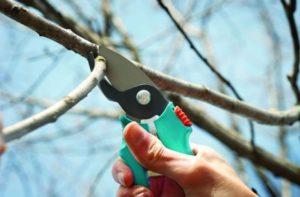
Garden plum is one of the few crops that doesn't require training, but it does require sanitary pruning. In the first year after planting, all branches should be trimmed back by approximately 15-20 cm. This procedure is repeated annually, removing all excess shoots to the ground. It is also necessary to remove all rapidly growing, dead, and diseased branches.
Caring for the tree trunk circle
The correct size for a plum tree's trunk circle should be the crown diameter multiplied by 1.5. In late autumn, the soil around the trunk should be dug. It's best to use a pitchfork to avoid damaging large roots. Mulching helps maintain the soil around the trunk circle. Straw, sawdust, peat compost, and broken brick are all suitable.
Preparing for winter
Before the onset of frost, it is advisable to protect the plum tree with the help of additional materials:
- whitewash the trunk and skeletal branches;
- cover the fragile seedling with protective material (spunbond);
- mulch the tree trunk circle with organic material.
Some gardeners protect plum trees from rodents for the winter using fine mesh.
Preventive treatments
To avoid pest attacks and the spread of diseases, the following preventative measures must be taken:
- remove fallen leaves;
- remove or burn cut branches;
- after fruiting has finished, dig up the soil;
- remove old, diseased and dried branches.
To prevent aphids, it is necessary to use systemic preparations that can penetrate into curled leaves.
Reproduction of the variety
Several methods are used to propagate the Alyonushka variety: cuttings, grafting, and root suckers. Seeds are planted only to obtain cuttings, onto which buds or cuttings of the desired varieties (rootstocks) are grafted.
Gardeners' reviews
Vladimir, 37 years old, Nizhny Novgorod.
"A plum with a beautiful name, fruits, good winter hardiness, but a guaranteed susceptibility to aphids."
Oleg, 54 years old, Syzran.
"I love the Alyonushka variety for its juicy flavor, fruity aroma, and good yield. Every year I pick buckets of it and then make a delicious liqueur."
Irina, 35 years old, St. Petersburg.
"Among the advantages of Alyonushka, I can list its productivity, frost resistance, and spicy flavor and aroma. Its disadvantages include the non-separating pit, which means it takes a lot of time to prepare the fruit for canning."
Related posts:
 Description and characteristics of the Yakhontovaya plum variety, pollinators
 Description of the Renklod plum varieties and cultivation technology
 Description and varieties of plum variety Ternovka, planting and care technology
 Description and characteristics of the 30 best yellow plum varieties, planting and care
 Description and distinctive features of the best varieties of Ussuri plum
 Description of the beneficial and harmful properties of plums for human health, contraindications
 Description and characteristics of the Svetlyachok plum variety, the intricacies of cultivation
 Description of the 30 best plum varieties for the Moscow region, planting and care