
- Description and characteristics of the fruit
- Types of tamarillo
- The benefits, harms, and contraindications of the fruit
- What is the proper way to eat tamarillo?
- Features of plant cultivation
- Planting seedlings
- Transplantation into open ground
- Care instructions
- Watering
- Top dressing
- Trimming
- Protection from diseases and pests
- Harvesting and storage
Tamarillo is an exotic fruit. Originally known as the tomato tree, it was renamed only in 1967. The fruit received this name only after the decision was made to export it to other countries. Gradually, the fruit's popularity grew, and today it is recognized in many corners of the globe.
Description and characteristics of the fruit
The fruit tree's homeland is considered to be South and Central America. Despite this fact, New Zealand is currently its largest supplier. It is from there that the vast majority of tomato fruits are exported.
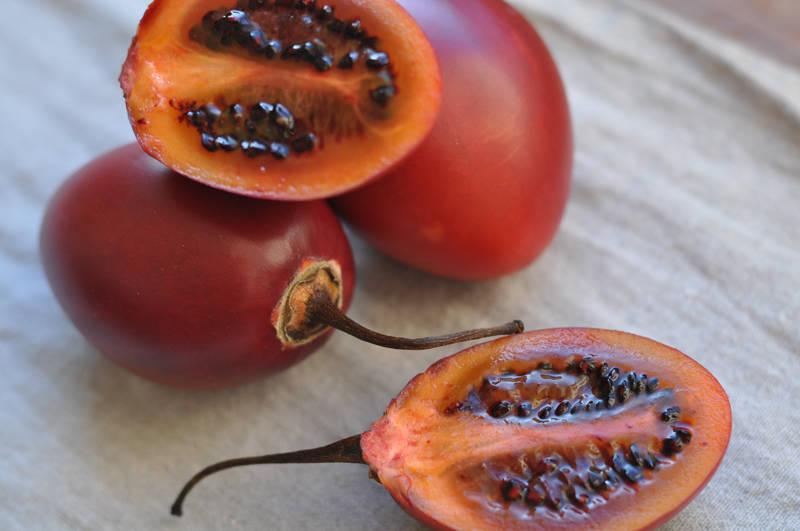
The plant is distinguished by its vigor, capable of growing up to 300-400 centimeters. Its fruits resemble traditional tomatoes in appearance. They are characterized by smooth skin and an oval shape. The shape is characteristically tapered on one side, like a chicken egg. The fruit's flesh has a sweetish taste. The fruits range in width from 4-6 cm, and in length from 10-15 cm.
Types of tamarillo
There are several varieties of this fruit:
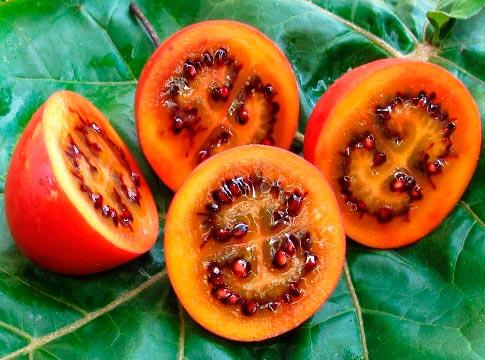
- With reddish skin. This variety is considered the most popular. The fruits have reddish seeds and orange-tinted flesh. This fruit can be used not only in various dishes but also for decoration.
- With golden skin, the fruits are particularly juicy and fleshy. They are much larger in size than those of other varieties.
- With a yellowish skin. The size of yellowish fruits is smaller than that of red ones. Their main advantage is their taste, as these fruits are much sweeter than reddish and golden varieties.
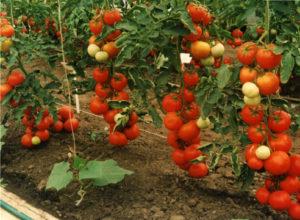

All varietal subspecies of this plant crop are not afraid of insects and can boast resistance to most common pathologies.
The benefits, harms, and contraindications of the fruit
Tamarillo pulp contains a huge number of beneficial elements and vitamins. The fruits boast iron, magnesium, calcium, potassium, potassium, and vitamins A and C. They are sodium and cholesterol-free.
Consuming the fruit can be targeted at addressing certain health issues. For example, it effectively combats dizziness and headaches. It is recommended for nervous breakdowns.
Tamarillo may be harmful if consumed in large quantities or if a person has an individual intolerance to it. In this case, an allergic reaction may occur. No other contraindications or adverse effects have been observed.
What is the proper way to eat tamarillo?
Thanks to its appearance and flavor, tamarillo has become widely used in cooking. This fruit is recommended for:
- fresh;
- in fried;
- boiled;
- in canned.
This fruit is often used as a side dish for meat dishes, and as a filling for sandwiches, pies, pizza, and lasagna. It is also used in desserts such as ice cream, mousses, jams, yogurts, juices, and marmalade.
Most often, the fruits of this plant crop are eaten fresh:
- The fruit is peeled by scalding it. The pulp is eaten.
- The fruit is washed and cut into two halves. The pulp is then eaten with a spoon.
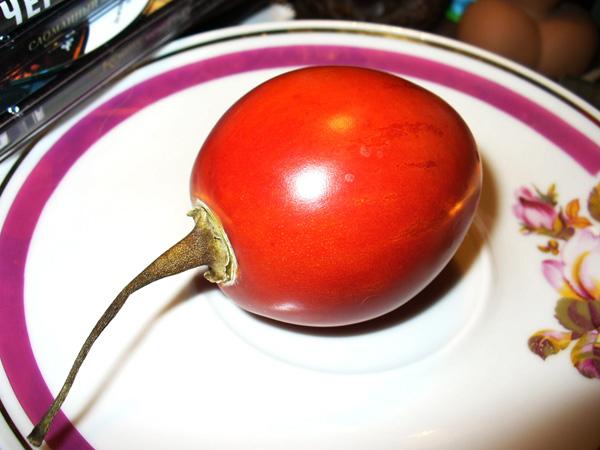 For desserts, it's best to choose orange- or yellowish-colored fruits. For main courses and salads, choose reddish or purple-colored ones.
Features of plant cultivation
This fruit has become popular among gardeners. To ensure vigorous growth and development, it's important to know a few planting and care tips.
Take a look Also

Planting seedlings
Tamarillo is a hybrid plant that requires seeding for planting. Seeds should be sown for seedlings in mid-February.
First, the planting material must be disinfected. A 1% potassium permanganate solution is used for this. The seeds are soaked in the prepared solution for a couple of hours. After disinfection, you can begin sowing:
- The seeds are laid out in a pot so that there is a distance of 3 centimeters between the seeds.
- After this, the pot is covered with cling film.
- The container is placed in a warm room, the temperature in which fluctuates between 25-30 degrees.
After a couple of weeks, the first leaves are formed.
Transplantation into open ground
Transplanting seedlings is done only after they reach 1 meter in height. Plants typically reach this height by early July. Under optimal conditions, this height can be reached earlier, by the end of May.
Before transplanting, select a good site. It should be protected from the wind and well-lit. The soil must be prepared by adding mineral fertilizers and compost. Before transplanting, create support structures. Next, dig the holes. Leave a gap of 85 centimeters between them. When transplanting, do not bury the seedlings too deeply.

Care instructions
To produce tasty, fleshy fruits and a healthy plant, proper care is essential. This includes fertilizing, watering the soil, and pruning.
Watering
Tomato tree requires regular watering. If the weather is cool, the tree should be watered once a week. During hot periods, the frequency of watering should be increased to 2-3 times a week.
Top dressing
Fertilize the soil regularly. Liquid tomato fertilizer is best. If necessary, its effectiveness can be enhanced with slow-release fertilizers.


Trimming
Tomato trees require regular pruning. A year after the first harvest, the tree is pruned to a height of about a meter. This procedure will encourage the branches to develop more vigorously. To encourage new shoots, it is recommended to prune branches that have already produced fruit.
Pruning can be done in spring or fall. For an early harvest, it's recommended to prune in early spring.
Protection from diseases and pests
Tamarillo is a hybrid variety that is rarely affected by diseases or insects. To prevent problems, the plant should be regularly fertilized, pruned, and inspected for signs of disease or pests. If any appear, the affected areas should be removed and the plant treated with special solutions.
Harvesting and storage
The harvested fruit can be stored in the refrigerator for 10 days. If the fruit was picked unripe, it should be placed in a warm place for 3 days. If you want to preserve the harvest until winter, it can be frozen or canned.
Related posts:
 The best eggplant varieties for growing in a polycarbonate greenhouse: planting and care
 Causes and treatment of eggplant pests and diseases, how to combat them at home
 Methods for planting and propagating cherries at home
 Carrot care guidelines for outdoor cultivation to ensure a good harvest
 Is it possible to soak treated cucumber seeds before planting and how to do it correctly?
 Top 40 DIY New Year's Baking Recipes for 2020
 The best grape varieties for growing in the Urals, planting and care rules in summer
 Growing and caring for hazelnuts in open ground, rules for planting hazelnuts