
- Description and Features
- History of selection
- Properties
- Caloric content
- Benefits and harms
- Acidity
- Bush characteristics
- Vine
- Bunch
- Productivity
- Taste qualities
- Winter hardiness and drought resistance
- Disease resistance
- How to plant correctly
- Recommendations for choosing deadlines
- Site selection and preparation
- How to select and prepare planting material
- Planting diagram
- Care instructions
- Watering
- Top dressing
- Mulching
- Garter
- Disease prevention
- Oidium
- Powdery mildew
- Anthracnose
- Chlorosis
- Rubella
- Bacteriosis
- Bacterial cancer
- Protection from birds and pests
- Preparing for winter
- Pruning and shaping
- Methods of reproduction
- Advantages and disadvantages of the variety
- Harvesting and storage
- Tips and advice from experienced gardeners
Thanks to its rapid ripening, resistance to winter frosts, and high yields, the Bazhena hybrid grape variety quickly gained popularity among farmers, gardeners, and vegetable growers. Bazhena grapes are recognized as a versatile table fruit variety, recommended for both fresh and processed consumption.
Description and Features
Bazhena berries ripen in just over three months, allowing them to be cultivated even in northern latitudes. From its ancestors, this hybrid berry has inherited natural immunity to fungal infections and insect attacks.
Bazhena grapes are undemanding in terms of growing conditions and care, making them suitable for cultivation even by novice farmers and gardeners.
History of selection
The creator of this new fruit crop is amateur breeder V. V. Zagorulko, who lives in the Ukrainian city of Zaporizhzhia. This amateur experimenter has developed numerous grape varieties through cross-pollination. Some of these varieties have been approved for commercial cultivation by government agencies.
But the Bazhena grape became the most striking achievement of the folk breeder, who crossed the famous fruit variety Arkadiya and the grape Podarok Zaporozhye.
Properties
During the growing season, cluster-shaped inflorescences with male and female flowers appear on the bushes; the Bazhena grape variety does not require pollinators.
Caloric content
The Bazhena berry is a white grape variety. And, as is well known, white grapes are the lowest in calories among their red and green counterparts.
Average values for 100 g of fresh fruit are from 40 to 46 kcal.
Important! The calorie content of berries directly depends on growing conditions, climate, and the sugar content of the fruit..
Benefits and harms
The fruits contain a huge amount of vitamins and nutrients that help maintain and improve the health of the body.
Due to the high sugar content, berries are not recommended for people with high sugar levels or individual intolerance to the product.
Acidity
The acidity of fruits, as well as the presence of sugars, depends on agricultural practices, weather conditions and soil composition.
Bazhena grapes have a balanced acidity level of 4 to 6 g/l and sugar levels of 16 to 18%. These levels are acceptable only for table grapes and are not suitable for industrial wine production.
Bush characteristics
Mature specimens are tall, with multiple branches and shoots. The leaf blades are medium-sized, five-lobed, slightly expanded, and bright green.
Vine
Fruit shoots are powerful, growing from 2 to 4 m during the growing season.
The average ripening rate of the vine is from 80 to 85%, with careful care up to 100%.
One to three clusters of large fruits ripen on a fruiting shoot. The vine can withstand heavier loads, but the larger the clusters, the smaller the berries become and the less flavorful they become.
Bunch
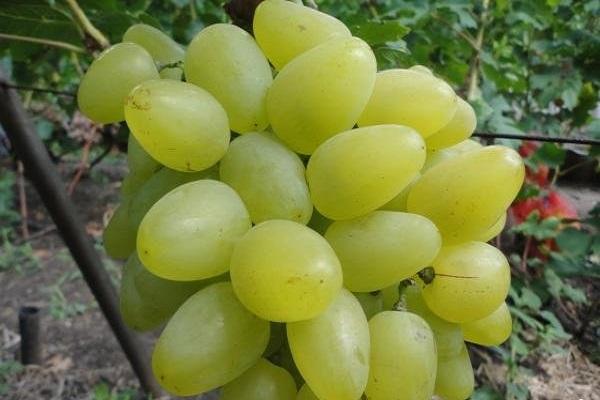
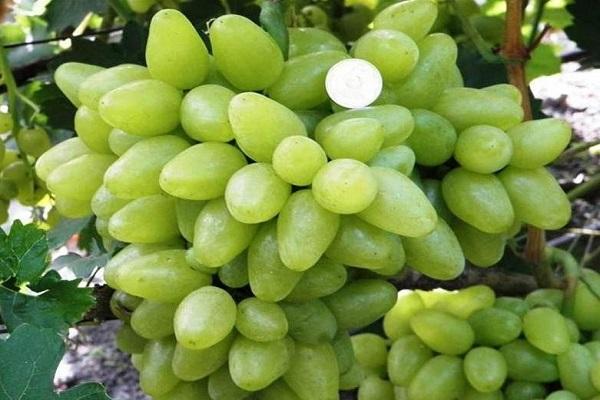
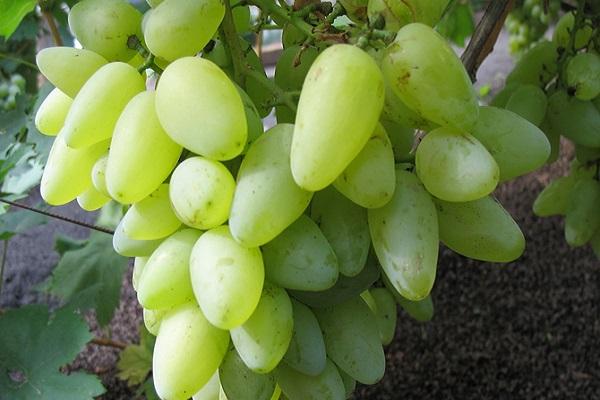
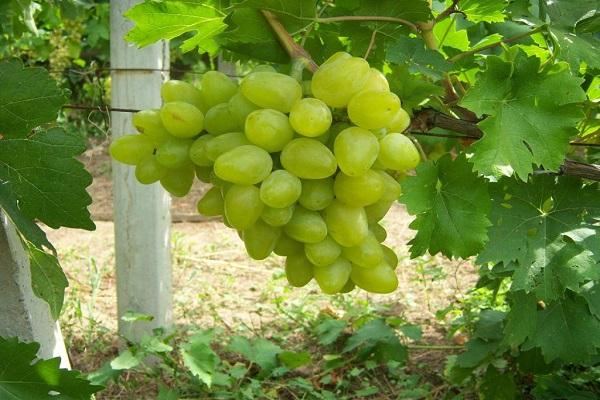
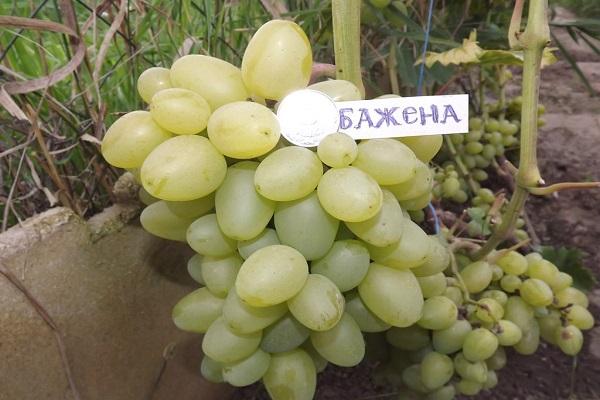
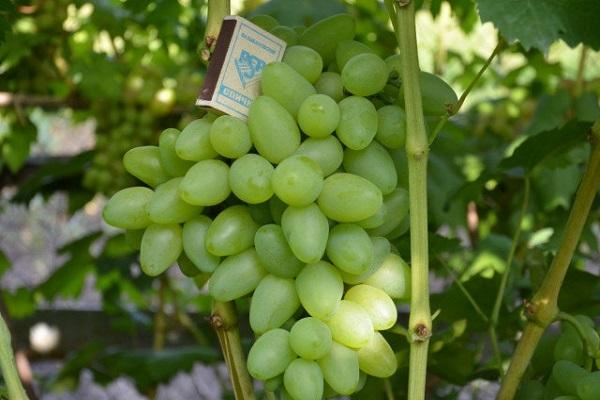
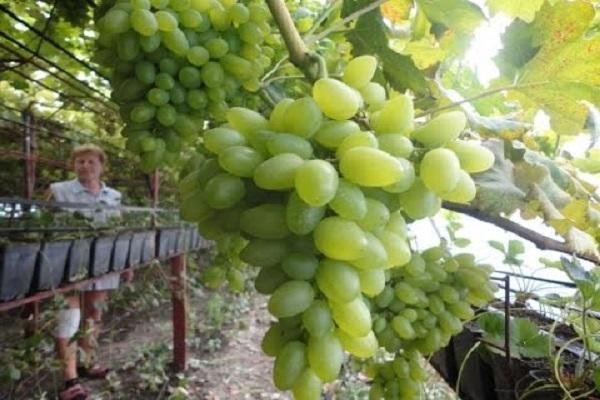
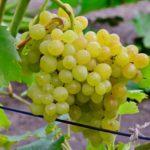
Bazhena grape clusters are large, weighing from 700 g to 2 kg, and are cone- or cylindrical in shape. The berries are spaced closely together on the ridge, allowing for even sunlight exposure.
The fruits are firmly attached to the ridge, do not crack or fall off.
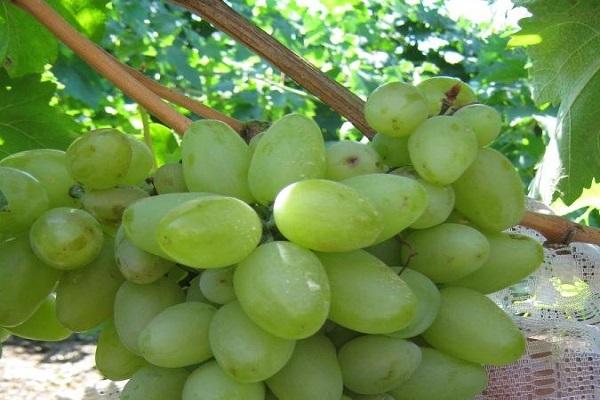
Ripe grapes are large, weighing between 10 and 15 grams, and are greenish-white in color with an amber tint. The skin is thin but firm, which facilitates long-term storage and long-distance transportation of the harvest.
Important! When overripe, the berries' skins become thicker, the flesh becomes soft, and their flavor deteriorates.
Productivity
Fruiting and yield of berry crops primarily depend on timely, competent care and favorable weather conditions.
The average yield of the Bazhena variety is 15 to 20 kg of clusters per plant. With proper pruning and fertilizing, yields can increase to 25 kg per plant.
From the beginning of the growing season until the technical ripeness of the fruit, it takes from 95 to 110 days.
Fruiting of berry bushes begins in the 3rd year of growth in open ground.
Taste qualities
Bazhena berries have dense, juicy flesh with a sweet-tart flavor. Depending on the soil composition, the fruit can have a variety of aromas and aftertastes: cherry, apple, or pear.
According to experts, the taste qualities of the fruit crop are rated at 4.5 points on a 5-point scale.
The fruits are suitable for juice, nectar, canning, freezing, and drying. The primary use of Bazhena grapes is fresh consumption.
Experienced housewives make homemade wines and liqueurs from the fruits.
Winter hardiness and drought resistance
In regions with warm and temperate climates, grapes easily tolerate temperatures down to -23 degrees Celsius. In latitudes with cold winters, Bazhena requires additional insulation.
Bazhena grapes are moisture-loving plants, but short-term droughts do not have a negative impact on the yield and taste of the fruit.
Disease resistance
The hybrid berry variety has natural immunity to fungal and viral diseases. However, for prevention, Bazhena grapes are sprayed with chemical or biological pesticides.
How to plant correctly
The future grape harvest depends on the quality of the planting material selected for planting the seedlings, the location and timing of the work.
Recommendations for choosing deadlines
The fruit crop is transferred to open ground in mid-spring or early autumn.
For southern latitudes it is preferable autumn planting of grapes, 4-6 weeks before the expected first frost.
In temperate and cool climates in the central zone, Bazhena is planted in the spring. This allows the plants sufficient time to establish roots and develop.
Important! After planting seedlings in the fall, they must be carefully insulated, even in southern growing regions.
Site selection and preparation
Sunny sites with a south or southwest exposure, at slightly elevated elevations, are best for growing grape vines. This fruit crop tolerates strong north winds and drafts, and the groundwater table should be at least 3-4 meters below the soil surface.
The Bazhena grape variety is not demanding in terms of soil composition, but grows, develops, and bears fruit better in loose, fertile soils with moderate acidity and moisture content.
Preparing a site for Bazhena grapes:
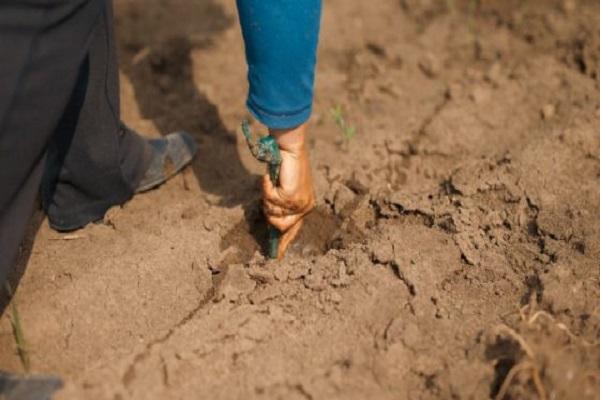
- The selected area is dug deeply, weeds are removed, and the soil is thoroughly loosened.
- The soil is mixed with organic and mineral fertilizers, and humus is added.
- Heavy, clayey soil is diluted with river sand and humus; peat, compost and a little clay are added to sandy soil.
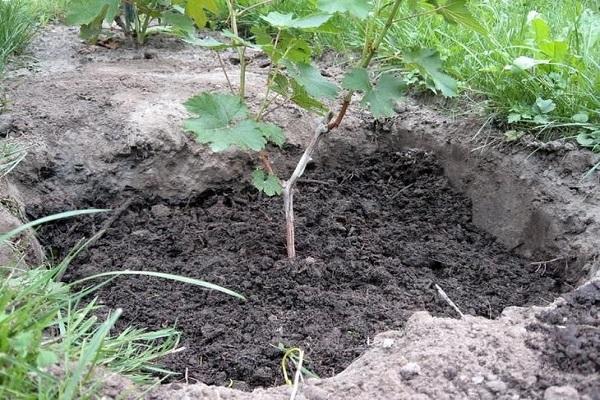
- 2-3 weeks before planting, dig holes 70-90 cm deep and wide.
- The grape bush is tall and spreading, so the distance between plantings is maintained from 3 to 5 m, between rows up to 6 m.
- Place small stones at the bottom of the planting hole and fill it with fertile soil mixture.
- A support for the seedling is driven into the hole and filled with water.
Important! Large bushes with long shoots require support structures to support the formation and development of fruiting shoots.
How to select and prepare planting material
Bazhena grape seedlings are purchased from reputable nurseries. The following guidelines are followed:
- The plant is examined for damage, diseases and insects.
- The plant trunk must be straight, elastic, with the obligatory presence of buds or green leaves.
- The roots are developed and moist, without rot or damaged shoots.
- Before planting in the ground, the seedlings are placed in a bucket with clay and water and left for a day.
Tip! Plants that are 1-2 years old take root and establish themselves best.
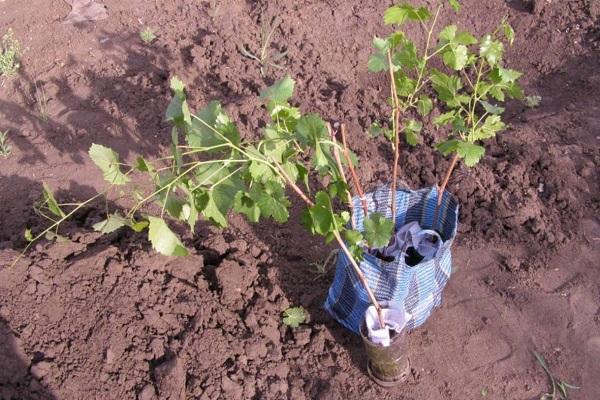
Planting diagram
On the day of planting, the rhizomes of the grape seedlings are trimmed, leaving only long, well-developed shoots.
The order of planting Bazhena grapes:
- The seedling is placed in a prepared planting hole with fertile soil.
- The root part of the plant is evenly distributed throughout the hole and covered with the remaining fertile mixture.
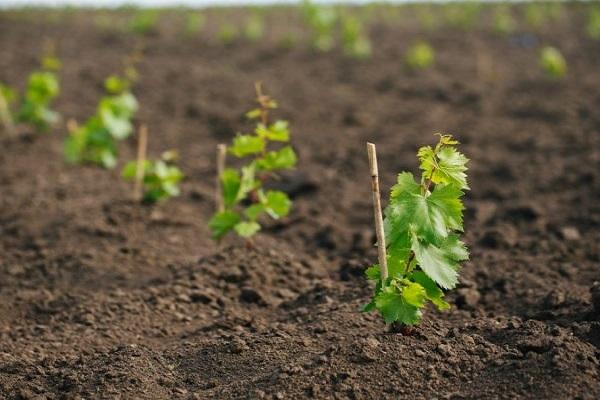
- The soil under the seedling is carefully compacted and watered, and the plant is tied to a peg.
After planting is complete, the tree trunk circle is mulched with humus or dry straw.
Care instructions
Bazhena grapes are not demanding in terms of care, but still require watering, pruning of bushes and timely fertilizing.
Watering
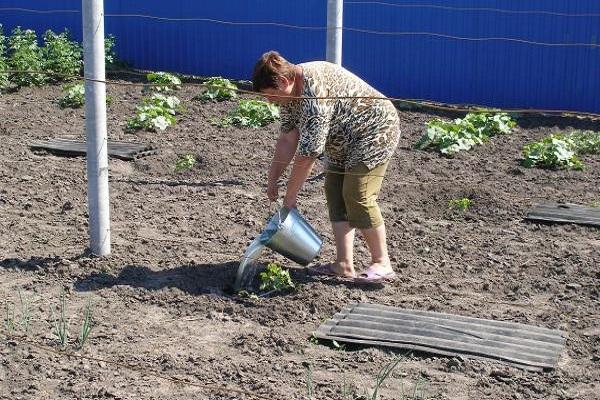
For irrigation, drainage channels are dug around the grapevines at a distance of 40-50 cm from the main trunk. During the first 2-3 years of growth, grapevines are watered depending on weather conditions, but at least 2-3 times a month. Mature plants, whose root systems are deep and well-developed, require watering 3-4 times throughout the growing season.
Irrigation measures are especially important before flowering and during the period of fruit formation.
The last watering is done after harvesting, pouring up to 70 liters of water under each plant.
Top dressing
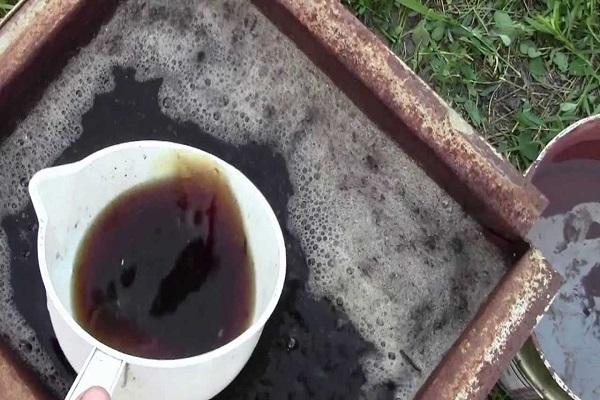
Bazhena grapes are fed several times per season, alternating organic and mineral complexes.
In early spring, cow or chicken manure is added to the soil. Before flowering and after fruit set, the grapes are fed with phosphorus and potassium.
In the fall, after harvesting, the bushes are fertilized with humus and wood ash.
Mulching
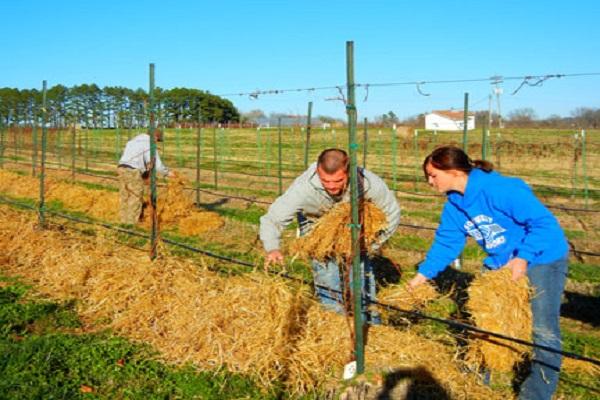
Loosening and mulching the grape trunk circle is combined with watering and fertilizing.
The procedures are carried out to enrich the plant roots with oxygen, moisture and nutrients.
Also, if necessary, weed the soil, removing weeds.
Note: Weeds not only remove nutrients from the soil, but also carry diseases and insects that are harmful to grapes..
Garter
Fruit-bearing grape shoots require additional support structures in the form of large arches or high trellises.
Disease prevention
Improper care and high humidity provoke the development of fungal and bacterial infections.
Oidium
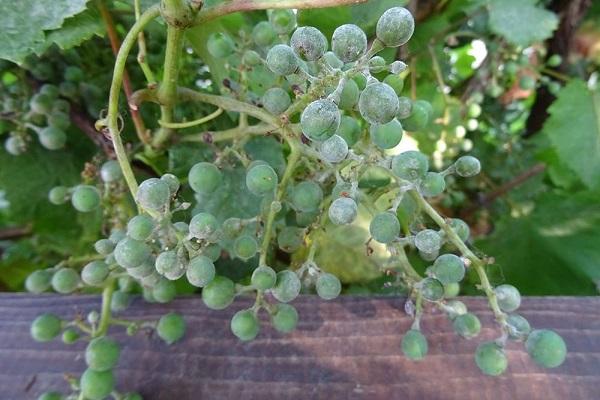
The disease manifests itself as a grayish-white powdery coating on all above-ground parts of the plant.
The ovaries fall off, the berries rot and burst, producing an unpleasant rotten odor. Chemical or biological agents are used for treatment and prevention.
Powdery mildew
Fungal infection manifests as a whitish coating and brown spots on all above-ground parts of the shrub. Treatment involves using fungicides or sulfur-based products.
Anthracnose
The disease manifests as small brown spots on leaves and fruiting shoots. Fungicides and Bordeaux mixture are used for prevention and treatment.
Chlorosis
If grape leaves are turning yellow, chlorosis is most likely the culprit. To restore health, feed the plant a mineral complex containing iron.
Rubella
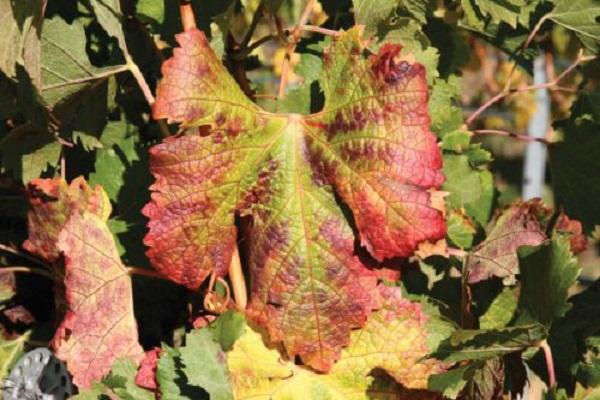
The fungus attacks the leaves, shoots, and fruits of grapes, appearing as red spots on the leaf blades. Fungicides are used for treatment.
Bacteriosis
Bacterial wilt affects the entire grapevine. The disease manifests as various spots on the leaves, shoots, and fruit. Treatment involves sulfur-based agents and combination antibiotics.
Bacterial cancer
It manifests itself as light-colored growths and lesions on the branches and shoots of the shrub. In the initial stages of the disease, the affected areas are cut off, and the damaged areas are treated with special agents. In advanced stages of bacterial canker, the plant is uprooted and destroyed.
Protection from birds and pests
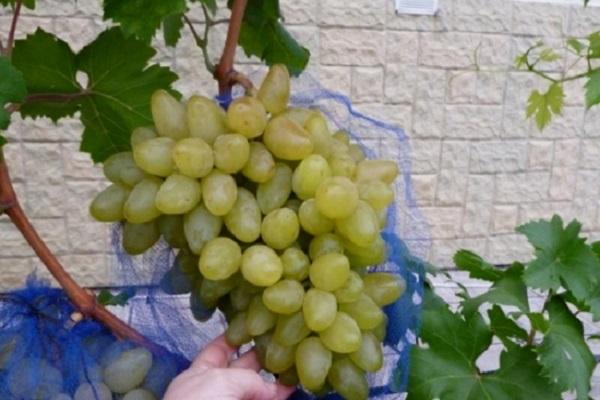
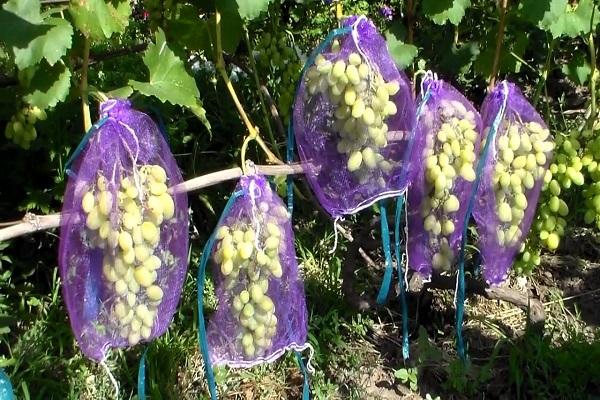
Ripening berries often attract birds and wasps, which can cause irreparable damage to the crop. To protect them, the bunches are placed in special fine-mesh nets that prevent access to the fruit.
Preparing for winter
In late autumn, a number of measures are taken to allow the grape bushes to survive the winter cold:
- Plants are watered generously.
- The tree trunk circle is mulched with a thick layer of humus.
- The shoots are removed from the supporting structures and placed on a layer of dry leaves.
- The bushes are covered from above with film or a special material.
The cover is removed in early spring when the daytime temperature exceeds 5 degrees.
Pruning and shaping
In spring, sanitary pruning of bushes is carried out, removing broken, frozen and old branches and shoots.
In the fall, after harvesting, all deformed, weak branches and numerous suckers are pruned, leaving a total of 5 to 8 strong, healthy shoots. The remaining fruit-bearing shoots are shortened to 8-12 buds.
Methods of reproduction
Bazhena grapes are propagated vegetatively. The fastest way to obtain new seedlings is by layering. To do this, in early summer, select the strongest lower shoot from a mature Bazhena grape bush and bend it down into the ground. The layer is covered with soil, leaving the upper part of the shoot exposed. In the fall, the rooted layer is cut from the mother plant and transferred to a separate hole.
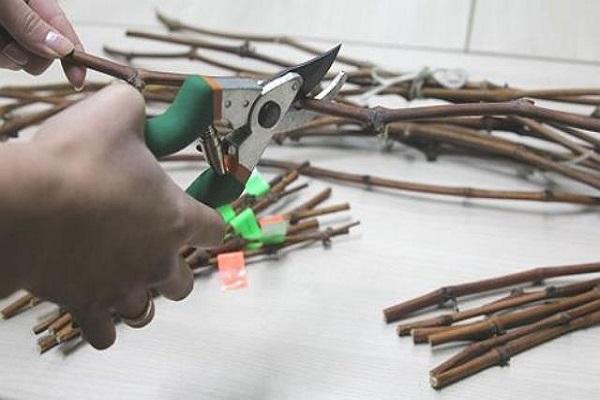
Also, to increase the number of varietal crops, propagation by cuttings and grafting is used.
Advantages and disadvantages of the variety
Based on the described features and characteristics of the Bazhena grape, we can analyze all the pros and cons of this fruit crop.
Advantages of Bazhena grapes:
- Already in mid-August you can get a ripe harvest of healthy berries.
- Fruiting begins in the 3rd year of growth.
- Increased natural immunity to fungal infections and pests.
- High taste characteristics and excellent presentation of ripe fruits.
- Stable, annual fruiting.
Among the disadvantages, the variety is demanding in terms of load distribution on fruit shoots and the deterioration of the taste characteristics of overripe fruits.
Harvesting and storage
The harvest time for Bazhena grapes depends on the climate of the growing region. In southern latitudes, the berries ripen in mid-August, while in temperate climates, the harvest is not until mid-September.
It is recommended to store ripe fruits in the refrigerator or special chambers for no more than 4-6 weeks.
Tips and advice from experienced gardeners
Experienced gardeners thin out the clusters at the ovary stage to increase the size of the Bazhena grape berries and speed up the ripening process.
Related posts:
 Description of 30 grape varieties for Siberia, planting and care for beginners
 How to grow grapes in the Moscow region in open ground without a greenhouse
 Description of the Julian grape variety, planting and care instructions
 The ripening time of grape vines by variety, how to speed up the process, and what to treat the plant with
 Description of 30 varieties and types of Muscat grapes, planting, cultivation and care
 Beginner's Guide to Growing Grapes in Open Ground in Central Russia
 Description of the Krasotka grape variety, planting and care technology
 Description and characteristics of the Laura grape variety, planting and care