
- History of origin
- Description and Features
- Main characteristics of the variety
- Purpose
- Ripening time
- Productivity
- Taste qualities
- Frost resistance
- Bunch
- Berries
- Disease resistance
- Methods of reproduction
- Cuttings
- By vaccination
- Layering
- How to plant correctly
- Recommendations for choosing deadlines
- Site preparation
- How to select and prepare planting material
- Planting diagram
- Care instructions
- Watering mode
- Top dressing
- Trimming
- Mulching
- Garter
- Preparing for winter
- Protection from birds and wasps
- Diseases and pests
- Aphid
- Powdery mildew
- Mildew
- Chlorosis
- Armillariasis
- Cercospora leaf spot
- Alternaria
- Oidium
- Foliar rubella
- Pros and cons of the variety
- Harvesting and storage
- Applications of berries
- Tips and advice from experienced gardeners
There are grape varieties grown specifically for winemaking. These crops typically bear fruit late. The late-bearing Garnacha grape is suitable for growing in warm, dry climates and is used for winemaking. Below is information on planting and caring for the grapes, as well as the pros and cons of this variety.
History of origin
There is no precise data on the origins of the Garnacha grape. Most scholars agree that it originated in Catalonia. From this region, the variety spread throughout Spain, then migrated to France, where it is known as Grenache.
Some experts believe that Grenache originated on the Italian island of Sardinia. The variety has several varieties: Grenache Noir, used for rosé wines; Grenache Gris, used for light raspberry-colored spirits; and Grenache Blanc, used for white wines.
Description and Features
Garnacha is grown for wine production. The berries are primarily red, but can also be pink or white. The variety is drought-resistant, so it thrives in dry soils.
It doesn't tolerate high humidity well, as it's susceptible to pathogens and harmful insects. Garnacha grapes have predominantly spicy and berry aromas, primarily raspberry. To produce fortified sweet wines, it's often blended with other varieties.
Additional information: Every year on September 24th, International Grenache Day is celebrated.
Main characteristics of the variety
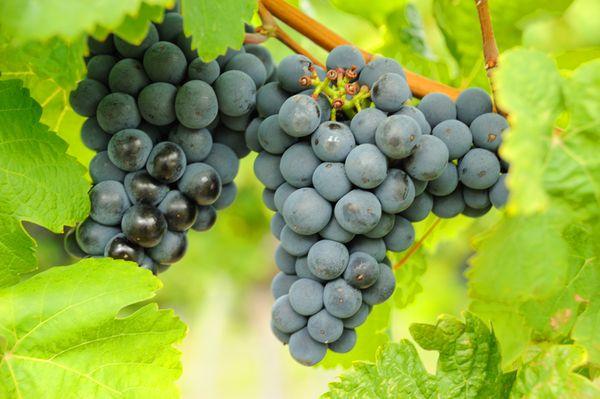
The plant is drought-resistant, but its winter hardiness is weak and requires winter cover. The bushes are vigorous, with funnel-shaped foliage.
Purpose
Red grapes are used to produce wines with fruity notes and a slight acidity. The rarely grown white Grenache Blanc is used for fresh consumption and also for making table wines.
Ripening time
Garnacha grapes bloom early, but the fruit ripens slowly. This results in late fruiting. The variety produces both light, aromatic rosé wines and highly concentrated red wines.
Productivity
A one-hectare plot yields 2,000 kilograms of grapes. The high yield is achieved through drought resistance, a strong root system, and the robustness of the plantings. Rainy summers reduce the quantity and quality of the fruit.
Taste qualities
Garnacha grapes are delicious, with a bouquet of aromas of currant, raspberry, honey, and ginger. The berries are used primarily for winemaking. This variety is often blended with other grapes.
Take a look Also
Frost resistance
This variety has weak frost resistance. It can withstand winter temperatures down to -18°C, so it is grown primarily in southern regions. If frosty winters are expected, the bushes should be covered with spruce branches or agrofibre.
Bunch
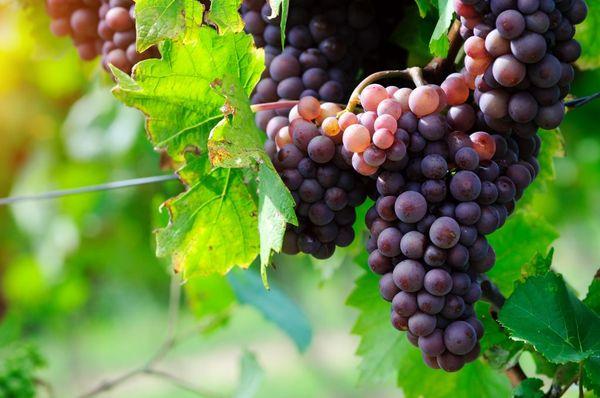
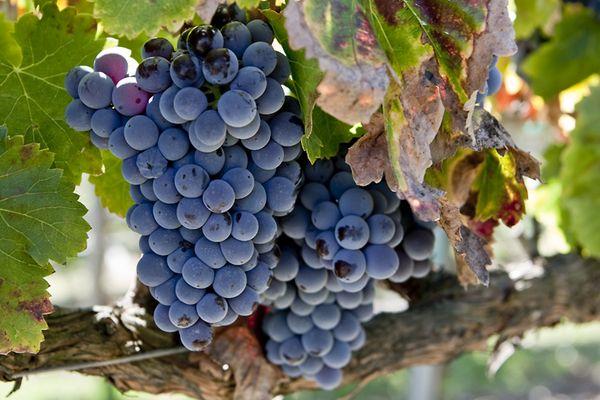
The conical grape cluster grows to a medium size. Its density, depending on weather conditions and light exposure, ranges from loose to dense.
Berries
The grapes are small and round. They are purple-pink in color, have firm skin, and juicy flesh. The fruit contains a large amount of sugar. The aromatic berries are used for winemaking.
Disease resistance
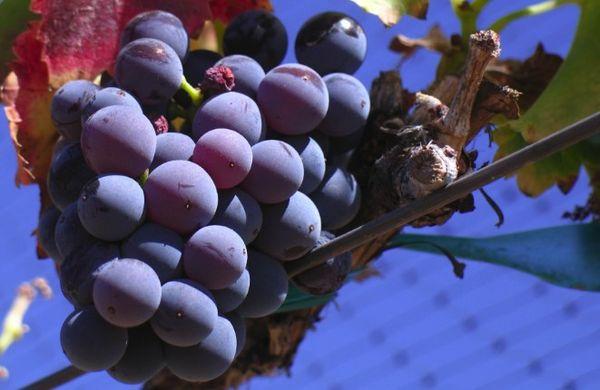
Garnacha grapes are susceptible to powdery mildew, downy mildew, and chlorosis. These diseases are primarily caused by improper care, contaminated soil, and excessively dry or humid climates. Timely preventative treatment of the vines with the necessary products can prevent many diseases.
Methods of reproduction
Gardeners can propagate Garnacha grapes in their gardens using three methods: grafting, cuttings, and layering. Seed propagation is not used.
Cuttings
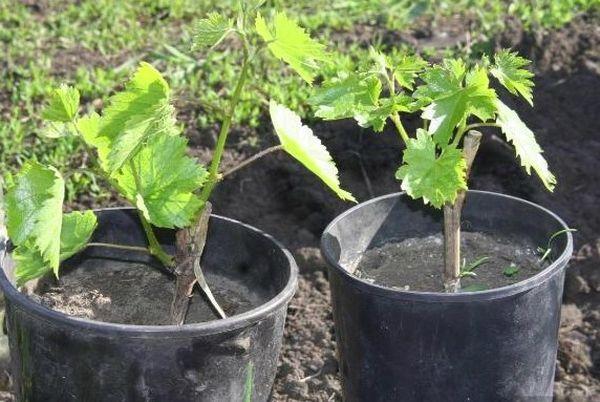
To propagate grapes using cuttings, follow these steps:
- in the spring, before flowering, cut cuttings 1 centimeter thick and 40 centimeters long;
- place in warm water for 24 hours;
- cut the cuttings into 2 parts so that each has 2 buds;
- cut the bottom part at a slight angle and plant it in a pot.
During the summer, the seedling is looked after and in the fall it is planted in the ground.
By vaccination
The procedure is carried out in April or May. The rootstock is cut to a stump 10-15 centimeters long, a grafting knife is inserted into the center, and the stump is buried 4-5 centimeters deep. A wedge-shaped cut is made on the scion, which is inserted into the gap in the rootstock. The grafting site is secured with electrical tape or film.
Layering
To propagate Garnacha grapes using this method, the cuttings are bent to the ground in the spring, pinned down, and covered with soil. The covering area is kept constantly moist. When roots and new shoots appear on the vines, they are dug up and transplanted to a prepared site.
How to plant correctly
Grapes are a perennial plant, so the site for them must be carefully selected. They prefer sunny locations, so a western or southern exposure is preferred. Tall plants should not be planted nearby.
Recommendations for choosing deadlines
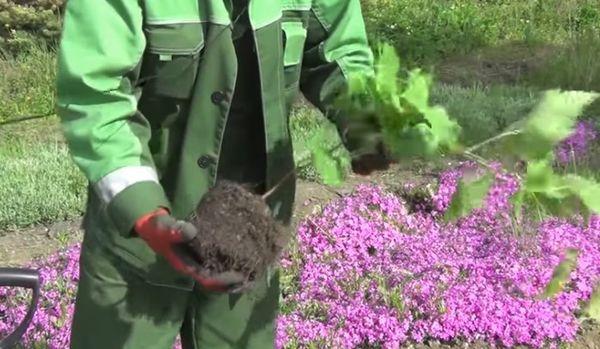
The most favorable time for planting grapes is spring. In southern regions, planting begins as early as early April. The procedure can also be done in the fall, starting in October. Seedlings planted in the fall are carefully covered.
Site preparation
Garnacha grapes are planted in sunny areas. The area is cleared and dug in advance. If the soil is heavy and clayey, sand and fertile soil are added. The plant dislikes stagnant water, so the soil should be well-drained.
How to select and prepare planting material
The seedling should be firm, with a green upper cut. Healthy roots should be white when cut. Before planting, soak them for several hours in water with a growth enhancer added.
Planting diagram
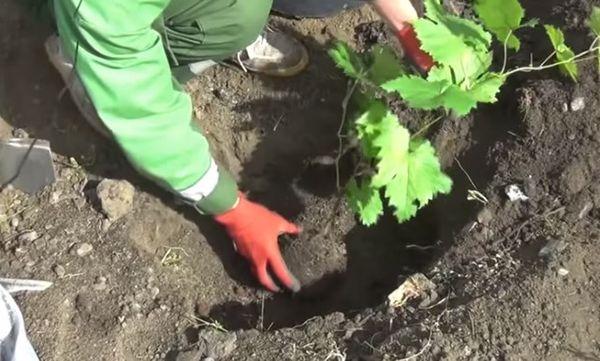
Garnacha grapes are planted as follows:
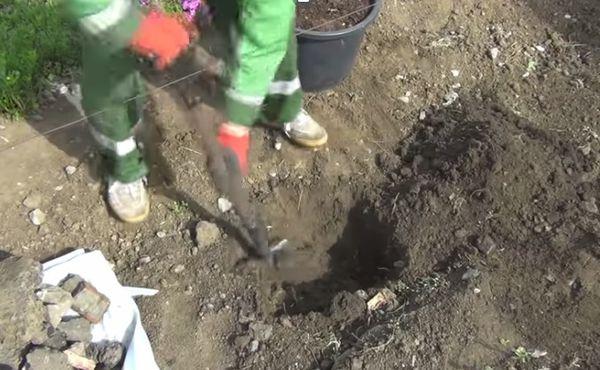
- dig a hole 80 centimeters deep and in diameter;
- install a drainage layer;
- a third of the hole is filled with fertile soil;
- a seedling is placed in the middle, the roots are straightened, and the remaining soil is poured out;
- The young bush is watered generously.
Take a look Also
The bushes are planted at a distance of 1.5 meters from each other, the distance between rows is 2-3 meters.
Important! When planting, immediately install a support to which the emerging shoots are tied.
Care instructions
To ensure proper growth, the plant requires care, including fertilizing, pruning, mulching, and staking. Plants planted in the fall should be provided with shelter.
Watering mode
Garnacha grapes are drought-resistant and don't require frequent watering. On the contrary, overwatering will only damage the plants, encouraging diseases and pests. Heavy watering is only necessary when planting young vines.
Top dressing
To stimulate growth and prevent many diseases, grapevines are fertilized several times per season. Fertilized plants develop strong immunity and successfully fight off diseases and pests. In the spring, grapes are fertilized with nitrogen, and later with a complex fertilizer.
Trimming
In the fall, the vines are pruned, leaving only the strongest shoots. In the spring, another pruning is performed, removing frost-damaged, dead, and diseased branches, as well as new growth. Additionally, the vine's crown is shaped from the first year after planting.
Mulching
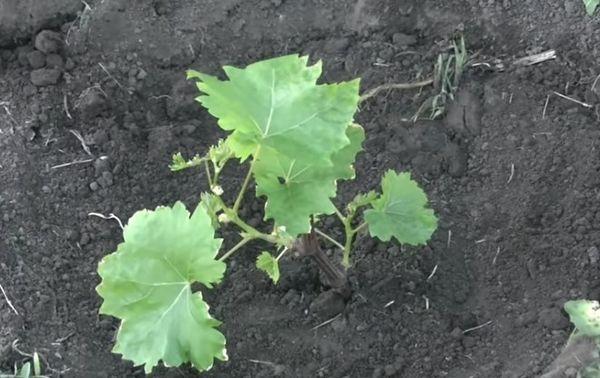
After planting, the root zone is mulched with straw, sawdust, and dried grass clippings. This will help retain soil moisture. Mulching will also prevent the growth of weeds, which can carry diseases and pests.
Garter
As soon as the grapevine shoots emerge, they are tied to a support dug into the hole. This will prevent the branches from breaking in the wind. This also helps establish the direction of growth for the vines. Proper tying will ensure each shoot receives enough light to thrive.
Preparing for winter
Only well-ripened shoots survive the winter, so thin, green branches are pruned in the fall. Additionally, to ensure a good wintering, grapes are watered generously before the onset of frost. After the first frost, the vines are tied, bent to the ground, and covered with spruce branches.
Protection from birds and wasps
Place several watering bowls in your garden plot: the birds may just want to drink. They usually only peck at the berries, and then the wasps finish them off. Experienced gardeners recommend covering the bushes with fine-mesh tulle while the berries are ripening. Each bunch can also be wrapped in netting to protect it from pests.
Diseases and pests
The most common diseases and grape pests Garnachas are listed below.
Aphid
This pest weakens the plant by feeding on its sap. To get rid of aphids, spray the grapes with insecticides. This treatment is carried out in dry, windless weather.
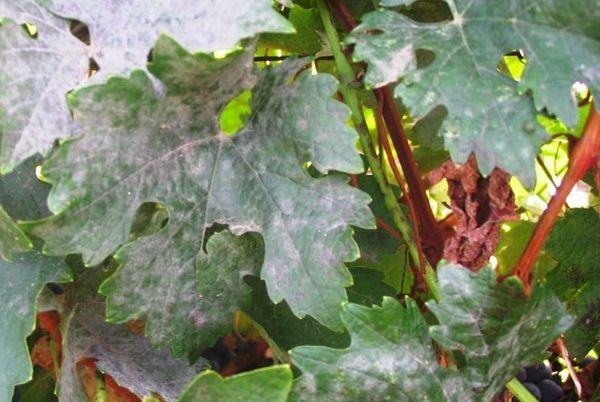
Powdery mildew
With this disease, the leaves appear to be dusted with flour. This fungal infection is caused by heat and sudden changes in humidity. To combat powdery mildew, bushes are sprayed with fungicides.
Mildew
Another name for this disease is downy mildew. A spreading yellow, oily spot appears on the leaf blades, with a white coating appearing underneath. To prevent this, grapes are sprayed with antifungal agents.
Chlorosis
With chlorosis, leaves lose color and turn yellow. However, the veins remain green. To prevent and treat the disease, ferrous sulfate is added to the soil.
Armillariasis
This fungal disease first attacks the grapevine roots and then the above-ground portions. Warm, rainy autumns favor the disease's development. The plant's roots become soft and rotten, and the leaves gradually wilt. There is no cure; the vine must be uprooted and the soil thoroughly treated with an antifungal agent.
Cercospora leaf spot
In the second half of summer, spots appear on the leaves, which begin to drop prematurely. The fruit turns blue and wrinkles. To prevent the disease, grapes are sprayed with copper-containing preparations in the spring.
Alternaria
This disease causes silvery or brown spots to appear on foliage, vines, and berries. It is triggered by hot weather and high humidity. For prevention and treatment, grapes are sprayed with fungicides.
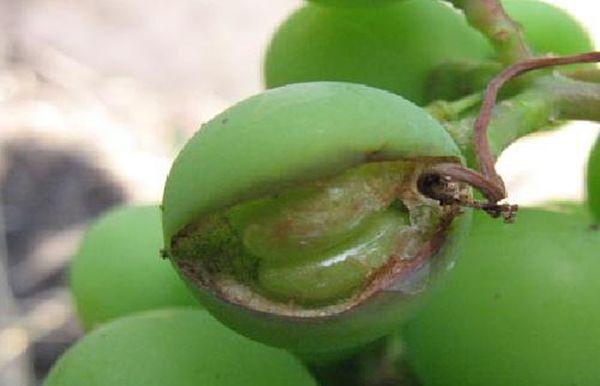
Oidium
This is another name for powdery mildew. To prevent the disease, grapevines are sprayed with antifungal agents.
Foliar rubella
Rubella causes rusty spots to appear between the veins of the leaves. Spraying the grape vines with fungicides can prevent the disease.
Please note! Fungicide and insecticide treatments should be carried out in sunny, windless weather.
Pros and cons of the variety
The advantages of Garnacha grapes include the following qualities:
- drought resistance;
- endurance;
- unpretentiousness;
- resistance to major diseases;
- suitability for wine making.
Disadvantages include low frost resistance and susceptibility to fungal diseases when there is excess moisture.
Harvesting and storage
The grapes are harvested in dry, warm weather, using scissors or pruning shears. This variety is intended for wine production, so it shouldn't be stored for long periods. They can be preserved for a short time by laying them out in thin layers in crates.
Applications of berries
Garnacha grapes are used to make juices and wines. When used to make fortified wines, they are often blended with other grape varieties. This results in a higher-quality wine.
Tips and advice from experienced gardeners
Experienced gardeners give the following tips and recommendations:
- When planting grapes, immediately install support for them.
- Water the bushes very rarely, only if there has been no rain for a long time.
- In autumn, prune unripe vines.
- Constantly inspect the leaves: the earlier the disease is detected, the easier it is to cure.
- Purchase seedlings from reliable sellers.
Garnacha grapes thrive in warm, dry climates. Under these conditions, the variety produces berries from which the winemaker can produce a delicious, aromatic wine.
Related posts:
 Description of 30 grape varieties for Siberia, planting and care for beginners
 How to grow grapes in the Moscow region in open ground without a greenhouse
 Description of 30 varieties and types of Muscat grapes, planting, cultivation and care
 The ripening time of grape vines by variety, how to speed up the process, and what to treat the plant with
 Description of the Julian grape variety, planting and care instructions
 Beginner's Guide to Growing Grapes in Open Ground in Central Russia
 Description and characteristics of the Syrah grape variety, where it grows
 Description and characteristics of the Merlot grape variety, planting and care
I should have boldly stated that Garnacha is for unirrigated areas. Vineyards in Spain don't even know that anyone is irrigated.
If you have a dry, hot, and dry plot, feel free to plant a Garnacha vineyard there. In this case, prune last year's growth back to two buds—this is crucial, otherwise the grapes will struggle. After flowering, be sure to break off any empty shoots. A good idea is to plant a pipe nearby when planting a young sapling to provide drip irrigation to the roots during drought.