
- Description and Features
- History of selection
- Varieties
- Improved
- Nutmeg
- Main characteristics
- Description of the bush
- Description of bunches and berries
- Productivity
- Transportability
- Frost and drought resistance
- Disease resistance
- Taste qualities
- Application of berries
- Pros and cons of the variety
- How to plant correctly
- Recommendations for choosing deadlines
- How to choose and prepare a site
- How to select and prepare planting material
- Planting diagram
- Care instructions
- Watering mode
- Top dressing
- Trimming
- Mulching
- Preventive spraying
- Protection from birds and pests
- Preparing for winter
- Support
- Methods of reproduction
- Cuttings
- Graft
- Diseases and pests
- Gray rot
- Oidium
- Anthracnose
- Mildew
- Olive spot
- Harvesting and storage
- Tips from experienced gardeners
Seedless grape varieties are very popular. They are not typically used to make wine, but are consumed fresh and dried to make raisins. Dried grapes store well and can be used until the next harvest. Rusbol is a seedless grape variety, considered one of the top five Siberian varieties. Below is information on the advantages and disadvantages, planting and care, and propagation of the plant.
Description and Features
Rusbol is a sultana grape variety, meaning the berries are seedless or rudimentary. This quality places the grape in Class IV seedlessness. The variety does not require pollinators: its flowers are bisexual and self-fertilizing. Rusbol ripens 120 days after bud break, making it an early-ripening grape variety used as a table grape.
History of selection
The Rusbol grape is the product of breeders from two countries: Bulgaria and Russia. A team of Russian-Bulgarian scientists crossed the Villard Blanc hybrid with the Sverhranniy Bessmenyny variety. In Russia, the grape is also known as Mirage.
Varieties
Breeders didn't stop at this grape variety. They refined it, resulting in two varieties of Rusobol.
Improved
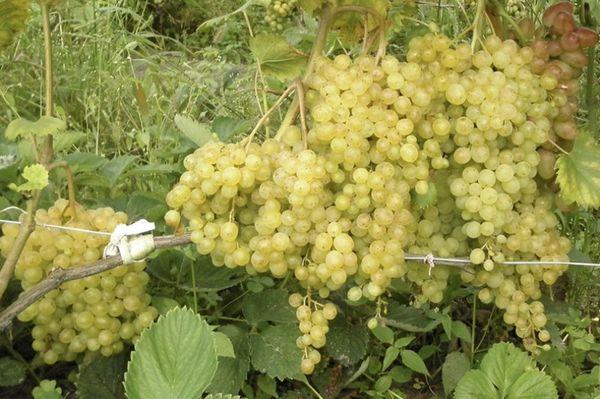
This variety is a cross between Rusbol and Vostorg. Rusbol has an improved ripening period of 105-115 days. Fruiting can begin as early as the following year after planting. Bunches of this variety reach 900 grams, with berries up to 2 centimeters long.
Nutmeg
Rusbol Muscat was developed from Rusbol and Bulgaria. It shares the same basic characteristics as other Rusbol varieties, but has a distinctive muscat flavor and aroma.
The berries store well and can even turn into raisins at room temperature.
Main characteristics
The Rusobol grape variety has many positive characteristics, making it very popular among winegrowers and consumers.
Description of the bush
This variety produces medium-sized bushes. Flowers appear early, attracting bees. This quality allows the bushes to serve as pollinators for other varieties. The crown of this grapevine tends to become dense, so it requires sparse cultivation.
Take a look Also

Description of bunches and berries
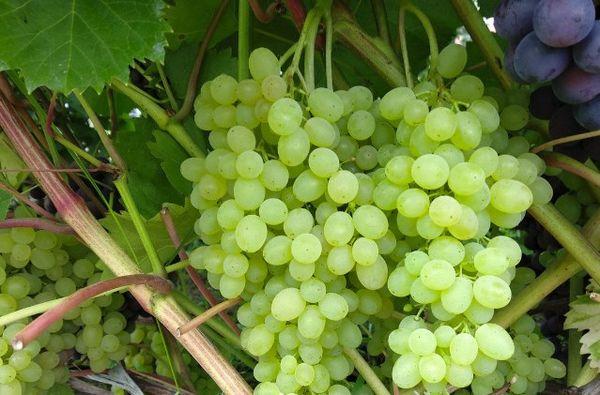
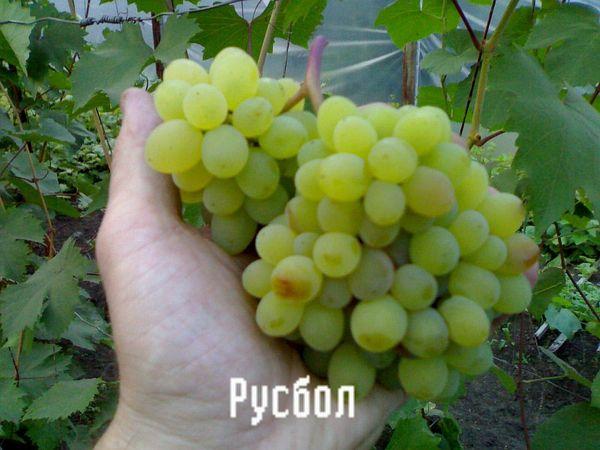
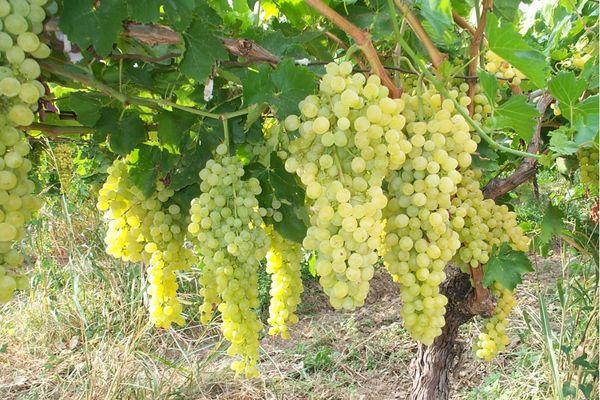
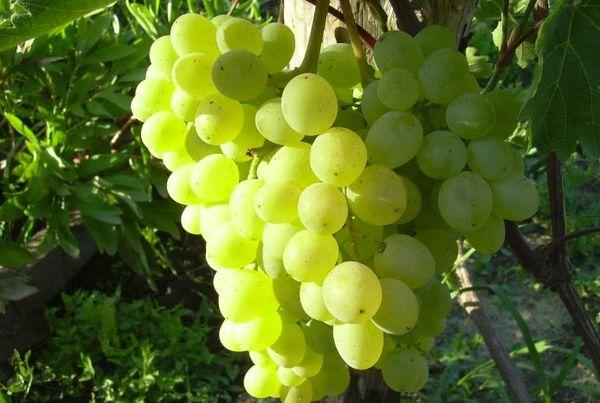
The bunches weigh between 400 and 600 grams, with some reaching 900 grams or more. The grape clusters are conical in shape and medium in density. The skins are yellow-green, the berries are 18 millimeters long, 16 millimeters wide, and have a sugar content of 21%.
Productivity
The vines produce a large number of clusters, which reduces the quality of the grapes. Therefore, fruiting should be controlled, leaving no more than two clusters per shoot.
Transportability
Rusbol grapes have firm flesh and soft skin. These are positive qualities, making this variety very popular with consumers. However, the soft skin makes the bunches difficult to transport.
Frost and drought resistance
Rusbol grapes tolerate winter temperatures down to -24°C without cover. In anticipation of a colder winter, the vines are removed from the trellis and covered with spruce branches. The variety tolerates drought well.
Please note! Grapevines under three years old require winter protection.
Disease resistance
The variety has high resistance to many diseases and pests. However, it can still be affected by powdery mildew, downy mildew, gray mold, and anthracnose. Pests that can affect the bushes include grape mite.
Taste qualities
Rusbol grapes have excellent flavor. They are large, firm, and sweet, with soft, easy-to-eat skins.
Application of berries
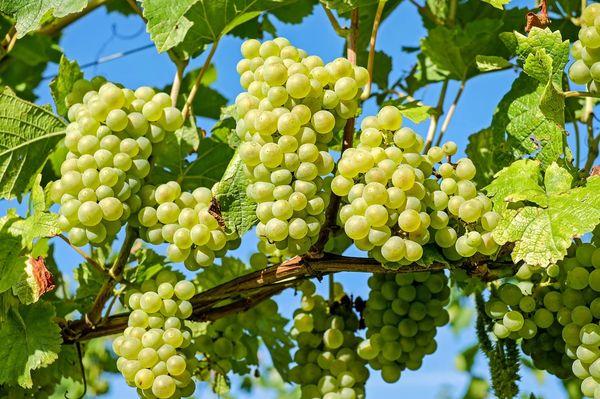
Grapes are primarily eaten fresh. Another common use is drying. Raisins are made from seedless grape varieties, and Rusbol is one of them.
Pros and cons of the variety
The advantages of Rusbol grapes include the following qualities:
- high yield;
- self-fertility;
- early ripening;
- ability to recover from frost;
- good disease resistance;
- high taste qualities;
- unpretentiousness.
Disadvantages include the tendency of fruits to crack after rain and poor transportability.
How to plant correctly
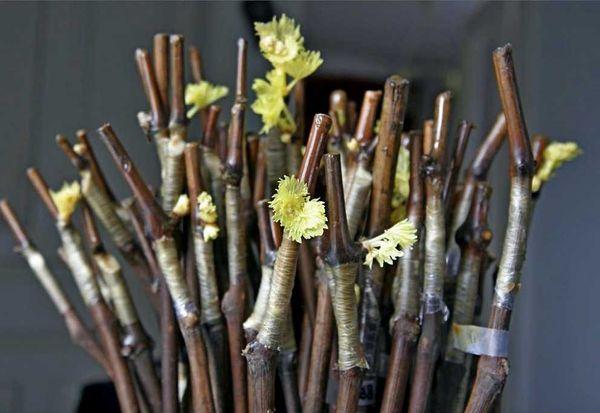
Rusbol grape seedlings are purchased from trusted sellers at garden centers or directly from growers.
Recommendations for choosing deadlines
Experts recommend planting grapes in the spring. This will give the vines time to take root and grow before frost sets in. Fall planting is also acceptable, but should be done a month before the first frost.
How to choose and prepare a site
Grapes are planted on the south side of the plot, ensuring they receive ample sun exposure throughout the season. The soil should be permeable, fertile, and well-drained. Two weeks before planting, a trench is dug, and drainage is laid in the bottom, followed by a mixture of soil, humus, and mineral fertilizer.
How to select and prepare planting material
At a nursery or garden center, select a seedling with a firm stem and healthy roots, free of signs of rot. If the root system has dried out during transportation, soak it in water for 12 hours. A growth stimulant can be added to the water.
Planting diagram
A hole is dug 80-100 centimeters deep and approximately 1 meter in diameter. When planting multiple grape vines, maintain a distance of 2 meters between them. Rusbol grapes are planted as follows:
- they dig a hole and put drainage at the bottom;
- partially fill it with fertile soil;
- place a seedling in the middle and water it generously;
- covered with the remains of fertile substrate.
To prevent the bush from breaking from gusts of wind, a stake is driven into the hole.

Care instructions
The crop is cared for, which includes watering, fertilizing, spraying with fungicides and insecticides, and protection from birds.
Watering mode
In the spring after planting, the vines are watered generously to ensure they establish well. Subsequently, rainfall will provide sufficient moisture for the grapes. Only during extremely dry summers should the seedlings be additionally watered with warm, settled water.
Top dressing
Grapevines are fertilized with nitrogen before bud break. The next application is made before flowering with a complex fertilizer. A third application is made with a potassium-phosphorus mixture when fruiting begins. After harvest, potassium is added to ensure the vines survive the winter.
Trimming
Formative pruning is performed each spring. The bush should have 30-45 developed buds. In addition, inspections are carried out throughout the season, and wind-damaged and diseased vines are removed.

Mulching
Immediately after planting the Rusbol grape, the trunk area is covered with mulch made from sawdust, straw, and peat. This covering material will prevent weed growth. Furthermore, the mulch helps retain soil moisture for a long time.
Preventive spraying
To prevent fungal diseases, the bushes and the soil beneath them are sprayed with fungicides. This procedure is repeated several times during the spring and summer. To combat harmful insects, the grapes are sprayed with insecticides.
Important! Spray grape bushes in dry, windless weather.
Protection from birds and pests
Birds and wasps love to feast on the sweet berries of grapes. You can protect the bunches by covering each one with fine-mesh netting. Placing a scarecrow near the bushes or cutting up rustling film will also repel pests.
Preparing for winter
Before the onset of frost, the bushes are watered generously and mulched with compost. If frost below -24°C is expected, the vines are removed from their supports and covered. Spruce branches and dry straw are used as cover.
Support
To support and guide the grape vines, supports are installed. These can be metal, wood, or plastic. The structure is either pillar-like or arched.
Methods of reproduction
Rusbol grapes can be easily propagated on a plot by cuttings or grafting.
Cuttings
In the fall, before frost, the mature vines are cut, placed in sand, and stored in a basement. In the spring, the cuttings are soaked in water for a day and planted in containers with soil or damp sawdust. When the seedlings grow, they are planted outdoors.
Graft
Rusbol grapes will display their best qualities when grafted onto tall rootstock. The graft site is wrapped with tape. Fruiting will begin in the second or third year.
Diseases and pests
Despite good immunity, Rusbol grapes are sometimes affected by certain diseases and pests.
Gray rot
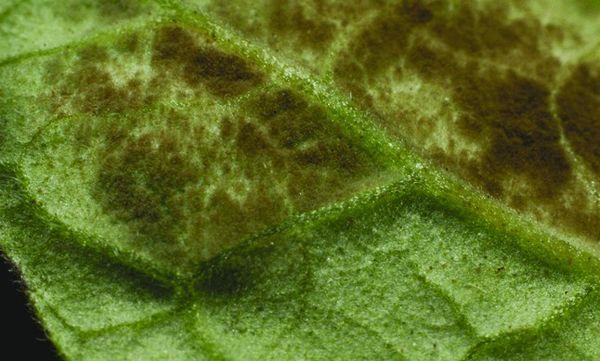
This fungal disease affects the above-ground portion of the bush. A gray coating appears on the leaves, and the berries wilt and fall off. Fungicides such as Horus and Insegar are used to combat the disease.
Oidium
Powdery mildew manifests itself as a white coating on berries and leaves. They appear dusted with flour. To combat this fungal disease, spray the bushes with products such as Karatan and Bayleton.
Anthracnose
This disease causes rapidly spreading brown spots to appear on the leaves. To prevent the disease, grapes are sprayed with copper-containing preparations in the spring.
Mildew
This is downy mildew. Yellow spots with white fluff appear on the leaf blades. To prevent the disease, spray the bushes with Bordeaux mixture in the spring.
Olive spot
Light yellow spots about 1 centimeter in diameter appear on the above-ground parts of the plant. To prevent the disease, remove plant debris from the tree trunks, spray the bushes with Bordeaux mixture, and boost the plant's immunity with fertilizer.
Harvesting and storage
The bunches are picked from the vines in dry weather with sharp scissors. Rusbol grapes don't have a good shelf life, but can be extended by spreading the bunches of berries on paper in a single layer. The berries can easily be made into raisins, which significantly increases their shelf life.
Tips from experienced gardeners
Winegrowers who grow Rusbol offer the following advice:
- To regulate the harvest, cut off excess shoots and bunches.
- Young bushes should be covered for the winter with spruce branches, straw, or agrofibre only after the temperature drops to -5°C for a week.
- Spray the bushes several times with antifungal preparations according to the instructions on the package.
- Use nitrogen for fertilizing only in early spring.
- If the soil is clayey, dilute it with sand and compost.
- Constantly, as the shoots grow, tie them to the support.
Rusbol grapes require no more attention than other varieties. By studying the information, following the advice of experienced winegrowers, and putting in some effort, a farmer can grow grape vines and reap a bountiful harvest.
Related posts:
 Description of 30 grape varieties for Siberia, planting and care for beginners
 Description of the Julian grape variety, planting and care instructions
 How to grow grapes in the Moscow region in open ground without a greenhouse
 The ripening time of grape vines by variety, how to speed up the process, and what to treat the plant with
 Description of 30 varieties and types of Muscat grapes, planting, cultivation and care
 Beginner's Guide to Growing Grapes in Open Ground in Central Russia
 Description of the Krasotka grape variety, planting and care technology
 Description and characteristics of the Laura grape variety, planting and care