
- Medunitsa apple tree: selection and description
- Dimensions and appearance of the tree
- Foliage
- Pollinator varieties
- In what year does it begin to bear fruit?
- Flowering and fruiting
- Tasting assessment of the harvest and the scope of application
- Winter hardiness
- Immunity to diseases
- Varieties of the variety
- Summer
- Winter
- What rootstocks should be used for growing?
- Seminal
- Semi-dwarf
- Columnar or dwarf
- How to plant an apple tree in a plot
- Deadlines
- Process
- Caring for a seedling and an adult tree
- Watering
- Top dressing
- Crown formation
- Protection from diseases and insects
- Caring for the tree trunk circle
- Preparing for the winter period
Among the thousands of apple varieties available, gardeners identify those trees best adapted to various climatic conditions. If, in addition to their adaptability, these trees also produce tasty fruit, they become especially popular. Such varieties include the Medunitsa apple tree, which grows in regions with temperate or temperate continental climates.
Medunitsa apple tree: selection and description
Work on the apple tree's qualities began in the middle of the last century. Michurin's talented student, I. Isaev, crossed two varieties: Cinnamon Striped and Wesley. The breeder was awarded the Stalin Prize in Botany, but the variety was never included in the State Register. Despite this, the variety remains popular among experienced gardeners. Lungwort is sometimes abbreviated as Medovka or Medovukha.
Dimensions and appearance of the tree
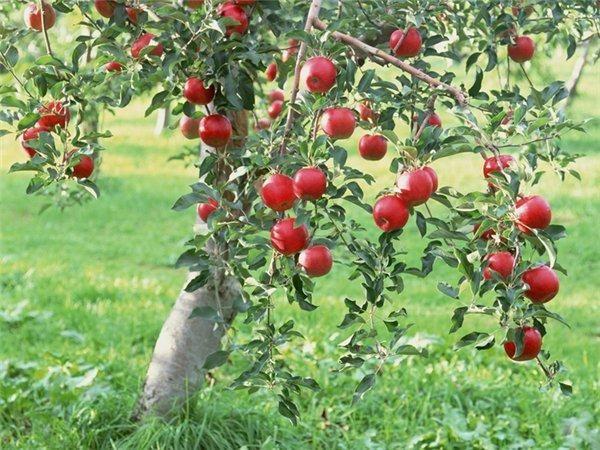
The Medunitsa apple tree is classified as a tall-growing type.
- The trunk height reaches 5-7 meters, the trunk is light brown.
- The branches are densely foliated and form a pyramidal crown.
- The flowers are white or light cream, medium-sized, and form evenly throughout the entire crown of the apple tree during flowering.
Foliage
The leaves on the apple tree branches are light green, turning slightly yellow at the edges towards the end of fruiting. They grow up to 5 centimeters and are rounded in shape. They may be slightly concave in the center.
Pollinator varieties
Self-fertility is considered an advantage of apple trees, but for more consistent fruiting, gardeners recommend planting pollinator varieties. The following varieties are ideal for Lungwort:
- Sverdlovsk anise;
- Chernenko's victory;
- White filling;
- Chinese-Belle fleur.
In what year does it begin to bear fruit?
The Medunitsa apple tree begins bearing fruit in its third year. It can grow and produce fruit for up to 50 years. With proper care and adherence to all planting guidelines, the apple tree will produce a consistent harvest. The apples do not become smaller or lose their flavor over time.
Flowering and fruiting
Apple tree blossom times depend on the climate in which the tree grows. Buds typically appear during the second half of May, reaching full bloom by early to mid-June. Apple trees begin bearing fruit in August.
Apples reach technical maturity very quickly, and are often harvested before consumer maturity because they have excellent taste even when unripe.
Tasting assessment of the harvest and the scope of application
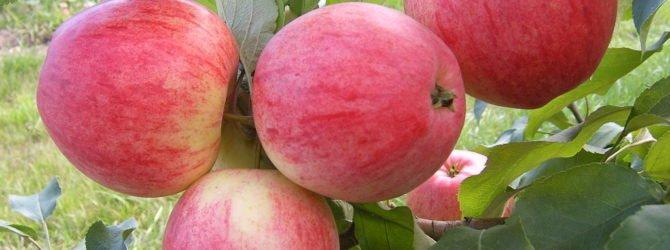
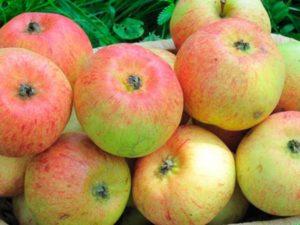
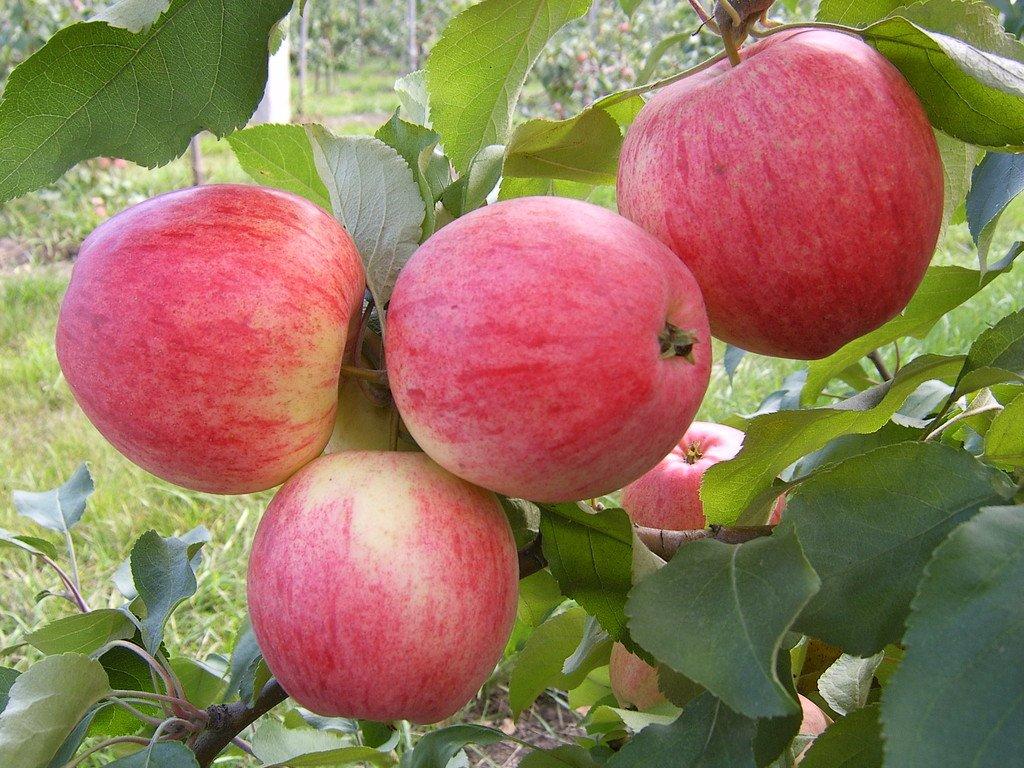
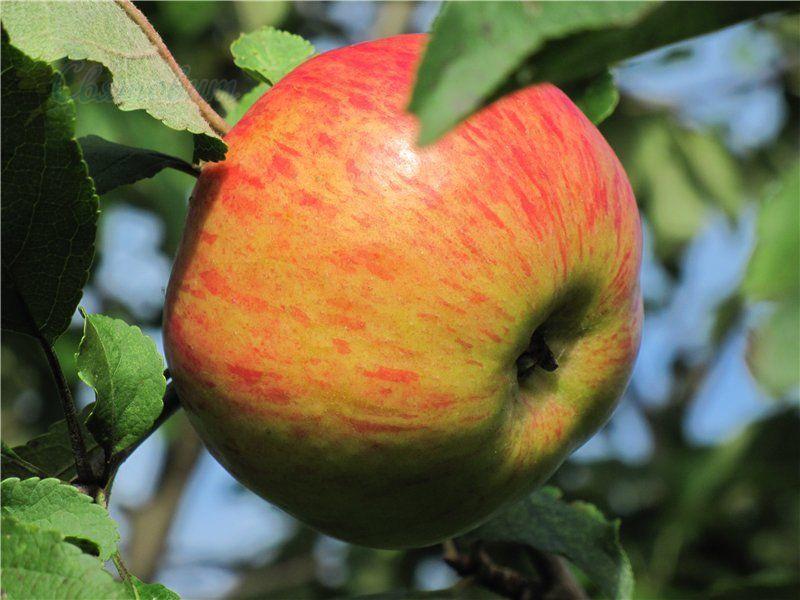
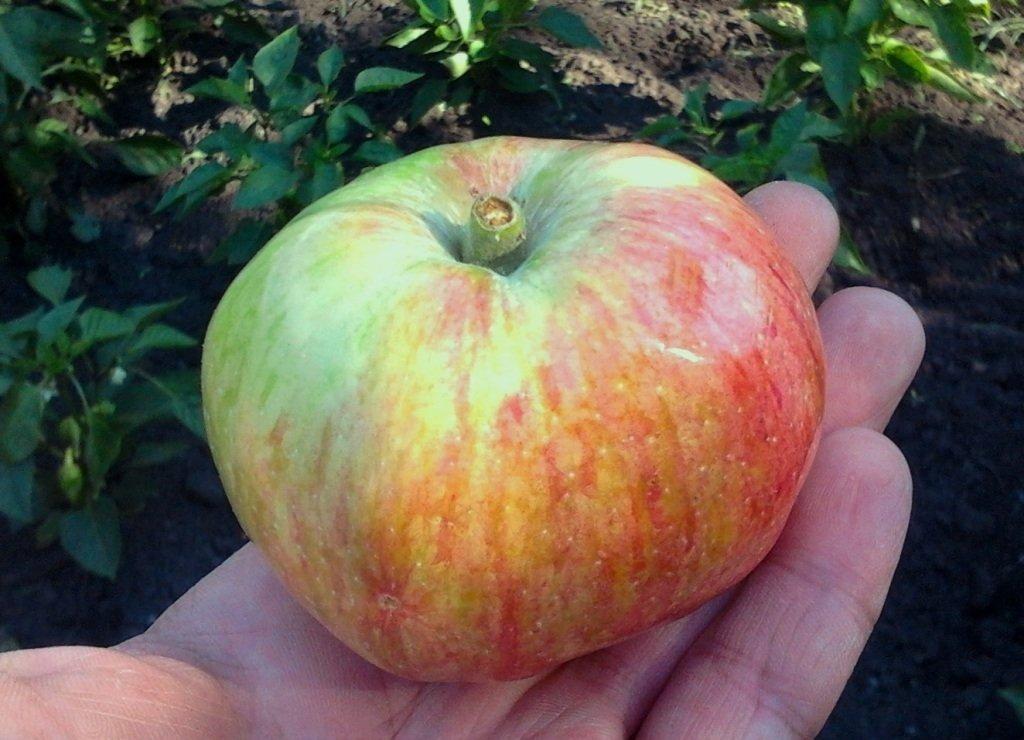
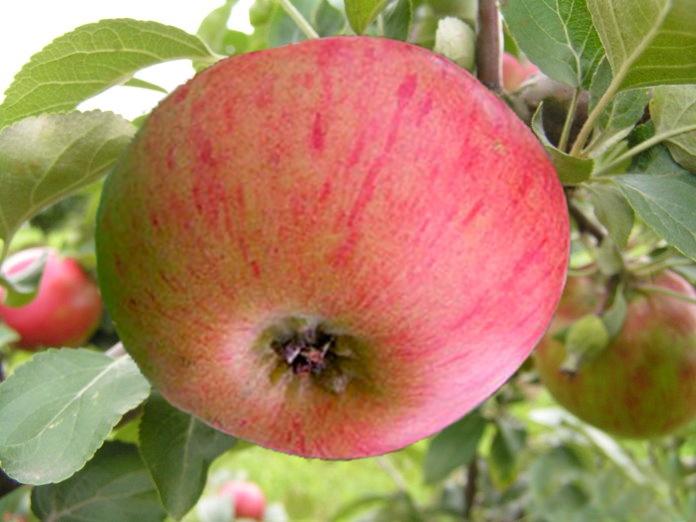
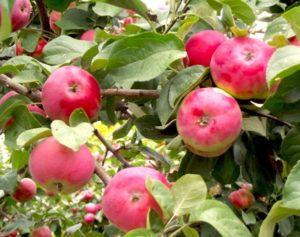
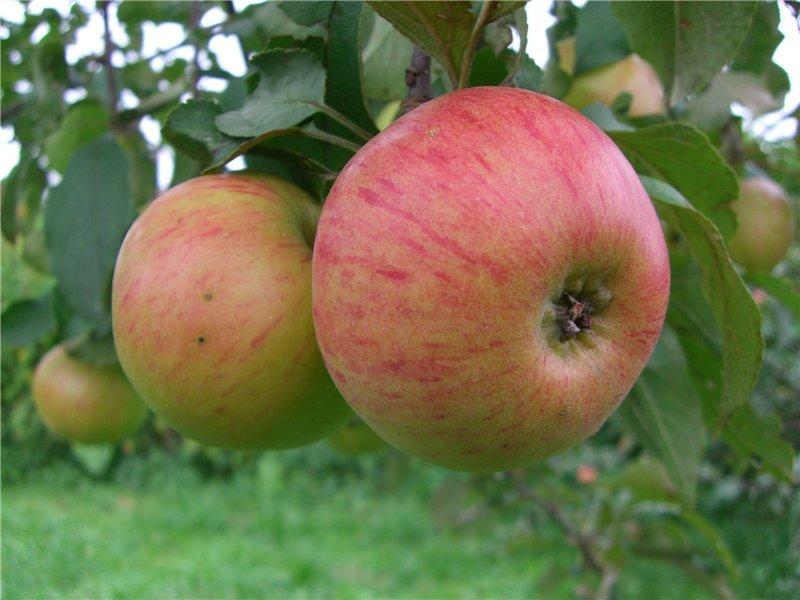
As apples ripen, their color changes. They can be yellow-green with a reddish tint. The fruit is slightly flattened at the top and bottom. They can weigh 100-200 grams. The flesh is light cream-colored and juicy. The acidity is reduced, and the sugar content approaches 15 percent. The tasting score, which is given to fruits at varying stages of ripeness, is 4.6 points.
These apples have average shelf life and can withstand short-term transportation. The winter variety, which harvests in mid-September, can be stored under appropriate conditions until spring. The summer variety can be stored for about two months. These apples are delicious fresh. The juicy flesh makes them suitable for making apple juice. The fruit is also used to make marmalade, puree, and traditional pastila.
Winter hardiness
The Medunitsa variety was developed for cultivation in challenging climates. It is highly winter-hardy, able to withstand temperatures down to -20°C without loss. Young trees require additional protection during the winter.
Immunity to diseases
Among the advantages, gardeners note high resistance to scab, a dangerous disease for apple trees. Over time, the disease has evolved into new forms, so additional treatment is recommended.
Varieties of the variety
Lungwort is represented by two varieties. Through selective breeding, the apple tree's quality is constantly being improved.
Summer
A classic version of this variety. The summer variety's fruits grow up to 200 grams, with juicier flesh than the winter variety. The fruit has a sweet, honey-like flavor.
Winter
This variety was bred from a summer variety. The fruit is smaller, but the flavor is just as good as the classic variety. The fruit ripens later, and the apples have a long shelf life.
What rootstocks should be used for growing?
There are various methods for growing Lungwort rootstocks. Each has its advantages.
Seminal
On seed rootstock, this variety can produce fruit for up to 50 years. Seed rootstock trees are characterized by:
- height – up to 6 meters;
- spreading branches;
- fruiting – by the 5th-6th year of existence.
Semi-dwarf
This option is suitable for small garden plots. The trees grow up to 4.5 meters and bear fruit in the third year.
Columnar or dwarf
This type of rootstock is particularly popular. Small apple trees of this popular variety grow to 1.5-2 meters tall and begin bearing fruit two years after planting.
How to plant an apple tree in a plot
When planting an apple tree, choose a location in advance. It's important to remember that the tree will grow in the same spot for at least 20 years.
Deadlines
Apple trees are planted in early spring or late fall. This is due to the specific characteristics of the crop. It's important to remember that the soil must be 50-60 percent warm, and the tree must have time to adapt before the onset of winter cold.
Process
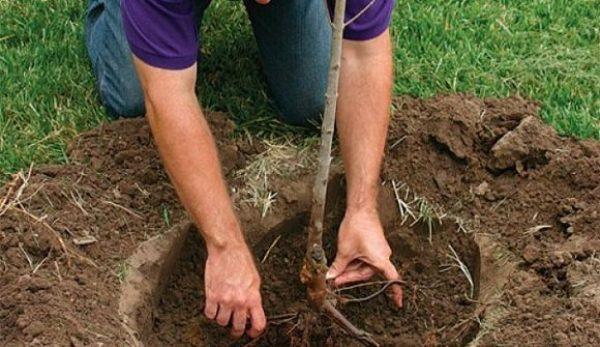
Planting begins with soil preparation. It should be fertilized with organic matter and dug over beforehand. For loose soil, prepare a planting hole about 40-50 centimeters deep. For heavier soil, dig a deeper hole. A stake about 1.5 meters high is driven into the center of the hole. The seedling is placed next to it, the roots are spread out, and the soil is covered.
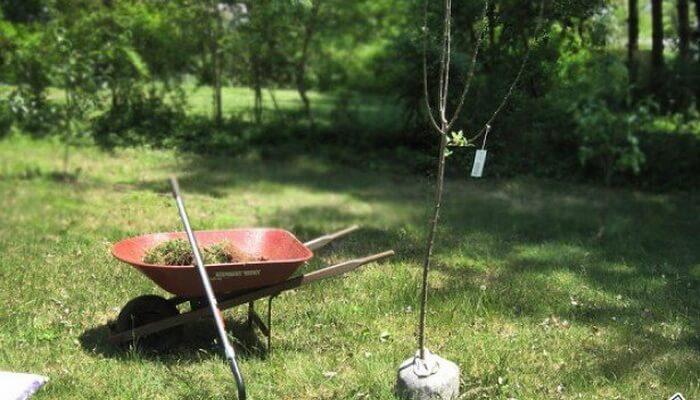
The surface is then compacted, the seedling is tied to a support, and the soil is watered. Watering is done not at the root, but in the trunk circle around the planting. This is necessary to avoid washing away the root and depriving it of the nutrients it is beginning to actively draw from the soil.
Leave about 4-5 meters between trees to allow for proper growth. If apple tree branches interfere with each other, this can lead to smaller fruit and reduced yields.
Caring for a seedling and an adult tree
After planting, gardeners recommend following the established watering schedule. In addition, apple tree formation start at the very earliest stage.
Watering
It's important for the seedling to keep the top layer of soil from drying out. A mature tree only needs one watering per week. During dry summers, water more generously.
Top dressing
In spring, the soil around the apple tree is fertilized with nitrogen-containing complexes. Potassium fertilizers are added during the fruit set stage. Trees need nitrogen to produce green foliage. Potassium helps increase the tree's ability to produce apples.
- Spring feeding: Nitrophoska or ammonium nitrate.
- Summer feeding: superphosphate or double superphosphate.
Warning! In the second half of summer, do not fertilize apple trees with nitrogen-containing mixtures. They stimulate shoot growth, which may not be completed before frost sets in.
Crown formation
During the first 10 years of an apple tree's life, the crown is regularly pruned. This technique helps address several issues simultaneously:
- removal of damaged diseased branches;
- stimulation of shoot formation;
- tree rejuvenation, maintaining yield indicators.
The crown is pruned twice: in the fall and in the spring. In the fall, pruning is for sanitary purposes. The tree is unloaded for further wintering. In the spring, the sanitary pruning is adjusted and the crown is shaped using the chosen method.
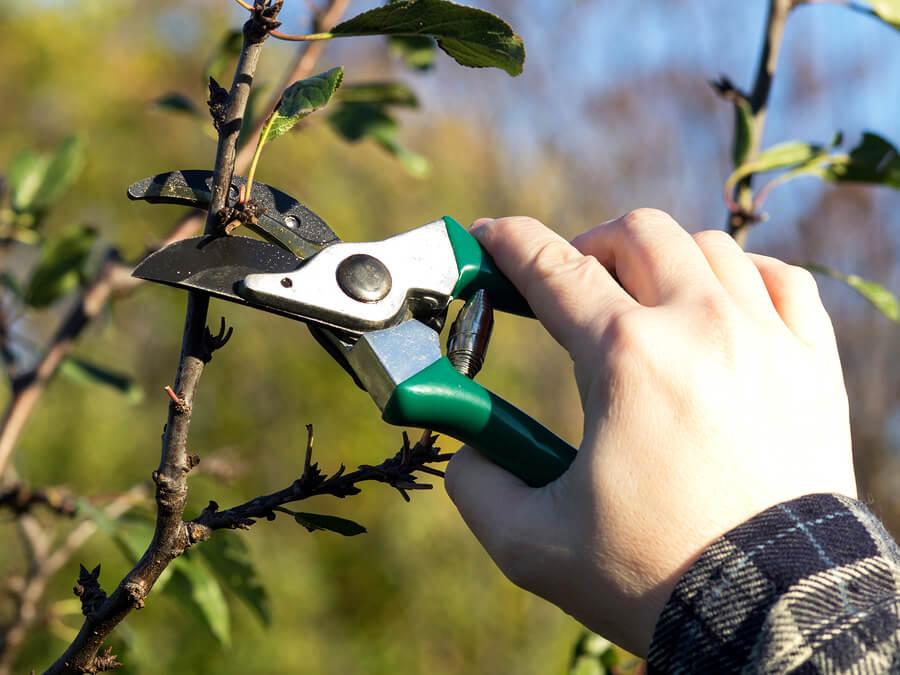
In summer, pruning is not carried out, but young growth is pinched and branches that block light from other branches that are prone to producing more fruit are removed.
Information! To control the yield, the number of ovaries formed is regulated. Some of them are deliberately removed to stimulate further flowering.
Protection from diseases and insects
In the spring, trees are always sprayed with a copper sulfate solution. This preventative measure is aimed at protecting against fungal diseases. To protect the trunk from insects and small pests and to prevent the development of rot or mold, the trunk is regularly whitewashed with lime. Whitewashing is carried out in the fall and early spring.
Caring for the tree trunk circle
The size of the tree's trunk circle depends on the tree's age. Two- to three-year-old apple trees have circles ranging from 1.5 to 2 meters. By the tree's seventh year, the circle widens to 3 meters. By the tree's tenth year, the root system has developed sufficiently for the circle to be completely level with the topsoil.
Tree trunks are loosened and cleared of weeds or mulched with selected materials. Mulch includes peat chips, sawdust, pine needles, fallen leaves, and grass clippings. The layer of material should be no more than 4-5 centimeters thick. Tree trunks are often decorative, filled with colored chips or planted with special crops.
Preparing for the winter period
In winter, only young trees require additional shelter. Mature apple trees can withstand subzero temperatures. After harvesting, sanitary pruning is essential to reduce the strain on the trunk and root system.
Next, the trunk is whitewashed, mulch is removed from the area around the tree, the soil is dug up, and the trunk is protected from frost. To do this, the trunk is wrapped in agrofibre and then covered with a layer of paper. When snow falls, it is raked closer to the trunk, creating an additional protective barrier.
Tip! Use spruce branches for the second layer. Humus is also good for protecting the soil around the trunk. Apply it in a 4-6 cm layer.
In addition to providing shelter from frost, trees are protected from rodent infestations. Plastic or wire mesh is installed 20-30 centimeters from the trunk to prevent rodents from entering and gnawing at the roots.
Related posts:
 Signs and treatment of apple tree cancer, varieties resistant to the disease
 Description of the Chudnoe apple variety, planting and caring for a dwarf tree
 Description and varieties of the Sinap apple tree, planting and care rules
 Description and planting of the Dream apple tree variety, care and propagation
 Description and characteristics of the Orlovim apple variety, cultivation nuances
 Description and varieties of Gala apple trees, planting and care in open ground
 Description and characteristics of the columnar apple tree President, planting and care
 Description and subtleties of growing the Sverdlovsk Beauty apple tree variety