
Among all onion varieties, sweet varieties hold a special place. One of the most popular is the Crimean onion, successfully grown in the central part of the country by both large farmers and amateur gardeners.
The main characteristic of this variety is its flavor. The bulb has juicy flesh and a slightly sweet flavor. It is virtually free of bitterness and pungency. The root vegetable is excellent for marinades and salads. It is used in preparing various meat and fish dishes.
Even a novice vegetable gardener can grow this vegetable. Its cultivation techniques are quite simple. The main thing to remember before growing Crimean onion is to familiarize yourself with its key characteristics and study the variety description.
Description of the variety
The Crimean onion was created by crossing Portuguese and Spanish red varieties. It incorporates the best qualities of these varieties. The bulb is very sweet, making it a favorite for those who dislike the bitter taste of regular onions.
This vegetable is grown primarily in Crimea, but it also thrives in central Russia. It ripens in July.
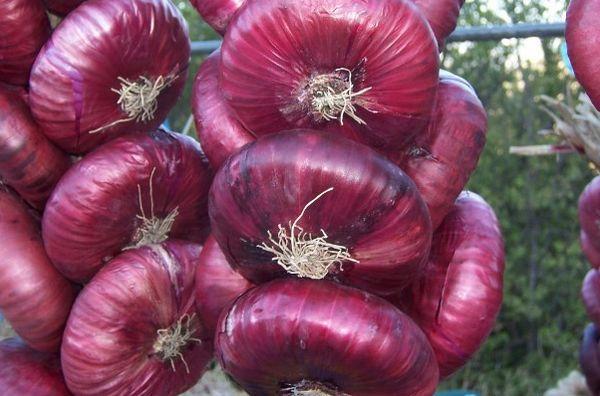
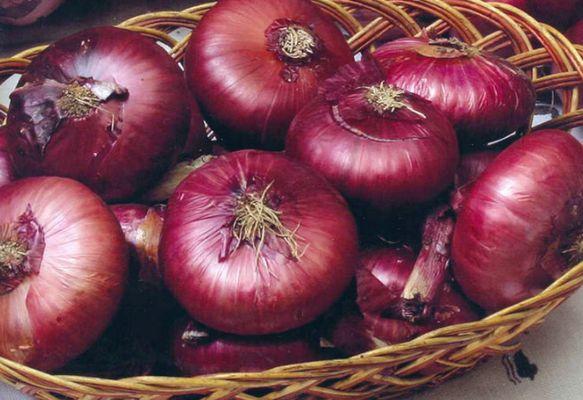
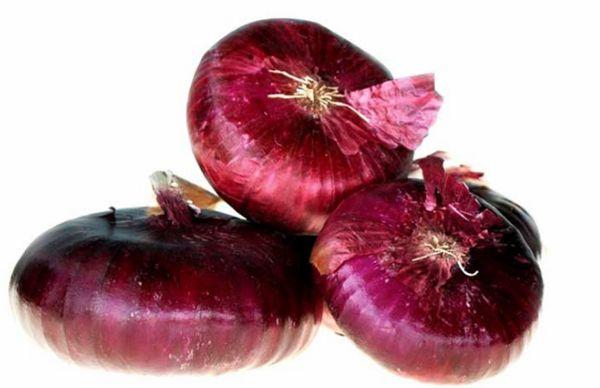
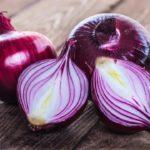
The Yalta onion is a bright purple. Sometimes its hue can range from dark to light. The bulb consists of seven lamellas, each at least 5 mm thick. They are pink in color. The bulbs are round, slightly flattened. The diameter of the bulb is no more than 7 cm. The average weight of the bulb is approximately 150 g.
All red varieties share one characteristic: they don't store for more than 4-5 months. This vegetable requires specific storage conditions. The room where the onions are stored should be dry and cool. The room should be regularly ventilated.
Experienced vegetable growers offer advice on how to distinguish genuine red onions from Yalta from counterfeits:
- A cross-section of an onion bulb has no more than seven layers, each of which is quite thick and fleshy. The segments have a pinkish tint.
- The vegetable has a very sweet taste, without bitterness.
- Red onions, unlike white onions, do not have a pungent onion aroma and do not irritate the eyes.
Red onions differ from their counterparts not only in taste but also in their nutritional value. They contain significantly more beneficial micronutrients and vitamins. They are best eaten fresh, as cooking destroys some of the root vegetable's nutrients.
How to grow Yalta onion?
The cultivation of this variety has spread throughout the former CIS, but Crimean vegetable growers are convinced that growing high-quality onions in other climates is virtually impossible.
In fact, the taste of an onion always depends on the soil and climate conditions in which it grows. A varietal vegetable requires plenty of warmth and light. Therefore, when growing this type of onion It's necessary to create all the conditions for its active growth. It's no secret that some gardeners have grown Yalta onions on their windowsills. Growing onions in an apartment requires a strong desire and basic knowledge of how to grow this spicy vegetable.
The rules of agricultural technology for this crop are as follows:
- Growing Crimean onions is only possible using seedlings.
- Before sowing seeds for seedlings, they must be properly prepared by soaking them in a weak solution of potassium permanganate to disinfect them. Soak the seeds in the solution for no more than 2 hours. Then, dry them thoroughly.
- Growth stimulants are used to activate planting material. The seeds are soaked in solutions for a certain period of time and then dried.
- Before planting, the seeds must be tested for germination using a saline solution.
- Next, special containers are filled with nutritious, loose soil. The soil consists of equal parts turf and humus.
- Furrows no more than 1-1.5 cm deep are made in the soil, with 2-3 cm between rows. The seeds are placed in the holes, then covered with soil and lightly compacted.
- Immediately after planting, watering should be carried out.
- Cover the seedling container with plastic wrap and place it in a warm place. Once the first loops appear, move the container to a cooler room. This will prevent the seedlings from stretching.
- The seedlings require some care. They need to be watered regularly. Use warm, settled water for irrigation.
- Once a week, young sprouts can be fertilized with a special complex mineral preparation.
- At the end of April, the seedlings are taken out into the fresh air to harden off.
- Planting in open ground is possible only 50-60 days after sowing the seeds. By this time, the small bulb should have produced 3-4 shoots.
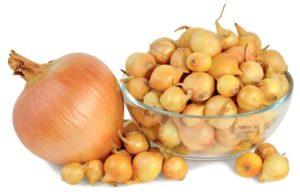
To grow truly high-quality Yalta onions, cultivation must be properly organized. The first stage—planting and caring for the seedlings—is crucial.
Transplanting seedlings into open ground
Many gardeners prepare their onion beds in the fall. To do this, they dig the soil to a depth of 30-40 cm. In the spring, they fertilize the area with humus, dig it thoroughly, and level it.
Gardeners say the most suitable soil for this onion variety is rocky, which is as close as possible to Crimean soil.
The site for the beds should be sunny and well-ventilated. Good predecessors for this crop include potatoes, cabbage, tomatoes, peppers, parsley, and dill, but not onions. It's worth noting that red and white onion They are not planted in the same bed.
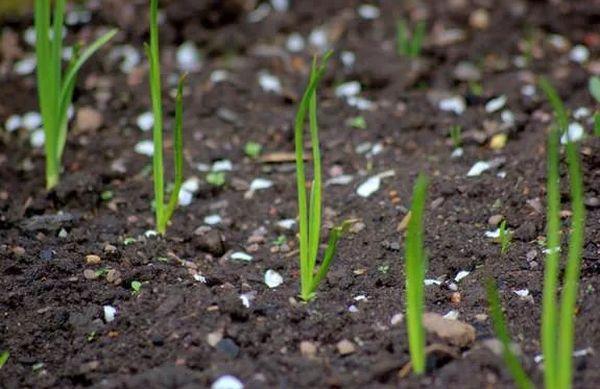
The seedlings are planted in early May. To ensure the bulb takes root, a third of the stem needs to be cut off. Before planting, the bulb is dipped in a solution consisting of mullein and clay.
The beds are placed at a distance of 30-35 cm from each other. The hole should be at least 10-15 cm deep so that the head is completely buried in the ground, and the greenery remains outside.
The general characteristics and description of the variety indicate that, despite the vegetable's high demands on warmth and sunlight, the plant requires regular watering. At the same time, moisture in the soil should not stagnate, creating conditions conducive to fungal growth. Without constant cultivation and regular weeding, a bountiful harvest will be impossible.
Once a month, the plant needs to be fertilized. This can be done with either organic fertilizer or complex mineral preparations.
Once the bulbs have grown, the soil should be lightly loosened to allow sunlight to penetrate. Three weeks before harvest, stop watering completely. Once the green tips have dried and fallen to the ground, you can begin digging up the roots.
Take a look Also
Storage
Not everyone knows, How to store Yalta onions properlyIn fact, storing your harvested crop should be done responsibly, as root vegetables don't last very long, only 4-5 months.
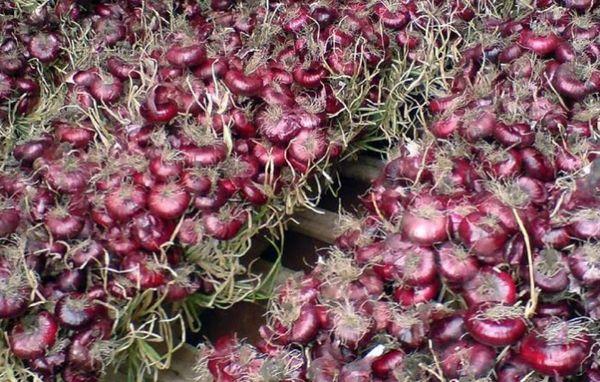
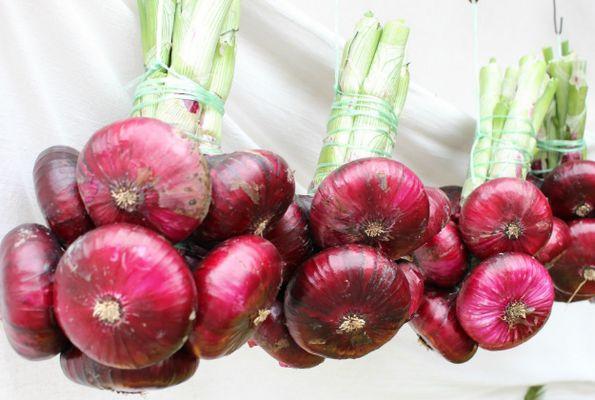
Crimean vegetable growers store their onions in braids or wooden boxes. The storage area should be dry and well-ventilated. In damp and humid conditions, the onions will quickly lose their potency and spoil.
Related posts:
 When to harvest leeks from the garden for storage, ripening times
 50 types and varieties of perennial onions with descriptions, cultivation, and care
 The beneficial properties of white onions, description of varieties, cultivation and care
 Description of the Exhibition onion variety, growing from seedlings, planting and care
 How and when to plant onions to get large bulbs
 Description of purple onion varieties, their beneficial properties, storage methods, and harvesting times
 Description of varieties and cultivars of wild onions, the subtleties of cultivation
 Types of onion varieties with names and descriptions, their differences and cultivation
A slight lie. This year I bought onions in Zaprudny. I specifically went down from Simferopol on my way from Belyaus to Kerch. I thought I'd buy 5-6 kilograms. First, I stopped at the fair on the way to Zaprudny. The onions they were selling were bitter. I thought they were probably steppe onions. The seller assured me they were from Zaprudny. I didn't believe it. I went up to Verkhniy Zaprudny. All the way to the last stop. There, the saleswoman took me to the growers. We went into a barn. Onions were hanging on the walls for sale. In baskets were onions that didn't look very pretty. They let me try them. The onions were the same as at the market. Bitter. The bitter aftertaste lingers for 5-6 hours. The onions are definitely from Yalta. 5-6 scales, fleshy. They spoil until December. The taste is definitely bitter.
The onion grower said these were their onions, and last year's taste seemed even more bitter. I was disappointed. My expectations didn't match the online praise for Yalta onions. They sold for 175 rubles per kilogram. I bought one 1.5 kg bundle. And this was from Zaprudnoye! Why pay such a price for ordinary red bitter salad onions? In Puda, these onions cost 99 rubles.
In the central zone, you can buy a large, white, truly non-bitter, sweet onion for 60 rubles.
Then I remembered that the Nikitsky Botanical Garden decided to revive the Yalta onion. Now I understand.
Why.