
To obtain a high-quality harvest, it's important not only to properly care for the seedlings but also to harvest the fruit in a timely manner. When wondering when to harvest onions, consider the variety, growing conditions, climate, and a number of other factors. A lunar gardening calendar can be used to help with growing and harvesting.
When to stop watering onions
Onions are considered a slow-maturing crop, so the harvest period often coincides with the rainy season. This negatively impacts their storage, so ripening must be artificially accelerated. To do this, stop watering 2-3 weeks before the expected harvest, when the bulbs are not yet fully formed. Soil watering should be stopped even during dry weather.
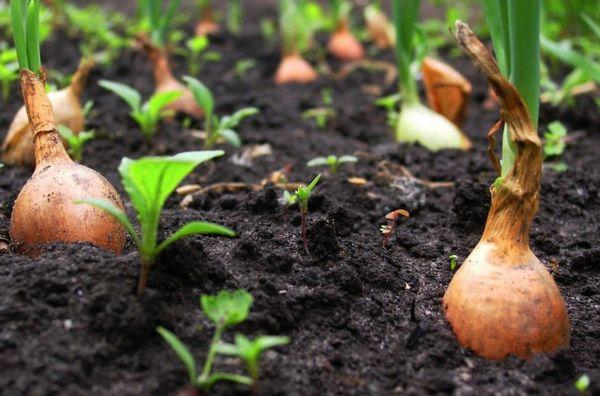
Excess moisture reduces the shelf life of the onions and, in some cases, stimulates new growth, causing the onions to ripen longer than necessary. To prevent rain from soaking the seedlings, it's recommended to cover the bed with plastic or another waterproof covering.
When to harvest onions from the garden
Accurate Onion harvesting dates in Siberian regions Harvesting times depend on a number of factors. The most important is the variety, as each variety has a different ripening period due to the characteristics of the seed. Climate conditions also influence the harvesting time. If the weather is dry, the ripening time varies significantly.
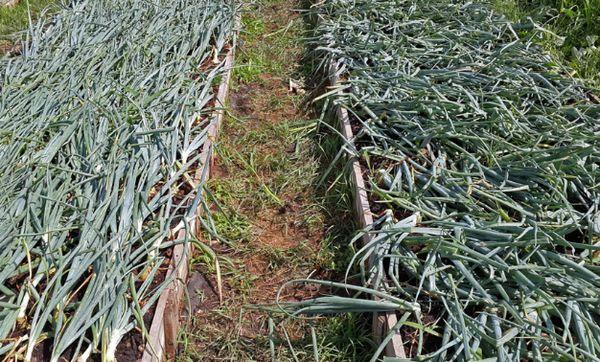
You can determine the time for cleaning by external signs, which include the following:
- The green stems begin to dry out and take on a yellowish tint.
- The neck of the bulbs becomes thinner and softer to the touch.
- Vertically growing feathers bend toward the ground. This trait is not recommended for growing in cool climates.
- The bulb scales become dry and easily removed. You can dig up a few bulbs to check.
Using the lunar calendar, you can harvest throughout the month, starting in mid-July.Typically, the moon is waning during this period, which positively impacts the quality of the harvest. However, it's important to note that the timing may shift slightly, so for specific information, consult the lunar calendar.
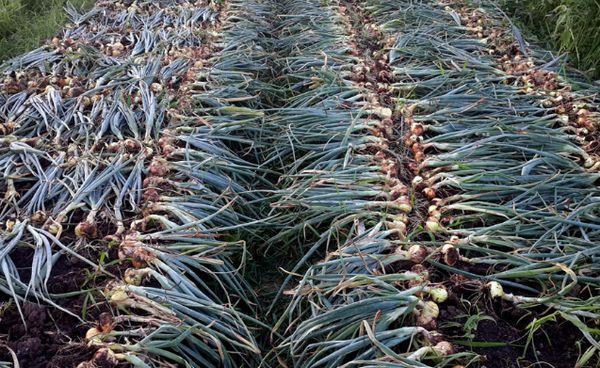
You can also use a mathematical method to calculate harvesting times. This involves counting a certain number of days from planting the onions, depending on the variety chosen.
Most varieties of this crop mature in 70-80 days. It's important to consider climate conditions: if the season was warm and dry, the seedlings will grow faster than if there was frequent rain and dampness. If you planted seeds that indicate a harvest date of 68-83 days, you should settle on an average of 75 days, focusing on visible signs of ripening.
How to dig correctly
Once you've decided when to harvest your onions, all that's left is to wait until they're fully ripe and begin harvesting. It's best to dig up onions in clear, sunny weather. Harvest early in the morning, allowing time for the harvest to dry in the sun throughout the day, shaking and turning the onions periodically to ensure they dry quickly.
You need to pull out the bulbs very carefully, because if you pull out the tops, they will rot.
For easier harvesting, you can use a pitchfork or a compact garden fork. If soil remains on the bulbs, remove it by hand to avoid damaging the integrity of the bulbs, as cracks can allow infection to enter. Also, avoid damaging the bulbs to prevent rot.
Harvesting during the rain
If harvesting during good weather is impossible, you can dig up the bulbs during rainy seasons. Harvesting during rainy periods is complicated by the fact that it's harder to check the ripeness of wet bulbs. Furthermore, some bulbs that are not fully ripe and have a watery texture may be harvested alongside properly ripened ones.
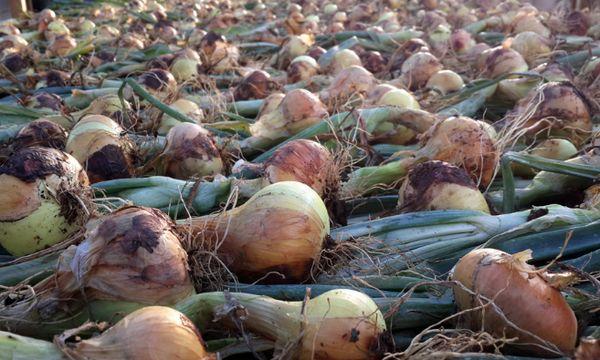
Onions picked in the rain should be thoroughly dried in a closed, well-ventilated area with a high temperature. To speed up drying, place them in a single layer and turn them regularly, at least once a day. Once the onions are dry, some of the dirt and soil will fall off on their own, and the rest can be gently washed off, being careful not to damage the flesh.
If fruits picked during the rain begin to rot, set them aside. Once dry, they can be frozen, chopped, or canned.
It may be necessary to harvest during rainy season, as late harvesting can have negative consequences. If onions are harvested too early, they won't be able to store for long without risk of spoilage. Since the fruit won't be fully ripe, their shelf life will be significantly reduced.
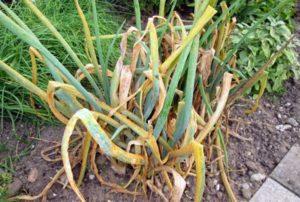
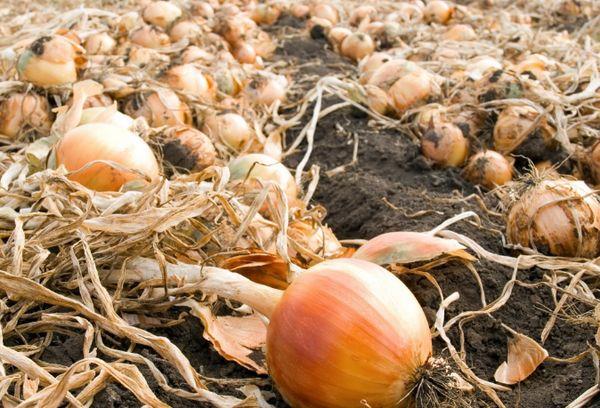
Delaying harvesting can result in a large number of bulbs rotting. After digging them out of the ground and storing them in a cellar, the likelihood that the rotting process will continue increases, and most of the fruit will be spoiled.
Trimming onions
After the onions have been dug up and any spoiled ones have been set aside, they need to be pruned. This procedure prevents disease and the sprouting of new bulbs. Furthermore, trimmed bulbs are easier to store, especially in limited space.
The bulbs are trimmed after they are completely dry. Typically, it takes about two weeks for the fruit to be ready for trimming. During this time, pathogens are completely destroyed. You can periodically check the onion bulbs for readiness by feeling them.
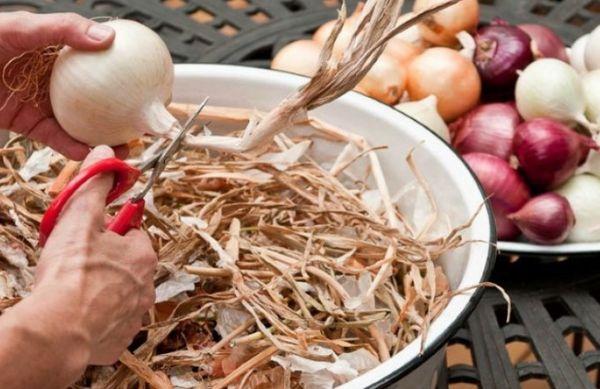
There are different ways to trim onions, depending on how you plan to store the harvest over the winter. In any case, you should trim the roots, and remove other parts as needed. For example, if you're storing the harvest in a box, you'll need to trim the tops of each onion so that each bulb has a small stalk about 5 cm long.
How to dry onions properly
If you plan to store the harvested onions, you need to dry them thoroughly. If you have a small harvest, you can use a standard gas oven for cooking. Preheat the oven to about 40 degrees Celsius (104 degrees Fahrenheit) and set the oven temperature to that level. Place no more than 2 kg of onions in a single layer on a baking sheet. Dry the onions for two hours, keeping the oven door slightly ajar. Turn the onions over several times during the drying process, otherwise the onions will dry unevenly.
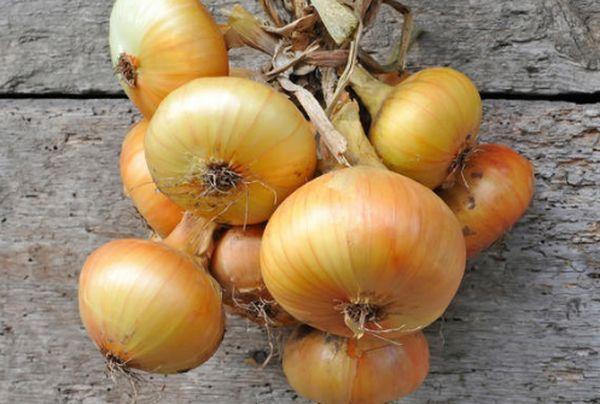
If you have the opportunity to place cross beams under the ceiling in your kitchen, then you can place the harvest in bundles and dry it over the stove burners. tie onion heads into bundles or weave Otherwise, it is important to trim the feathers at a distance of at least 4-5 cm from the head.
You can dry the harvest without using specialized heating devices. Simply spread the fruit in a single layer, placing parchment or thick cloth underneath. Keep in mind, however, that drying the harvest in a warm room without a stove significantly delays the drying process, which can take 10-20 days.
How to store onions at home
When harvesting large quantities, you can save the bulk for storage. After drying and trimming the bulbs, you can store them in a specially designed cellar or shed, stacking the bulbs in bulk. In a home with limited space, you can also easily store the bulbs for long-term storage.
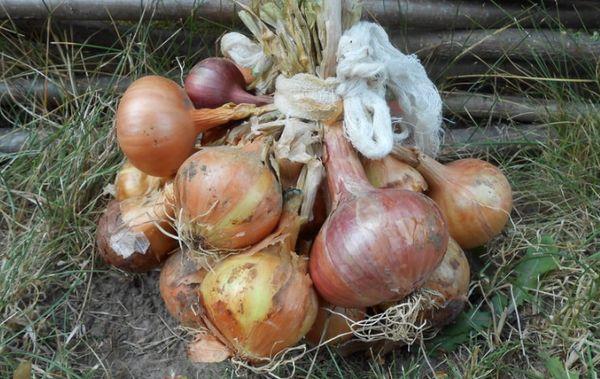
There are several ways to preserve fruit, including:
- Weaving wreaths or braids. Leaving about 5 cm of dry stem after trimming the feathers, tie several bulbs together. After drying, braid a suitable length of braid and tie it to beams or ceiling hooks in the kitchen or pantry.
- Store in flat-bottomed wooden boxes or wicker baskets. Stack the heads in several layers and store them in a pantry or on a balcony, provided it's sufficiently insulated to prevent the harvest from freezing. It's also important to avoid excessive dampness in the storage area.
- Stocking. Fill clean nylon stockings to the brim with the harvest and hang them from the ceiling or arrange them in a single, tight row on pantry shelves, with the knots facing outward.
To ensure that harvested fruit does not lose its nutritional value during long-term storage, it is necessary to ensure adequate humidity in the room. A suitable humidity level for the crop is 60%. Lower humidity levels can cause the fruit to dry out, so if necessary, provide additional humidity in the room or add husks to the storage containers. If humidity levels are too high, it is recommended to place containers filled with sawdust or ash in the storage area.
Related posts:
 When to harvest leeks from the garden for storage, ripening times
 When to harvest onions planted in autumn and spring from the garden for storage, how to determine the timing
 Description of the best varieties of onions, planting and care in open ground
 50 types and varieties of perennial onions with descriptions, cultivation, and care
 Description of the Exhibition onion variety, growing from seedlings, planting and care
 Description of shallot varieties, cultivation and care, when to harvest
 The beneficial properties of white onions, description of varieties, cultivation and care
 How and when to plant onions to get large bulbs