
At growing green onions There's a risk of disease or pest infestation. To preserve your harvest, it's important to understand the causes of green onion diseases and how to treat them. Regular disease prevention, basic plant care, and favorable climatic conditions all contribute to a better harvest.
The most common varieties of onions
Several varieties of onions have become popular among experienced gardeners. Each has its own unique characteristics and features.
Popular varieties include the following:
- Chipoluccio. An early-ripening and high-yielding variety, ripening in 2-3 weeks after planting. The onion greens have a pungent flavor. Fruits weigh up to 50 grams.
- Aristocratic. This variety is suitable for growing green onions. A single seed bulb produces 6-12 new onions weighing up to 100 grams. The growing season is 70 days, making it an early-ripening variety. The Aristocratic variety is often used for commercial cultivation.
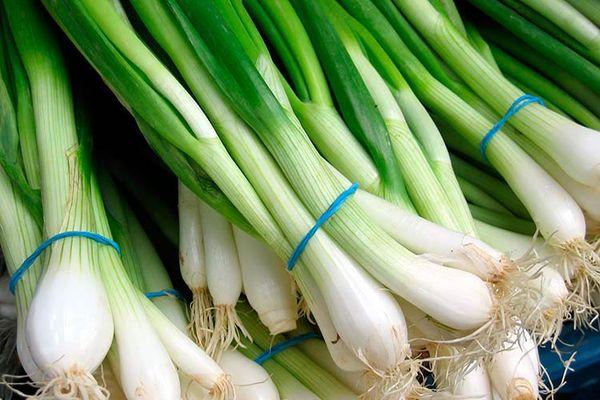
- Starorussky. This variety is popular because it produces vigorous green onions that can be stored for two years. It is resistant to many diseases and ripens 20-30 days after planting.
- Lilac Bell. The main advantage of this variety is its high yield (up to 7 kilograms of green onions can be harvested from one square meter of land). Its early maturity allows for planting several times during the season.
- Stuttgarten Riesen. A multi-bud variety with high disease resistance. A single square meter can produce up to 15 kilograms of greens.
How to grow green onions in open soil
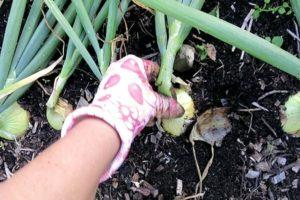
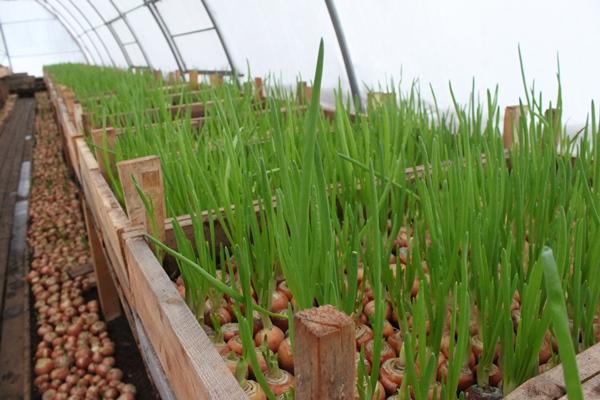
It is recommended to plant onions in open ground in early spring, after the snow melts, or in late autumn, before the onset of frost. To grow onions for greens, select healthy planting material with multiple buds and a diameter of more than 3 centimeters. Before planting, soak the seeds in warm water for 24 hours, then trim off the tops to promote rapid growth. You can plant the bulbs in one of the following ways:
- Place the bulbs close together and cover with fertile soil to a depth of 3 centimeters. This method requires approximately 10 kilograms per square meter of soil.
- The bulbs are placed in dug holes, spaced 4 centimeters apart. After sowing, the bed is leveled with a rake.
When growing onions for green onions in the fall, fertilize the bed with humus or manure. Remove the fertilizer in spring and cover the plants with protective film. Once the green onions reach a height of 25 centimeters, sprinkle the beds with peat or cover with straw to protect the crop from viruses.
What to be wary of
When planting green onions, be wary of developing diseases due to poor soil quality or adverse environmental influences. If plants become infected or pests appear, much of the harvest may rot. Fungus-infected seedlings, if not removed from the beds in a timely manner, can spread the virus to neighboring crops.
Diseases
Green onion infections can occur as a result of exposure to negative factors. Common plant diseases include:
- Powdery mildew (peronosporosis). This disease is classified as a fungal infection and is most dangerous during prolonged rainfall. It also develops with overwatering. One of the signs of damage to plants is the presence of pale green, indistinct spots that continually enlarge and become covered with a gray-purple coating. Damaged leaves almost always develop semi-parasitic fungi, which cause black mold. Powdery mildew is a disease that can reduce crop yields by half.
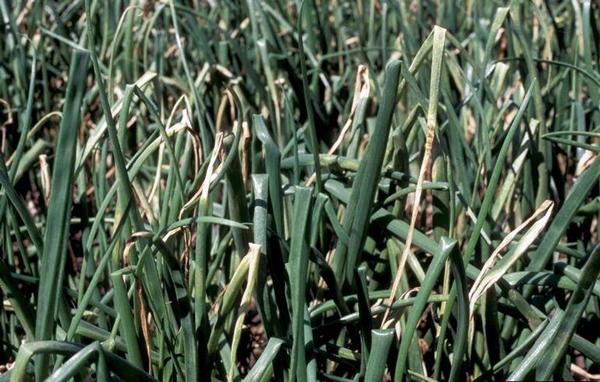
- Neck rot. This disease progresses rapidly during storage, but its development begins during the growing season. When the leaves of the seedlings begin to wilt and droop, the fungus penetrates the neck of the bulb. The infection softens the neck tissue, forming a dent. The rot completely covers the bulbs a couple of months after harvest, causing the fruit to become watery and develop an unpleasant odor.
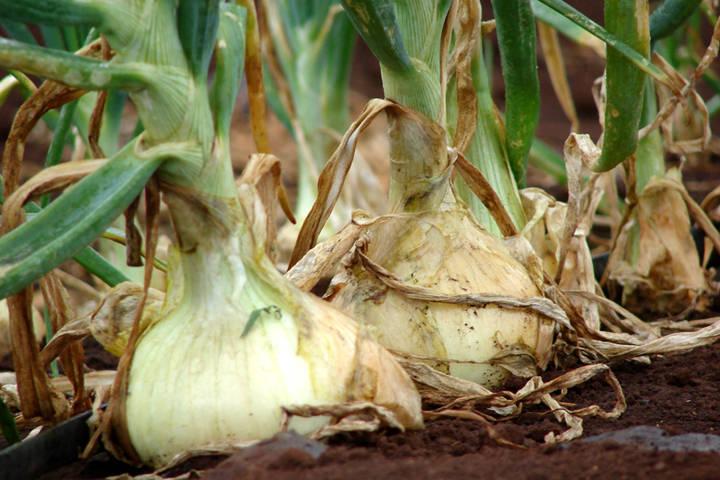
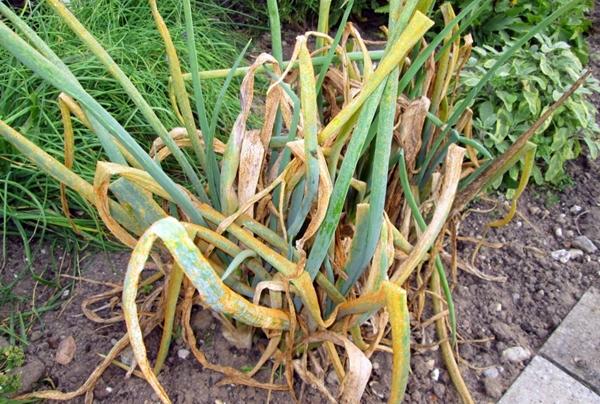
- Rust. In conditions of high soil moisture and unfavorable climate, orange, rough spots appear on onions, which darken over time. If the disease continues for a long time, the leaves dry out prematurely, and the bulbs stop growing. If the disease is treated at a late stage, the pathogen may remain on plant debris.
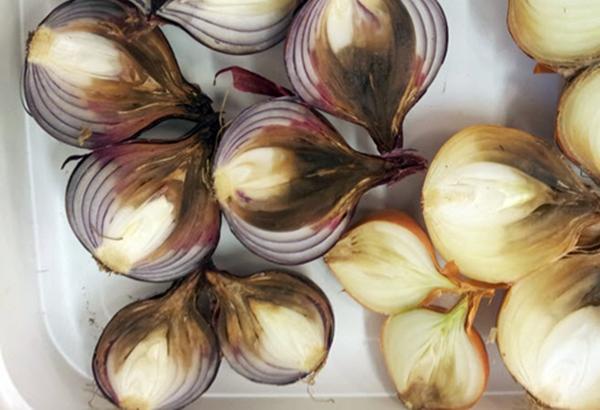
- Green mold. This disease is most often detected only after harvesting—during storage, water-soaked, green spots form on the surface of the scales or on the bottom. The pathogen is found in the soil or in the storage area. High humidity and frost favor the development of green mold.
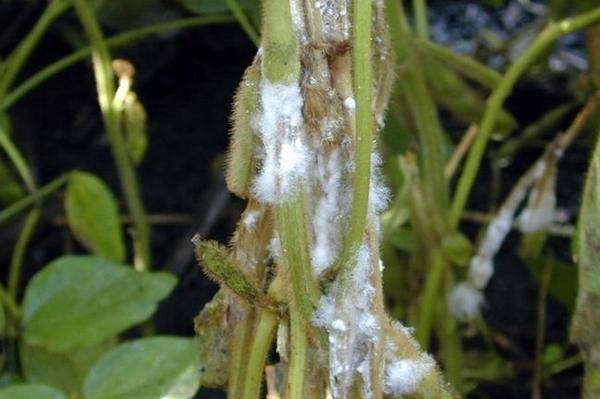
- Gray mold. The infection manifests itself actively during storage. When the rot develops, the fruits become soft and watery to the touch. Characteristic signs of the disease also include a pungent odor and the presence of small flies. When cut, affected bulbs reveal brown, rotten tissue.
Pests
Harvest declines are caused not only by infections but also by harmful insects. Green onion pests gnaw at the above-ground parts and root systems of seedlings.
One of the most dangerous pests is the onion fly, which can be detected even at the embryonic stage. Regularly inspect the plant stems, paying attention to the spots located 2-3 centimeters above the ground. If you notice white, oblong eggs 1-2 millimeters long, remove the affected stem.
If the eggs are not removed in time, larvae will hatch from them and immediately try to burrow into the soil.
Another pest that attacks plants are small insects called thrips. They act as vectors of diseases and appear on many vegetable crops. These insects can be identified by the following characteristics:
- on the green part of the onion there are thrips eggs, which are pale yellow in color, bean-shaped and no more than 0.5 millimeters in size;
- Thrips larvae look like small flies, but without wings;
- Adult insects grow to 1 millimeter, and their color changes to dark brown.
Take a look Also

The lifespan of thrips is 20-30 days, depending on the ambient temperature. During this period, the insects manage to infect onion leaves and reduce yield.
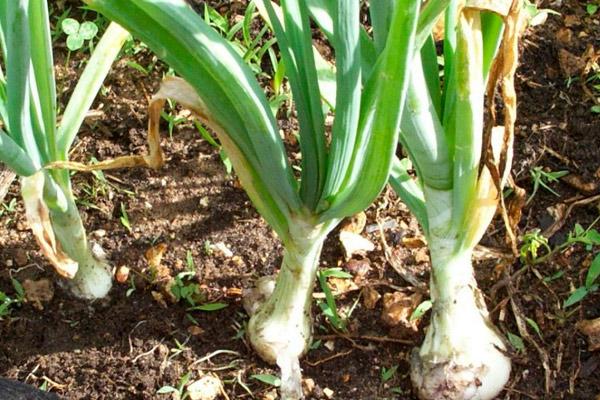
If there's excess moisture, onion moths can appear in garden beds. The pest lays eggs at the bases of leaves or in the soil near seedlings multiple times throughout the season. The first generation of pests appears in early summer. You can detect an onion moth infestation by noticing small yellow caterpillars with brown spots.
Since the insect overwinters in the butterfly stage, pre-treatment is not a guarantee of preventing the development of pests in the beds.
Harvest protection requires timely and proper pest control. To eliminate insects, regularly inspect plantings for spots or chewed-up feathers. If signs of plant damage are noticed, treat the beds with insecticide and fungicide solutions. If large insects are found on the soil surface, they should be removed by hand before fertilizing the soil.
Top dressing
The soil for onion planting should be fertilized before sowing and during the period of intensive growth. The crop especially needs nitrogen and phosphate nutrients after the first row thinning. To properly fertilize the onions, it's important to know: How to feed onions, then you'll be able to get a high-quality harvest. When fertilizing the soil, follow these rules:
- To prevent the plant from being affected by fungal diseases, it must be treated with potassium salt;
- It is better to apply fertilizer to the soil in the evening, when it is cool and the seedlings are not exposed to direct sunlight;
- Mineral fertilizers should not come into contact with plant leaves, as this may harm them.
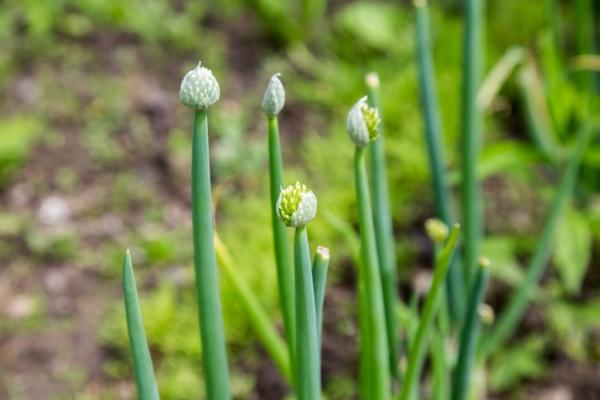
The main feeding is done one week after planting. The next feeding is done 10-12 days later, using organic fertilizer. You can also treat the plants with a solution of the chosen fertilizer with added minerals. After the first shoots appear, wait until the tops reach 12-25 centimeters, then thin the seedlings and remove weak shoots. This is the time when onions need fertilizing.
For effective growth, you can use a combination of organic and mineral fertilizers.
Proper watering
Onions are a plant that require regular watering. When growing onions for green onions, the same method is used as when planting bulbs or turnips. The only difference is the frequency of watering and the need for artificial drought, which is necessary before harvesting.

When planting onions as heads, you need to stop watering for 2-3 weeks before harvesting, and when planting onions as feathers, watering is not required for 3 days.
When watering the beds, it is also necessary to observe a number of the following nuances:
- When watering seedlings, you need to add a moderate amount of water so that the soil is moist, but not marshy;
- Onion varieties grown for greens may be watered using sprinkling or at the root;
- When planting multi-tiered varieties, it is necessary to water the bed once a week so that the onions form dense vegetation;
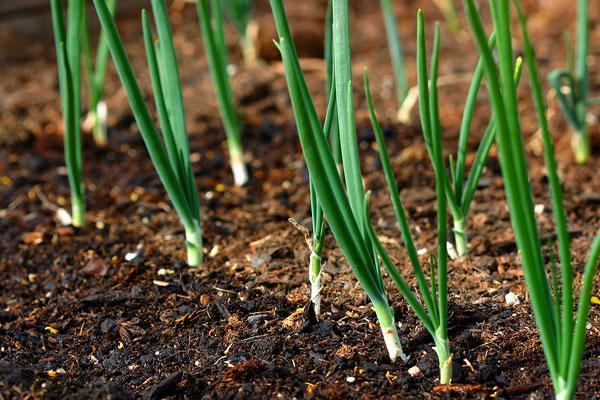
- In the spring, moderate and constant watering is carried out, since excess moisture or the onset of drought have an equally negative effect on plants and provoke a slowdown in growth;
- If the correct intensity is observed, the soil should not become loose, as this indicates that it is dry;
- It is better to moisten the soil early in the morning or in the evening, since under the influence of daytime sunlight the water will quickly evaporate, and burns will form on the vegetation.
If the sprouts change color and the onion feathers wither during the ripening process, it is necessary to reconsider the intensity of watering. When onions are turning yellow in the garden The question arises as to what to do to restore natural growth: check the soil condition. If the soil is overly wet, wait a few days for the beds to dry out, then reduce the frequency of watering.
Related posts:
 50 types and varieties of perennial onions with descriptions, cultivation, and care
 When to harvest leeks from the garden for storage, ripening times
 Description of the best varieties of onions, planting and care in open ground
 Description of the Exhibition onion variety, growing from seedlings, planting and care
 How and when to plant onions to get large bulbs
 The beneficial properties of white onions, description of varieties, cultivation and care
 Description of varieties and cultivars of wild onions, the subtleties of cultivation
 Description of Welsh onion varieties, planting, growing, and care in open ground