
Unlike in central regions, onion harvesting in Siberia begins at a different time. In most regions of Russia, onion harvesting begins in late July or early August, depending on the variety and the time it was planted outdoors.
Siberia is known for its harsh climate, so the weather isn't always ideal for growing crops. But this doesn't stop gardeners from constantly seeking new ways to achieve a bountiful harvest.
Climate features and variety selection
Before planting onion beds, it's important to determine the best varieties for this harsh climate. For example, the following onion varieties are popular among Siberian gardeners:
- Yukon;
- Aleko;
- Odinets;
- Voronezh 86;
- Setton;
- Golden Spindle;
- Apogee;
- Krasnodar.
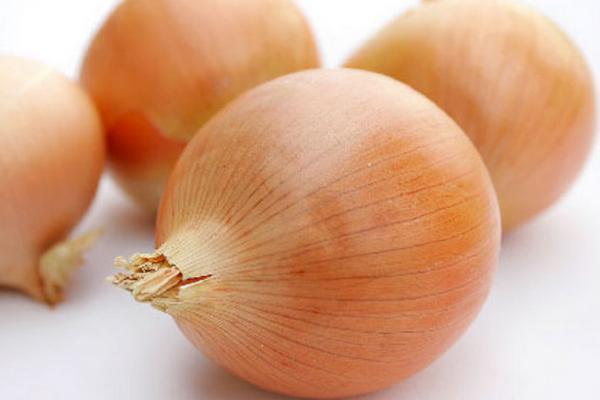
The climate of Siberia is characterized by the following features:
- In spring, frosts occur not only at night.
- Summer is cool and it rains often.
- But sometimes in summer the weather is dry and hot.
- During the growing season, the weather is constantly changing.
To maximize the yield when growing onions in Siberia, choose early and mid-early varieties. Harvesting should begin after more than half of the plant's foliage has yellowed and dried. Harvest on a warm, windless day. Full maturity takes 80 to 100 days from planting.
Beginner mistakes
A common mistake new gardeners make is not harvesting onions in a timely manner. It's important to determine in advance when to dig up onions And how to store them properly. Onions dug up in Novosibirsk and harvested at the same time in central regions won't keep for long. In central latitudes, onion beds ripen faster.
When harvesting, it's important to ensure the bulb scales are tightly sealed. If they're loose, the bulbs won't keep for long and will quickly become moldy. If the bulbs are left in the soil for too long, early varieties will begin to rot.
Some gardeners believe that mineral and organic fertilizers should be applied throughout the entire growing season. However, this is far from true. A few weeks before harvest, you should stop applying fertilizer to the soil. This is especially true for nitrogen. If nitrogen is applied during the final stages of bulb formation, the bulbs will not have time to ripen. This will result in the harvest being lost during winter storage.
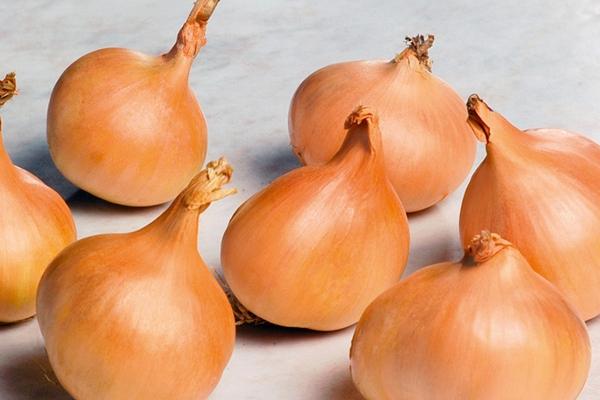
We are deciding on the deadlines
After planting the bulbs, you need to immediately decide when to harvest them. It's important to understand whether this should be done in late summer or fall. The harvest time will vary depending on the planting region and climate conditions. There are several methods that gardeners can use to determine the most favorable time to harvest onions from their garden plots.
Mathematical calculations
One of the popular methods of determination timing of harvesting onions The calculations for harvesting from the beds are mathematical. There's nothing complicated about this method if you understand the calculations in advance. Most gardeners are used to choosing the timing based on the appearance of the plants or weather conditions.
Many people initially think the mathematical method is ineffective. But that's not true. It makes it easy to calculate an exact or approximate date. To determine the time period, you need to remember the date of planting the onions in the soil and then add 70 or 90 days to it. However, you still need to take weather conditions into account. If there's been prolonged cold weather, the onion harvesting time will be delayed by several days.
Weather conditions
Another way to tell when it's time to start harvesting your onion beds is by checking the weather conditions. First, check the weather forecast for the next two weeks. The growing season is directly affected by climate conditions. If the summer is cold, postpone harvesting for a few days, or even weeks. Once the onions are harvested, they should first be dried in a dark place.
If the weather was warm in the summer, then the bulbs need to be collected earlier.
Furthermore, if most of the foliage has already dried out and the rest is still green, and the weather forecast predicts prolonged downpours, delaying harvesting is not recommended. Heavy rains can cause onions to rot. If the onions haven't had time to ripen, they should be left in a dark place to ripen.
Take a look Also
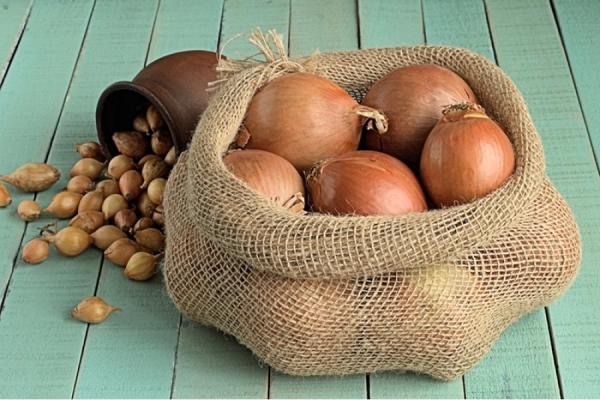
External parameters
You can tell by the appearance of the plants determine when to harvest onions from the gardenThe harvest should be collected if:
- Onion feathers begin to turn yellow, dry out and gradually fall to the ground.
- The onion acquires a rich aroma.
- New green feathers on the onions stop appearing.
- The bulb is large, the plates separate easily from each other.
- The root collar of the plant becomes thinner and gradually withers.
- After digging up the bulbs, the dry scales peel off easily.
There's no need to wait until all the green onions have fallen to the ground. It's enough if more than half of the greens are yellow.
Lunar calendar
Some gardeners prefer to use the lunar calendar when harvesting crops. However, this is the least reliable method, so it's better to rely on climate conditions or the appearance of the plants.
According to the lunar calendar, the harvest is postponed to August 7, 2025. From this date, a favorable period begins, When to dig up onion bulbsIf you harvest the bulbs during this period, they will keep for a long time and won't rot. During the waxing moon, all plant growth processes slow down, and all the nutrients are absorbed into the bulbs. The same thing happens during the waxing moon. But again, it's important to use the lunar calendar wisely. If the weather is bad outside, but the lunar calendar indicates a favorable time for onion harvesting, it's best to trust the weather and wait.
Is it possible to speed up the ripening process?
If the weather forecast leaves much to be desired, you can bring forward the onion harvest time. There are several methods for this:
- During the onion ripening process at the end of the growing season, the onion beds are loosened, gently pulling the bulbs out of the soil. This causes the roots to be slightly torn, and the process of scale formation accelerates.
- If you remove the soil from the surface of the bulbs, they will begin to ripen faster.
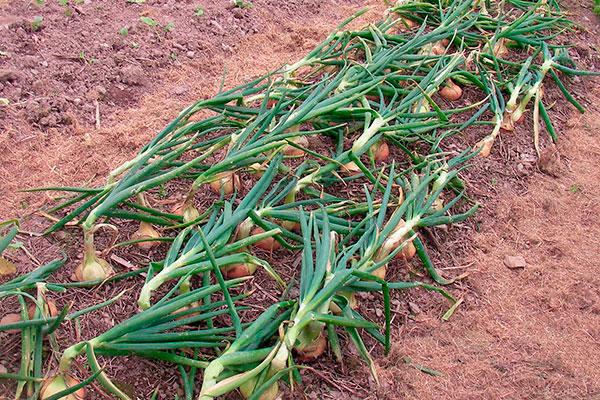
- The stems are laid on the soil. After a week, the bulbs are dug up.
- When growing onion sets, the roots are trimmed slightly below the bottom by about 6 cm.
Some gardeners prefer to trim the leaves to speed up the ripening process. However, this is not recommended. If the onions don't ripen and have to be dug up, they will get all their nutrients from the stems while they ripen indoors.
Cleaning Features
In order to save the bulbs To ensure healthy bulbs, it's important to learn the important nuances of drying. After digging up the bulbs, lay them out in a single layer in a dark, ventilated area. It's not advisable to trim the stems. They provide nutrition to the bulbs if they haven't had time to ripen in the soil.
In Siberia, as in Altai and other regions, a clear, sunny day is chosen for digging onions. The soil should be dry and loose, so the bulbs are easy to pull out. If you can't remove the bulbs by hand, you should harvest the crop with a shovel. It's important not to damage the fragile onion stems during harvesting.
After digging, avoid banging the onions against each other. If they are damaged, they will spoil faster. During drying, carefully remove soil from the roots.
After digging, the bulbs can be left directly in the garden bed to dry. However, they should be brought indoors at night. Allow the bulbs to dry completely. This typically takes 1 to 2 weeks. If the weather is sunny, take the harvested bulbs out into the sun. This will help them dry faster.
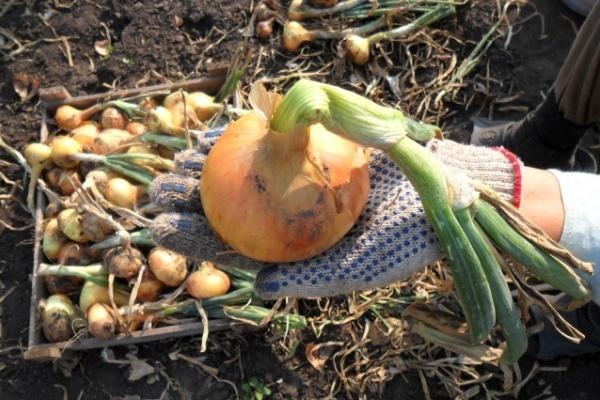
Once the heads are completely dry, the stems should be trimmed. However, the root collar remains intact. This pruning method will allow tie the bulbs In bunches. Don't trim the stems completely. Cutting them off at the very base of the bulb will allow infections and fungi to penetrate the bulb, leading to rapid spoilage and the spread of infections to all vegetables stored nearby.
Related posts:
 Description of the best varieties of onions, planting and care in open ground
 Description of shallot varieties, cultivation and care, when to harvest
 How and when to plant onions to get large bulbs
 50 types and varieties of perennial onions with descriptions, cultivation, and care
 When to harvest onions planted in autumn and spring from the garden for storage, how to determine the timing
 When to harvest onions for storage in 2025 according to the lunar calendar
 When to harvest onions in the Central Black Earth Region and how to determine their maturity
 The beneficial properties of white onions, description of varieties, cultivation and care