
The Ram's Horn hot pepper is a medium-hot variety. Compared to chili peppers, it has a milder flavor and is used in many Asian dishes. Hot pepper varieties are grown in Russia both for culinary purposes and to make medicinal tinctures.
General characteristics of the plant
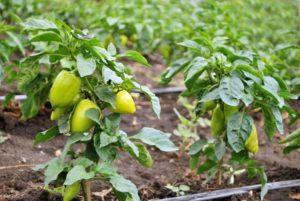
Pepper bushes are low, reaching only 60-70 cm. The robust stem bears numerous lateral branches, which produce the fruit. A plant can bear 20-25 fruits at various stages of development and ripening. The overall weight is quite heavy, but the well-developed root system firmly anchors the plants in the soil. The variety's description notes that plants rarely fall under the weight of the pods, so hot peppers are usually not tied down.
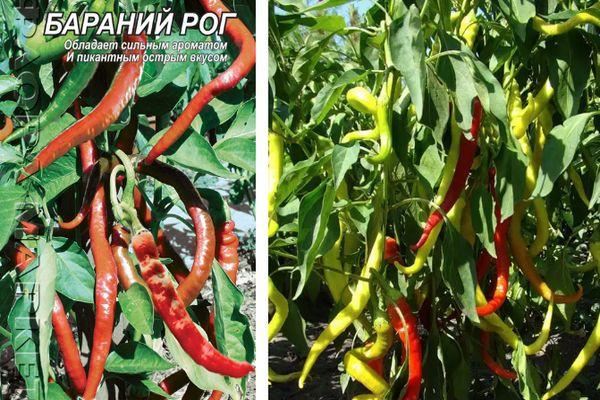
The plant is resistant to temperature fluctuations and prolonged cold spells. The Ram's Horn variety can be grown in a greenhouse if desired, but it also produces good yields outdoors, even in the Altai and southern Siberian climates. This heat-loving plant is also resistant to extreme heat. The bushes do not shed their buds and continue to bloom and set fruit.
The Ram's Horn pepper variety is immune to tobacco mosaic, resistant to Alternaria wilt, and virtually unaffected by late blight. In dense, highly acidic soils, it can be susceptible to blossom-end rot. To prevent this disease, plants require loose, calcium-rich soil with a neutral or slightly alkaline pH. To ensure good growth, the planting area should be limed.
The average yield reaches 2-2.5 kg per square meter. This area can accommodate 4-5 pepper plants; higher planting densities result in lower yields.
Cannot be planted nearby hot and sweet peppers, especially in a greenhouse. Plants can pollinate each other, and as a result, the gardener risks getting bell peppers with a hot taste, while the Ram's Horn may lose its flavor.
Consumer properties of hot pepper
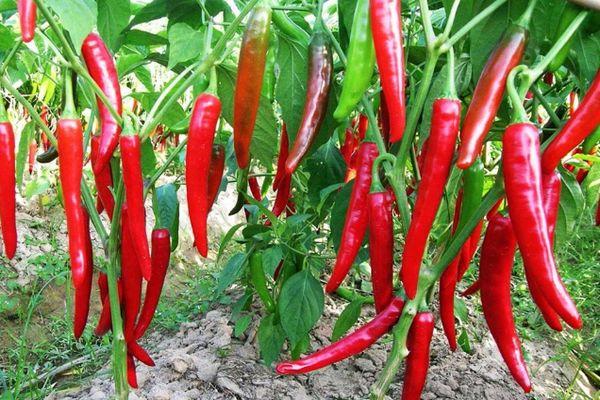
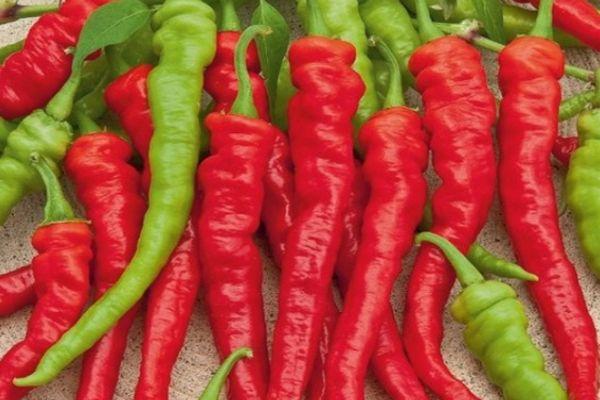
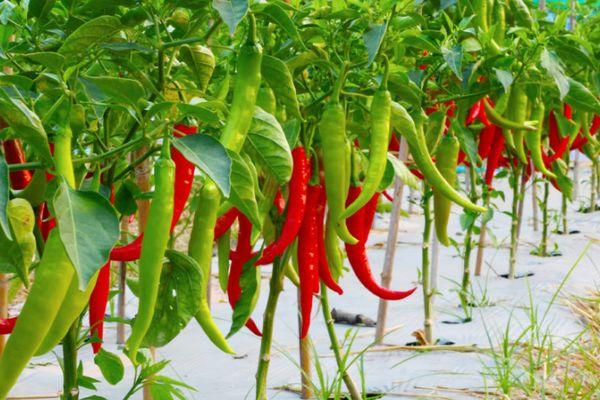
The description of the Ram's Horn variety notes its unusual shape. The long pods, up to 35 cm long, are transversely wrinkled and slightly curved and twisted along their length. They bear a strong resemblance to animal horns, which is where the variety's name comes from. The pods are green at technical maturity, turning yellow as they ripen, and turning red at biological maturity.
Gardeners' reviews indicate that for culinary purposes, it's better to use unripe, yellow peppers: when fully ripe, the skin becomes tough. But when used Ram's Horn pepper for decorative purposes For many purposes, this drawback must be tolerated. The tough skin reliably protects the fruit during transportation or artificial ripening. Peppers picked at technical ripeness will not be removed, ripening quickly in a cool room.
The color of the hot flesh matches the skin and changes as it ripens. The pepper has relatively thick walls (up to 0.5 cm). Each pepper contains two seed chambers containing numerous seeds, which can be left in for the variety's reproduction. When preparing dishes with hot peppers, keep in mind that the base to which the seeds are attached and the seeds themselves are more pungent than the walls of the pepper. By removing or leaving the seeds in, you can adjust the spiciness of the dish.
Hot peppers are included in Asian, Caucasian, Latin American, and Indian dishes. In some recipes, peeled peppers are stuffed and baked, like the familiar bell pepper. This spicy vegetable can also be added fresh to a vegetable salad. Ram's horn is used to prepare the well-known seasoning adjika, it's included in the Russian horseradish relish, and it's added to vodka to make pepper vodka.
For the winter, peppers can be salted and pickled, included in savory appetizers and vegetable stews, or frozen whole or sliced. When handling large quantities of peppers, it's advisable to wear gloves; the caustic juice is highly irritating to the skin and takes a long time to wash off.
Agrotechnical methods and rules
To grow a good pepper harvest in central Russia, you need to use seedlings. The "Baranii Rog" variety is mid-season and begins bearing fruit 130-140 days after sowing. These vegetables should only be grown from mature seedlings, which should be at least three months old by the time they are planted. The first harvest can then be in early to mid-July.
The best time to sow is the first ten days of February. Then the seedlings will be ready for transplanting into the greenhouse by mid-May, and they can be transferred to the open ground in early June. Sometimes peppers begin to bloom by this time. It's best to remove the first bud, located in the lower fork, to encourage flowering on later-growing branches.
Before sowing, seeds should be treated with a potassium permanganate solution, soaking them for 30-40 minutes. The soil is prepared from 1 part humus, 1 part garden soil, and 1 part sand, adding 1 tablespoon of gypsum or chalk for every 5 kg of the mixture. To disinfect the soil, generously water the hot potassium permanganate solution directly in the seeding container. A small amount of soil should be left dry in a separate container.
Spread the seeds over the surface of the cooled soil and cover with the remaining dry soil or sand. The seeding layer should be no more than 0.5 cm thick. After sowing, cover the tray with glass or place it in a plastic bag and place it in a warm place to germinate. At a soil temperature of around 25°C, the peppers will germinate in about a week. Remove the cover from the tray. It's best to keep the young seedlings warm for the first 10-14 days, until it's time to transplant.
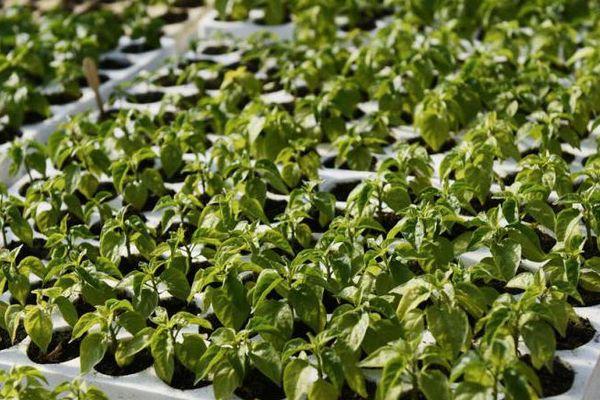
Seedlings are pricked out when they have 2-3 true leaves, removed from the soil, and transplanted into a common container using a 10x10 cm pattern. When transplanting, the stem is buried in soil up to the cotyledons. Afterward, care for the seedlings consists of timely watering and providing sufficient light. If the house does not have south-facing windows, the plants will need supplemental lighting, increasing daylight hours to 14-15 hours per day. This will prevent them from becoming leggy and will ensure they have a strong, short trunk by the time they are transplanted to their permanent location.
Peppers should be planted in a well-lit, wind-protected location. Add 1 bucket of compost, 500-600 g of wood ash, and 1-1.5 kg of gypsum or dolomite flour, chalk, etc. to the soil before digging.
Seedlings are planted in open ground after the last frost has passed, using a 30x30 cm pattern. Avoid burying the root collar too deeply; the maximum depth of the seedlings should be about 10 cm.
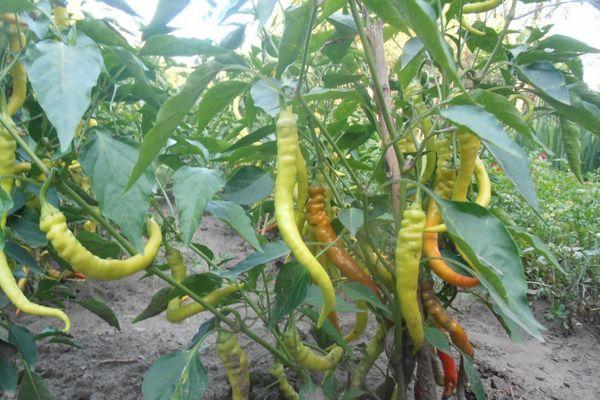
Narrow beds, like the Mittlider method, are also convenient for growing: two rows of plants are planted in them, providing good light for all plants. It's convenient to install arches above the narrow bed for covering material in case of cold weather.
Regular watering is essential for young plants. The soil beneath the bushes should remain constantly moist. Peppers should be watered whenever the top 1-2 cm of soil dries out. Mature fruiting plants tolerate heat and dryness much better, so watering can be done once every 5-7 days.
Related posts:
 The best eggplant varieties for growing in a polycarbonate greenhouse: planting and care
 Is it possible to grow an apricot tree from a seed in your garden? How to plant and care for it?
 How to properly grow a peach tree from a seed at home, planting and care
 Planting and caring for cherries, feeding and growing rules
 Top 40 DIY New Year's Baking Recipes for 2020
 How to control carrot flies with medications and folk remedies
 Descriptions of the 20 best cherry varieties for the Moscow region, their planting and care
 Carrot care guidelines for outdoor cultivation to ensure a good harvest
I really love spicy food, so I decided to grow this pepper. When planting, I fertilized the soil with a bioactivator.BioGrow", so the seedlings grew quite quickly. I add very little to dishes, as it's very spicy.