
- What determines harvest timing and yield?
- Overview of potential problems
- It does not bloom or bear fruit.
- It blooms but does not bear fruit.
- Conditions for obtaining a good harvest
- Correct fit
- Formation and standardization
- Disease prevention
- Spring pruning
- Maintaining temperature conditions
- Correct dosage of fertilizer
- Pollination
- Compliance with the watering regime
- How to choose the right variety
- Tips from experienced gardeners
To determine why grapevines aren't producing fruit, it's important to understand the possible causes. Two situations can arise: grapevines don't bloom and don't produce fruit, or they bloom but don't produce fruit. Grapes may fail to produce fruit due to insufficient fertilizer application or improper planting. They may also fail to produce fruit due to improper watering; perhaps they're under-watered or over-watered.
What determines harvest timing and yield?
The growth and development of the crop, the timing of the harvest, its quantity, and ultimately the harvest of high-quality grapes depend on optimal planting of the seedlings. It also depends on the correct application of fertilizers, the appropriate timing of disease and pest control, proper spring pruning, and the careful selection of pollinator varieties for each specific grape variety.
Overview of potential problems
Strictly adhere to the agricultural technology of plant cultivation, then you will reap an excellent harvest.
It does not bloom or bear fruit.
Grapes love warmth and good light, so they prefer a south or southwest-facing location. If the plant doesn't have enough warmth and light, it may not bloom. They may also fail to bloom if the air is excessively humid due to heavy rainfall.
Another cause is excessive fertilizer application. This causes the vine to grow numerous branches and foliage, but no buds.
You also need to carefully examine the grapes to determine whether they were frozen in the winter, or whether the gardener did not cut off the buds from which the fruit-bearing shoots grow during formative pruning.
It blooms but does not bear fruit.
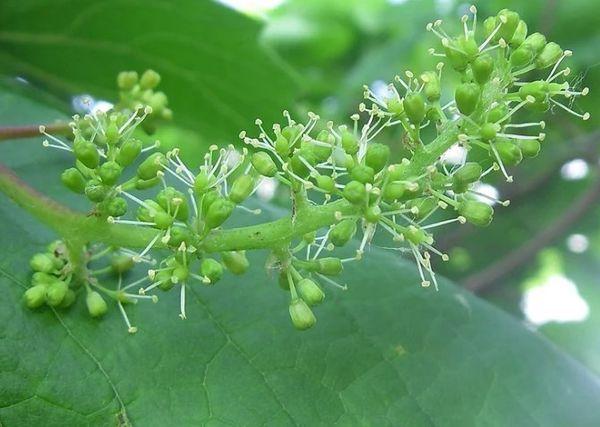
If the buds open but there are no berries, then most likely this variety needs pollinators.
Conditions for obtaining a good harvest
Gardeners can make various mistakes that will lead to delayed fruiting.
Correct fit
When purchasing, you should choose an absolutely healthy seedling.
If you plant bushes in the north, they will grow, but they will not produce berries; they will not have enough light and warmth for normal fruiting.
Bushes do not like excess moisture, so you should choose a location with groundwater no higher than 1.5 m; do not plant grapes in marshy areas.
Planting holes should be dug properly, maintaining a certain distance between them depending on the variety. For low-growing grapes, the distance between holes should be 1.5-3 meters; for medium-sized grapes, the distance between holes should be 2-3 meters; and for tall grapes, the distance should be at least 3 meters.
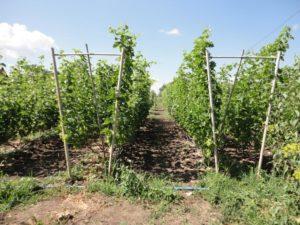
Holes are dug to a depth of 40-80 cm, drainage is poured onto the bottom - crushed stone in a layer of 15 cm, then fertilizer and fertile soil in a layer of 10 cm.
Formation and standardization
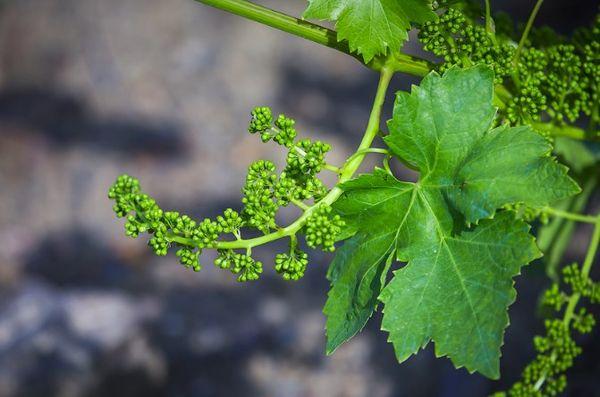
It's worth calculating the number of buds needed on a bush. When pruning, leave a reserve of buds to replace branches that freeze during winter frosts and in the event of mechanical damage. On a young bush, leave 50 buds. If it's a three-year-old bush of a very large hybrid variety, leave 100 buds.
Disease prevention
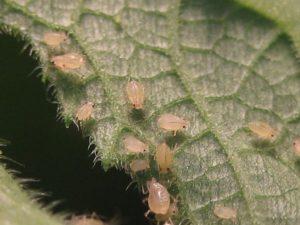
Pests and diseases interfere with plant growth and development. Grapes can be attacked by aphids and spider mites. In these cases, plants are sprayed with systemic insecticides. The most common disease that grapes suffer from is gray mold. and mildew. Gray mold is detected by a gray coating, while mildew is detected by oily spots on the foliage. Therefore, it's necessary to regularly inspect plants and perform preventative treatments. Fitoverm is the best product for this purpose, as it's a biological and low-toxic agent.
Spring pruning
Grapes may not bear fruit due to improper pruning of the vine.
For most varieties, the "fruiting eyes" from which young fruit shoots grow are between the 4th and 8th buds. However, for the Muscat Amber and Talisman varieties, the "fruiting eyes" begin at the 8th-10th or 12th-14th buds. Therefore, it's important to know exactly How to prune grapes This variety. However, it sometimes happens that amateurs cut back the Talisman variety's fruiting shoots to 8-10 buds, thereby reducing the yield.
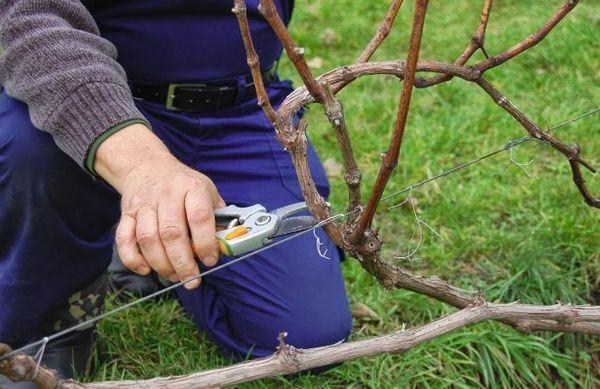
Also, when tying the vines vertically instead of horizontally, the number of ovaries is greatly reduced.
Maintaining temperature conditions
Here you must definitely take into account what variety you planted.
If this is an early variety and buds form early, they may be subject to recurrent frosts, so it is necessary to monitor the weather, water the bushes generously before frost, and cover them with film.
The optimal temperature for vine development and fruiting is considered to be 20-30 degrees Celsius. The key to good grape growth and a superb harvest is the sum of active temperatures (CAT). If the air temperature is insufficient, several techniques can be used.
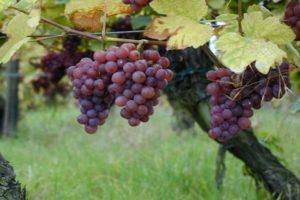
Dry soil surfaces increase soil temperature, so vertical drainage using pebbles is essential. If rainfall is excessive, you can build rain shelters over the bushes.
If the grapes are located near a wall or fence, then painting them snow-white increases the CAT.
If the air and soil temperatures in the growing area are consistently too low, you can increase the soil temperature by first adding pebble drainage material to the planting hole, then adding scraps of wood, and then adding fertile soil. You can also place foil on the soil beneath the grapevine.
Correct dosage of fertilizer
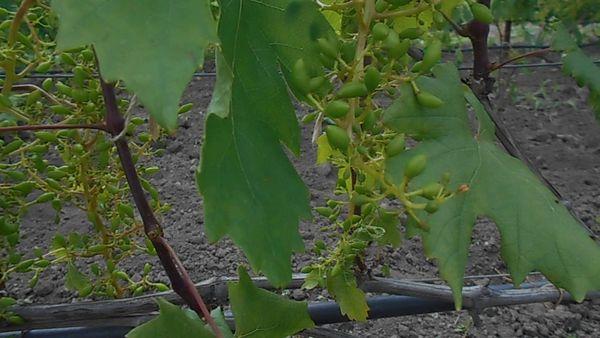
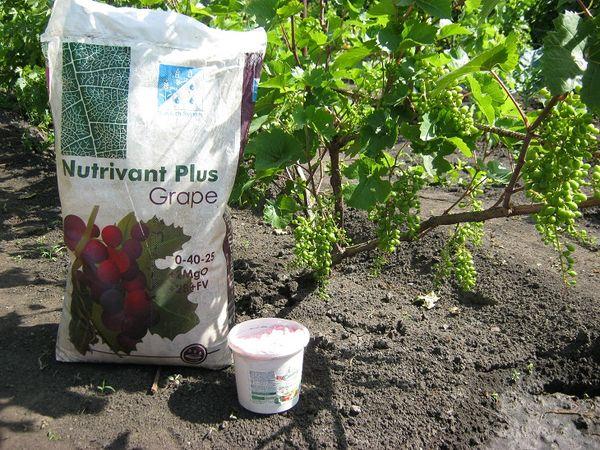
If too much nitrogen is applied, the vine begins to grow green mass—leaves and shoots—while the number of buds noticeably decreases, and the number of ovaries formed becomes even smaller. Furthermore, frost resistance and disease resistance decrease. You can tell that the plants are overfed with nitrogen by the rapid growth of the branches. Consequently, the vines don't mature before the frost. Fertilizing correctly is crucial.
The first feeding is done after removing the cover. Add 50 g of nitrogen, 30 g of potassium, and 40 g of phosphorus under the bush. Alternatively, you can use a complex fertilizer such as Florovit or Rastvorin.
Fertilize a second time before the buds open. Mix a bucket of manure with two buckets of water and let the mixture ferment for 10 days. Add 60 g of superphosphate and 45 g of potassium salt. Pour a bucket of fertilizer under each mature bush.
Fertilize the berries when they're about the size of a pea. Mix a bucket of manure with four buckets of water.
Important! Potassium supplementation is very beneficial for the bushes, as it ensures the plant's vitality and frost resistance.
Fertilizers should be applied to a depth of 40-60 cm, as this is where the root system is located. This means that with the correct fertilizer dosage, flowers and berries will not fall off, and the berries will ripen at the same time, all looking similar.
Pollination
One of the reasons why the bushes don't produce berries is that this variety produces only female flowers. Therefore, to pollinate them, other varieties must be planted nearby. If you don't plant other varieties near this hybrid, pollination will be almost nonexistent, few ovaries will form, and the harvest will be small.
Therefore, it is necessary to plant 2-3 more varieties of plants nearby that have the same height and bloom at the same time as the planted variety.
Also, if a given variety produces only male flowers, it will never produce a good harvest, since it is used only as a rootstock.
If planted varieties bloom at the same time, artificial pollination is necessary. Choose a cloudy day or early morning. Pollinate 2-3 times during flowering: first when the buds open, then 5-6 days later, and then at the end of flowering. Planting Kishmish grapes next to them works well for cross-pollination.
Compliance with the watering regime
Watering is essential when grapes are filling and ripening. Insufficient moisture will prevent the bunches from filling out, while too much moisture will cause the grapes to crack.
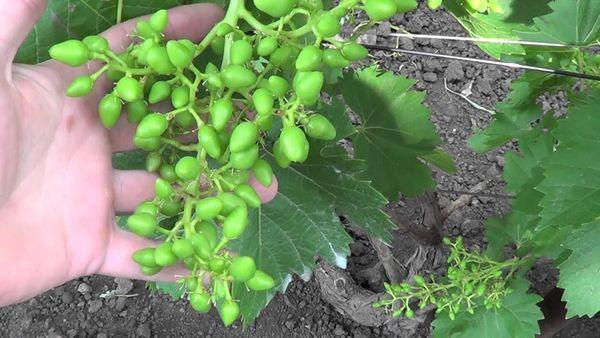
Watering depends on the weather. If it's hot and dry, watering should be increased, while if it's raining constantly, it should be reduced. The key is to avoid sudden changes in moisture levels.
How to choose the right variety
When purchasing seedlings, consider their frost resistance. You may need to cover the bushes for the winter and remove this cover early in the spring. If they are poorly covered, the fruiting branches will be the first to die.
It's best to choose a variety that's resistant to diseases and pests. These include: Agat Donskoy, Dvietskiy Siny, Vostorg, Marquette, Monarch (not resistant to powdery mildew), Timur, Harold, Rochefort (though susceptible to phylloxera), Helios, Atos (susceptible to gray mold), Dubovsky Rozovskiy, Galbena Nou (not immune to powdery mildew), Tayezhny, and Aligote (susceptible to grape leaf rollers).
Tips from experienced gardeners
If you notice in the spring that the bushes have frozen, you need to do the following:
- Select a one-year-old shoot and cut the fruiting bud lengthwise. A frozen bud will be brown, while a healthy bud will be green.
- Afterwards, cut the bark. If the wood is frozen, it will also turn brown.
To help the bushes regenerate, frozen branches should be cut off in the spring, which will then encourage new replacement buds and shoots to appear.
Related posts:
 Description of 30 grape varieties for Siberia, planting and care for beginners
 Description of 30 varieties and types of Muscat grapes, planting, cultivation and care
 The best ways and methods for properly covering grapes for the winter
 The ripening time of grape vines by variety, how to speed up the process, and what to treat the plant with
 Beginner's Guide to Growing Grapes in Open Ground in Central Russia
 The best methods for growing grapes from seeds at home
 Description and cultivation techniques for the Muromets grape variety
 Description and characteristics of the Syrah grape variety, where it grows